Document
Keep your attention on the care encounter.
Record the conversation and clearly state your own findings and agreed actions.
Hysio Geriatric and Dementia Nursing
You say what you saw in the client and what was discussed with loved ones. Hysio organises it into a clear report in your professional language.
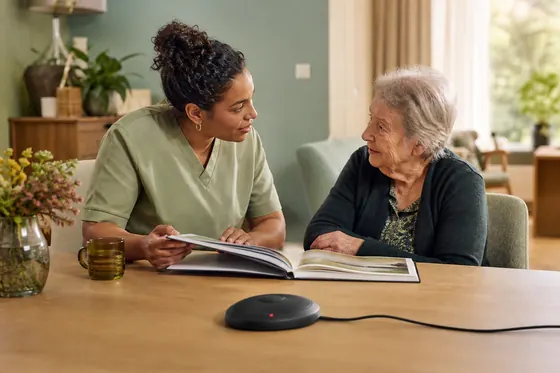
A structured report in your professional terminology
From care encounter to report
Hysio turns spoken information into a report. Choose the report format for the conversation you are documenting.
Document
Record the conversation and clearly state your own findings and agreed actions.
AI assistants
You stay in control of what gets saved.
In your workday
More attention for the conversation, less typing afterwards.
State relevant information, your own findings and agreed actions aloud so you can find them in your report.
The information appears under the headings of your chosen report format, so you can review each section.
Check names, facts and agreed actions. Edit the text where needed before using the report in your records.
Try it yourself
Try Hysio free for 14 days or schedule a personal demo.
For your team
Quick answer
Four documentation formats for person-centred care for older people: intake, behaviour observation, family meeting and MDT meeting.
Here you can see how Hysio works in geriatric and dementia care. You read every report back before it goes into the record.
There are four formats. The Intake is for the first conversation. The Behaviour & Care Observation records one concrete moment. The Family Meeting keeps track of who said what and what was agreed. The MDT Meeting turns a meeting into a list of decisions and actions. With voice-driven reporting, you say after the contact what happened, and you read the report back. [3] [4] [5] [6] [1]
The Intake organises the first care encounter into fixed sections: summary, context and sources, data collection, professional assessment, follow-up and additional information. Each item gets a recognisable place, with its source. What you did not discuss stays open. Hysio makes no diagnosis and draws no conclusion about cognition. [3]
This format turns one behaviour or care moment into a report on a timeline. You see what happened, what preceded it, what was measured and which support you offered. The next step stands apart. That way you can see later exactly how a moment went, without a judgement having crept in. [4]
The report records a conversation with the client and loved ones. For each speaker, it stays recognisable who contributed what. It also shows where opinions differ, which explanation you gave and which agreements were confirmed. Hysio does not take sides and does not turn a wish into an agreement. [5]
The MDT report turns a multidisciplinary meeting into a register of decisions and actions. You see which sources were discussed, what each discipline contributed, which decisions were really confirmed and who takes up which action. A proposal stays a proposal until someone confirms it. [6]
You discuss the medical history, daily functioning, the medication and what the client considers important. Loved ones often add to it. For each item, state who it comes from. Hysio puts it under the right headings and leaves open what is not yet known. Your own judgement stands apart, as your assessment. [3]
Describe what you saw and heard, as concretely as possible, and when. For example, write "she walked to the door six times and called for her son" instead of "she was restless". Hysio does not add an explanation or label. A term used by the doctor, you state with the doctor as the source. [4]
For each person, state what they contributed, as far as possible in their own words. For example: the son wants a move, the daughter wants to try more home care first. The difference stays visible. Hysio does not take sides and does not summarise it into one opinion. Say what was agreed and what is still open. That way a colleague can see later how the conversation really went. [5]
You pay €20 per month for Starter, excl. VAT. Whether you record an intake or an MDT meeting, the price stays the same. If you compare with typing yourself, also count the reading back. You decide what goes into the record. [7]
In dementia, it often concerns someone who cannot oversee everything themselves. So only record what is needed for the care. Your organisation decides who may read and approve the report. A family member who is at the conversation does not automatically get access because of it. That depends on the representation. [9]
After the meeting, say which topics were discussed, what each discipline said and what was decided. For each action, name who takes it up. Hysio puts decisions and actions in a register. What has not been confirmed stays open. That way nobody has to guess afterwards what the team agreed. [6]
State what is known about representation, such as a guardian, mentor or written authorised representative, and how you know it. If it is already in the record, name the record as the source. You only state a judgement on mental capacity if one was given, with who gave it and for what. Hysio does not assess mental capacity. What is unclear stays an open point. [3]
Say what happened just before: a visit, a shift change, pain, a full living room or a loud noise. Also say if you do not know, because that is information too. Hysio puts this under report and source information, separate from the behaviour itself. You only draw a link if you state it, as your assessment. [4]
State which topics you explained, for example the condition or the daily structure, and how the family reacted. Also say which questions were left open. Hysio does not turn an explanation into agreement. That way a colleague can see later what the family already knows and where another conversation is needed. [5]
Say literally whether something was decided or only proposed, and by whom. Hysio puts decisions under current care and keeps proposals open. That way an idea does not quietly become a plan. If you are in doubt afterwards, leave it as an open action and check. [6]
State what the client or loved ones tell you about work, habits, preferences and important people. Say who told you. Hysio puts it in the intake under data collection. That way colleagues can tailor their care to who the client is, without the story changing. [3]
Describe for each moment what you saw, with a time, for example at two o'clock and at four o'clock. State what you did, such as giving something to drink or sitting with the client for a while, and how the client responded. Prefer concrete words to "restless". Hysio puts the moments in order and does not add a cause. What the day shift needs to know goes under follow-up. [4]
Everyone who contributed something: the client, loved ones, you and possibly a doctor. When recording, say who said what. Hysio keeps the speakers apart and does not attribute a statement to someone else. The client's perspective gets a place of its own. [5]
When you type, you often write at the end of the shift, with a lot on your mind. When you dictate, you say straight after a moment what happened. Admin with AI takes over the typing, but reading back stays with you. After a few weeks, see whether you correct less and whether colleagues understand the report better. [10]
Choose a few made-up situations, such as a behaviour moment during lunch and a family meeting about moving. Record them as you would after a real situation. See whether speakers, observations and agreements stay properly apart. Also notice how much you need to adjust. [8]
The Wet zorg en dwang (Wzd, Care and Compulsion Act) explicitly names psychogeriatric conditions as a target group. That is why the law often plays a role in dementia care. For each contact, only note what was established then. Keep fact and assessment apart, so that it can be followed later how a decision was reached. [14]
The guideline module Geriatrisch assessment (geriatric assessment) asks as a minimum for nutrition, cognition with attention to delirium risk, mood, functioning and mobility with attention to falls. That is not a mandatory heading structure for the whole record. Show in your report which information still needs to be checked. [12]
Verenso is the professional association for elderly care physicians, with about 1,200 members. The association has a guideline database with more than a hundred guidelines and practical guides, intended for multidisciplinary care for older people in teams. In your report, describe the contact as it really went, so that the team can build on it. [13] [16] [12]
Involuntary care may only be used as a last resort. That is why it matters that your report shows what you tried first and how the client responded. Keep observation, interpretation and agreement apart. The professional responsibility stays with you and the team. [14] [15]
State the reports, results or observations that were on the table, such as a behaviour observation from last week or a report from the psychologist. Say when they are from. Hysio puts them under source information. That way someone who was not there can see what the meeting was based on, and which information may already have been out of date. [6]
State what you asked or saw that relates to delirium risk, and who that information comes from. Only state a score if you actually administered it. Hysio does not establish a risk. What still needs to be looked into stays visibly open. [3]
Say what you did, for example distracting, finding a quiet place or calling a loved one. Then state how the client responded and when. Hysio sets support and response side by side, but does not draw a link you do not mention. That way you can see later what helped and what did not. [4]
State what was agreed, with whom and when it will come up again. A wish from a loved one is not yet an agreement. Hysio only puts confirmed agreements under agreements. What is still open goes under follow-up. [5]
No, Hysio is not linked to your organisation's EHR. After reading back, you transfer the text yourself. Then check that you have the right client and that the text is complete. Follow your team's agreements when doing so. [11] [10]
Read the report through calmly and compare it with what you saw. Is the behaviour described concretely, without judgement or label? Are the times and the order of the moments right? Is the support you offered described well, and also how the client responded? Only when all of that is right do you approve it. [10]
That is in the action register, but only if it was said in the meeting. For each action, state a name or discipline and a timeframe, if they are known. Hysio does not assign tasks. An action without an owner stays open, so that the team can take it up. [6]
Name the family carer as the source, for example the partner or a daughter. What they say about functioning at home then stays separate from what the client says and what you see. Hysio does not turn their account into an established fact. Check what you consider important. [3]
State which instrument you used, when and what the outcome was. Only state an outcome if you actually administered the instrument. Hysio does not calculate a score. Put your own observation next to the outcome, so that both can be read. [4]
State both wishes, each with the right person. The client's perspective gets a place of its own. Hysio does not take sides. Say what was discussed and what is still open. That way it stays visible that the client's voice was heard. [5]
For each discipline, state what it said, such as the doctor, the psychologist or the physiotherapist. Use their own words as much as possible. Hysio sets it out per discipline, without summarising it into one opinion. That way it can be read back later who thought what. [6]
State earlier falls with the source, and what you saw yourself of walking and standing up. Only state a risk if it was assessed, with who assessed it. Hysio does not add a fall risk. What still needs to be looked into goes under follow-up. [3]
Say it in order: what came before, what happened, what you did and how the client responded. State times where you know them. Hysio puts it in that order and does not move anything. That way a colleague can follow the moment step by step. [4]
Leave it open and say that it still needs to be confirmed. Hysio does not put it under agreements. Name who will check it, if that is known. That way the next colleague does not read something as agreed that has not yet been settled. [5]
First look at where the error is: in what you said or in how it was organised. Only adjust that part. If it also appears in another report, such as the MDT meeting, correct it there too. Hysio does not change professional content without your instruction. [10]
Mark what you cannot hear properly and do not guess. Listen back to the part or check with whoever was there. Voice-driven admin works best with short dictations straight after the moment. A gap is safer than a guess in the record of a vulnerable client. [10]
Verenso manages a guideline database with multidisciplinary guidelines and practical guides for care for older people. One example is the Handreiking Kwetsbare Ouderen Thuis (practical guide on frail older people at home), which organisations can use as a quality framework for collaboration. In your report, record your own observation and the follow-up, with the date. [17]
The action register shows what needs to happen and by whom. Read it at the start of your shift. What concerns you is shown with your name or discipline. What is still open, you can check with whoever led the meeting. [6]
State what you saw and heard in the conversation, and what the client and loved ones tell you. Only state a test or score if you actually administered it. Hysio draws no conclusion about cognition or mood. That judgement stays with you or the doctor. [3]
Only if you or a colleague states that cause, and then as an assessment with the source. Hysio does not add a cause itself. That way the report stays factual and the team can look together for what is going on. [4]
That follows your organisation's agreements and the rules on representation. Not everyone who was at the conversation may read everything, not even when it is about their own parent. Hysio does not share anything itself and does not send anything to loved ones. If in doubt, consult your manager or the doctor before you share anything. [5]
Describe what was discussed, who decided and which steps came before. Follow your organisation's step-by-step plan under the Wet zorg en dwang. Hysio does not assess whether a measure is appropriate. Your report only shows what was really said and done. [6]
State what the client or loved ones say about eating and drinking, such as fixed habits or difficulty swallowing. Say what you measured or saw yourself, and when you weighed. Hysio does not establish malnutrition and does not calculate a loss. What still needs to be looked into, for example by the dietitian, goes under follow-up. [3]
Put them side by side, each with its own date, time and situation, such as lunch on Monday and the evening on Thursday. Hysio does not calculate a trend and draws no conclusion. AI reporting keeps each observation with its own moment. If you want to name a change yourself, say it as your assessment. [4]
Keep track for a week of how much time you spend on reporting, including reading back. Then do the same with Hysio. Also check whether your reports have become more concrete, with fewer vague words. In dementia care, that is worth at least as much as time. [10]
Start with one format, for example the behaviour observation, and practise with made-up situations. Agree with your team who approves reports and how you handle privacy. After a few weeks, discuss in the team meeting what went well and what could be better. Then add the family meeting and the MDT meeting, one at a time. [10] [9]
Hysio creates the report. You remain responsible for what you save in the record.