Document
Keep your attention on the care encounter.
Record the conversation and clearly state your own findings and agreed actions.
Hysio Clinical Geriatrics
After a geriatric consultation or multidisciplinary meeting, you say what the client, the relative and the team contributed. Hysio keeps collateral history, cognition and mobility separate.
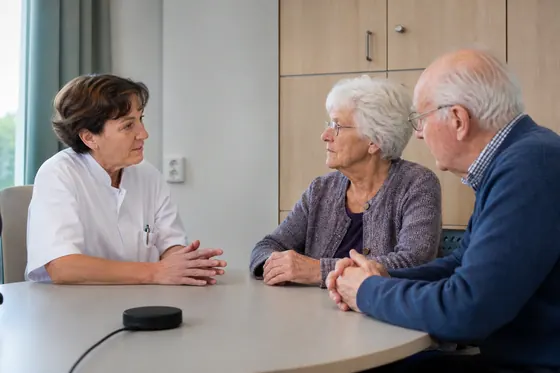
A structured report in your professional terminology
From care encounter to report
Hysio turns spoken information into a report. Choose the report format for the conversation you are documenting.
Document
Record the conversation and clearly state your own findings and agreed actions.
AI assistants
You stay in control of what gets saved.
In your workday
More attention for the conversation, less typing afterwards.
State relevant information, your own findings and agreed actions aloud so you can find them in your report.
The information appears under the headings of your chosen report format, so you can review each section.
Check names, facts and agreed actions. Edit the text where needed before using the report in your records.
Try it yourself
Try Hysio free for 14 days or schedule a personal demo.
For your team
Quick answer
For the broad assessment of frail older people, with a dedicated place for cognition, mobility, medication and what relatives tell you.
This is how Hysio works in a geriatric consultation, an intake or a multidisciplinary evaluation.
For a first, broad introductory visit, you choose the Clinical Geriatrics Intake. If you discuss several domains in relation to each other, such as mobility, cognition and nutrition, the comprehensive geriatric assessment fits. Falls history and what the relative tells you each get their own place in it. [2] [3] [4] [5] [1] [11]
Put cognition and mobility under fixed headings in the record, so you can quickly find the collateral history. Only assess what comes from the source after checking it; the clinical geriatrician decides which text finally remains for the geriatric domain assessment. Fixed headings also save time at every follow-up contact. [2] [1] [10]
Align falls history with your own route in the medical record system and check nutritional status together with the source before you save anything. That keeps the record pathway traceable, while collateral history and cognition remain separately recognisable within the geriatric domain assessment. It prevents falls history from becoming detached from the underlying conversation. [10] [1] [2]
Limit the note on cognition to what this one contact requires, and record the basis for sharing information about mobility separately, apart from the rest of the geriatric domain assessment. That way, when making privacy choices, you make sure only relevant data ends up in the record. It prevents sensitive data about frail older people from going further than this conversation requires. [8] [13] [1]
For the current price of Hysio for a clinical geriatrician, see the central pricing page. The subscription does not change because of a conversation in which nutritional status, mobility or cognition comes up. Collateral history and falls history are content elements of the record, not separate price components. The current prices and terms are on the pricing page. [6] [7]
If your ward has a standard falls analysis form, that stays the place for the scores and measurements. Hysio records what was said in the conversation about the fall, walking and the circumstances. That way you complete the form with the words of the client and relative. [1] [10] [11]
Put the report next to what you heard yourself. Does it state clearly that these are the daughter's words, and not those of the client or your own observation? Correct the source attribution if needed before you save the report. [1] [11] [9]
Focus on the patient first and only then check falls history and nutritional status, before you finalise the note. Link collateral history and cognition to the same contact, so the conversation with the patient stays recognisable as a whole within the geriatric domain assessment. Avoid judgements that do not come directly from the conversation itself. [1] [2] [10]
Hysio helps organise cognition and shows which source belongs to a passage. You assess mobility, falls history and their meaning within the geriatric domain assessment. Collateral history and nutritional status are not silently merged with your own judgement. The added value lies in overview and traceability, not in an automatic conclusion. Check the text and decide for yourself what is usable for the record. [1] [2] [10]
Start with nutritional status in one clearly defined contact and agree who checks the collateral history. Also note which information about mobility and falls history you want to follow in this first trial. Do not let the geriatric domain assessment grow straight away into a complete new way of working. After the first contact, discuss what is correct, what is missing and which step you can safely extend next. [7] [8] [1]
The Clinical Geriatrics Intake fits the first broad conversation in which collateral history, cognition and the follow-up of the contact are recorded together. Give mobility and falls history their own section and state the source for each passage. The format helps the team find the starting point again, but you check the content before anything is saved. Another format is intended for a later contact that calls for follow-up or a specific evaluation. [2] [1] [11]
A Comprehensive Geriatric Assessment fits when several domains of an older person are discussed in relation to each other. Organise falls history, nutritional status and the follow-up of the contact alongside mobility and collateral history, with the source visible. Cognition is not automatically interpreted because of the chosen format. You decide which information is relevant for the geriatric domain assessment and check the whole before saving. A follow-up may later call for a shorter, more focused format. [3] [1] [11]
The Clinical Geriatrics Family Meeting brings cognition, mobility and the follow-up of the contact together, ready for your review. Work from the collateral history and connect it with falls history and the source before it becomes part of the geriatric domain assessment. Around this conversation, the clinical geriatrician remains ultimately responsible for the final interpretation. [4] [1] [11]
The Clinical Geriatrics SOAP Note fits an ongoing course of care in which subjective information, observations, assessment and plan need to stay apart. Place nutritional status and collateral history under the source-bound sections, and describe mobility and falls history where they came up in this contact. Cognition gets a separate place for your assessment. The structure supports reading back, but the clinical geriatrician determines the content and the follow-up. [5] [1] [11]
There is no fixed order that works for every geriatric contact. An intake is intended for the starting point, a follow-up or consultation format for an existing question, and a broader assessment for when several domains come together. Only use cognition when the contact carries that information. Falls history, nutritional status and collateral history remain separately traceable. You choose the right format based on the purpose of this conversation, not on habit. [1] [2] [11]
Use an intake to record nutritional status and the rest of the baseline situation at the start of a course of care. A follow-up note is more suitable when you want to describe what has changed since the previous contact. Link mobility and falls history to the contact in which they were discussed, and state the source of a collateral history. That keeps it visible which information is new and which was already in the geriatric domain assessment. [1] [2] [11]
After a follow-up moment, record the reason, what was discussed or examined and which agreements followed from it. Describe mobility in the words of the source and do not add other details that do not appear in the contact. Collateral history and cognition each keep their own origin, while falls history stays separately recognisable. Limit the text to this contact, so the next team member can follow how things develop. [1] [2] [11]
A handover about collateral history contains at least the source, the recipient and the purpose for which you share the information. Check consent before the text goes to another team member or another healthcare professional. Mobility and cognition stay linked to the right moment of contact, and falls history gets its own label. The recipient must be able to see what was supplied literally and what still needs a substantive assessment by the healthcare professional. [1] [2] [11]
For falls history, separate three layers: what the patient or someone close to them tells you, what you observe and what professional meaning you give to it. Add the source role and the moment of contact to each element. Mobility, collateral history and cognition may appear in the same report, but they are not summarised as one fact. That keeps it clear which information comes from someone else and which passage reflects your assessment. [1] [2] [11]
Compare cognition between contacts using the same agreed points of attention. First record what each contact actually contains, and only then name a change that the source supports. Keep falls history, mobility and collateral history in view as context, without filling in a missing detail yourself. Briefly explain a different way of working, so the geriatric domain assessment remains easy to follow later. [1] [2] [11]
In the history, first write down the care question and the course in the words of the source. Only add cognition when it was actually discussed or supplied during the consultation. Record the origin of a collateral history separately and keep falls history recognisable. Mobility can be mentioned as context, but Hysio must not fill it in. That way the history stays an honest report of this contact. [1] [11]
Write down who said it: the client, a relative, home care or the GP. Weight loss mentioned by the partner is recorded as the partner's report; a measured weight is recorded with date and scales. You put your assessment of the nutritional state separately. [1] [13] [11]
For a measurement of mobility, record the instrument used, the unit, the date and the time as the source supplies them. Describe the outcome without attaching a clinical conclusion to it yourself. Collateral history and cognition each get their own source reference, so a later comparison stays fair. You only determine the professional meaning after the measurement and its origin have been fully checked. [1] [11]
Put the collateral history and the result side by side, each with date and source. If the relative says memory has been declining for a year and the MoCA score is low, those remain two separate items. You write your own conclusion about cognition underneath. [1] [11] [13]
Hysio can organise a supplied report on falls history, but does not assess images and does not make its own imaging interpretation of cognition. Copy the source, date and wording of the report exactly as they were supplied. Collateral history and nutritional status remain separately recognisable. You or the authorised healthcare professional assesses the medical meaning. When in doubt, ask the source for clarification before the passage becomes part of the record. [10] [9] [11]
Use the test names and abbreviations your team knows, and write them out in full the first time. With a score, also note the maximum score and the date, for example MoCA 21 out of 30. That way a colleague reads the report in the same way. [1] [11]
Note it as information from the relative, with who they are and how often they see the client. If a neighbour says the fridge is empty, that is something different from measured weight loss. Whether you may share this with home care, you record separately. [1] [13] [11]
The team wants to know how often someone fell, in what circumstances and with which walking aid the client walks now. Note which discipline gave the information, such as the physiotherapist, and who takes on the follow-up. That way the team can move on in the multidisciplinary meeting. [1] [2] [13]
Let an example case show the real contact, the collateral history and the follow-up, but never invent a diagnosis yourself. In that case, mobility, falls history and cognition belong to the same traceable contact within the geriatric domain assessment. When you use an example with voice-driven reporting, you only use anonymised or fictional data that do not trace back to a real patient. [1] [11] [2]
Limit yourself to what the recipient needs: the falls history, the risk factors you established and the agreed management plan. State the source of each item. You only include nutrition and cognition when they matter for the falls. [10] [8] [13] [11]
No. Hysio organises what was said about the falls, but does not make a diagnosis and does not choose a treatment. Whether there is orthostatic hypotension or another cause is for you to assess. Collateral history and cognition get their own place with source. [9] [1] [11]
You check cognition before saving and decide which information belongs in the record. Hysio can place falls history and collateral history clearly side by side, but does not take over the professional assessment of mobility or cognition. Check the source, the date and the wording of the contact. Correct an incorrect link before you save, and never let a suggested text pass as an approved final version. [1] [9] [13]
If nutritional status is missing, record that explicitly as missing or not discussed. Do not fill in a date, value or conclusion to hide an empty section. Mobility and falls history may be described when there is a source for them, without suggesting that the geriatric domain assessment is complete. Add new information manually later, after it has actually been discussed or supplied. [1] [9] [11]
Not during the acute situation: an authorised healthcare professional first assesses the urgency according to local agreements. After that, you can record the contact, with the fall, the decline and what the relative said, each with its own source. If in doubt about urgency, first consult the colleague on duty. [9] [8] [11]
That depends on the purpose and consent. What a relative tells you is shared with the treatment team when that is needed for care. For sharing outside the team, for example with another care provider, you first check whether the client or representative agrees. [8] [13] [1]
Hysio puts falls history under a heading, but never chooses a treatment itself; the clinical geriatrician safeguards that. Collateral history and mobility belong to the same treatment plan, without Hysio having a say in the geriatric domain assessment. Hysio explicitly stays out of any medical judgement about next steps. [9] [10] [11]
Write down what you saw and what was said, and note the doubt as an open question. For example: memory complaints according to partner, client does not recognise them, further assessment agreed. That way a suspicion does not quietly become a diagnosis. [1] [11] [9]
Leave both versions in place, with who said what. If the client says she eats well and home care reports that meals are left untouched, that is exactly the important information. Your assessment, for example based on weight and a nutritional screening, stays separate. [1] [13] [11]
Copy medication and the related measurements of mobility verbatim, with source, dosage and unit; the clinical geriatrician then assesses them. Collateral history and cognition belong in the same medication or measurement note, without any interpretation of your own ahead of the geriatric domain assessment. Repeat that check at every following measurement, even if the result seems unchanged. [1] [11] [9]
Read the text about what the relative said back next to your own notes. Check whether each statement is attributed to the right person and whether the date is correct. Correct a wrong source attribution before you save the report. [1] [8] [9] [13]
Agree in advance who reviews the report and who takes on the follow-up. Include the main points from the collateral history, such as changes in memory and daily functioning, and leave the rest in the record. That keeps the discussion short and focused. [10] [8] [13] [2]
Use fixed headings for falls history and agree which terms you use for nutritional status. Also record who checks the geriatric domain assessment and who approves a change. Cognition and mobility follow the same agreement, without all elements disappearing into one general text. Share the short way of working with new colleagues, and discuss it again when the team composition or the record structure changes. [1] [2] [10]
First test cognition in one clearly defined contact and collect the first corrections on mobility there; only extend further once it is right. Falls history and nutritional status belong to that same small trial, with the source as the check for the geriatric domain assessment. Deliberately involve a colleague who reviews critically in that first trial. [7] [8] [1]
Check nutritional status against your team's local headings and collateral history against the applicable authorisations; then have a designated colleague check it. Adapt mobility and falls history to local agreements in the same step, within the geriatric domain assessment. Briefly document each adjustment, so the reason for it can be traced later. [10] [1] [11]
The relative often says more about falls, memory and eating than the client does. You record both accounts by voice, and Hysio keeps them apart in the report: that is voice-driven reporting. Mobility, cognition and falls history each get their own place. You weigh what counts most. [1] [11] [2]
Around collateral history, measure writing, checking and corrections separately. Record what caused time to be lost, for example an unclear source, missing consent or an extra follow-up question. Prioritise thoroughness over a percentage promised in advance, and compare measurements within the same team. Use the outcome to improve the way of working, not to promise a medical quality or result. [1] [10] [7]
For falls history, first read the central trial conditions and use the free trial to assess nutritional status within the geriatric domain assessment. Collateral history and mobility belong to that same trial, with the source as the starting point for the clinical geriatrician. Close the free trial with a short joint evaluation moment within the team. [7] [6] [8]
For the subscription terms, see Pricing; for data use and privacy, see Legal. Cognition and mobility are topics in the geriatric report and do not have their own Hysio rate. The central information helps you assess the platform. Which data from the patient, someone close to them or a referrer is relevant for the geriatric record is something you decide based on the contact and your professional responsibility. [6] [8] [9]
Agree within the team how you write nutritional status, cognition and abbreviations. Link local terms to understandable descriptions, so new colleagues and other disciplines can follow the note. Use the same agreements for falls history and collateral history, but keep the source role visible. Manage the terminology list in one agreed place and review it when the geriatric domain assessment or the local way of working changes. [1] [10] [11]
Work per domain: mobility, cognition, nutrition and what the relative tells you. For each domain, note what you examined yourself and what others supplied. You describe the link between the domains in your own assessment, not in the source data. [1] [11] [2] [9]
Hysio creates the report. You remain responsible for what you save in the record.