Document
Keep your attention on the care encounter.
Record the conversation and clearly state your own findings and agreed actions.
Hysio Dental Hygiene
Record dental hygiene care, periodontal findings, instruction and the client's response clearly, with your professional assessment visible throughout.
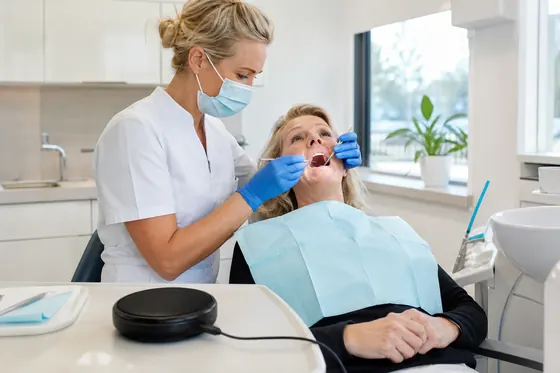
A structured report in your professional terminology
From care encounter to report
Hysio turns spoken information into a report. Choose the report format for the conversation you are documenting.
Document
Record the conversation and clearly state your own findings and agreed actions.
AI assistants
You stay in control of what gets saved.
In your workday
More attention for the conversation, less typing afterwards.
State relevant information, your own findings and agreed actions aloud so you can find them in your report.
The information appears under the headings of your chosen report format, so you can review each section.
Check names, facts and agreed actions. Edit the text where needed before using the report in your records.
Try it yourself
Try Hysio free for 14 days or schedule a personal demo.
For your team
Quick answer
Make self-care, professional findings and follow-up visible in one traceable source.
In dental hygiene, the client's goal, self-care, measurements, instruction and collaboration run closely alongside each other. A good report structure keeps those sources recognisable.
The first parts of Hysio Dental Hygiene Consultation are: summary, the request for help with relevant history, dental hygiene and periodontal findings, and the instruction and treatment given around plaque, self-care and feedback. Plaque observation and self-care instruction stand apart from assessment and follow-up. For dental hygiene, at this consultation Hysio only organises clinical content that was stated and leaves missing source information open. [3]
The first parts of Hysio Periodontal Intake are: summary, request for help and goals, medical and oral care history, and the dental hygiene and periodontal starting situation around plaque, self-care and feedback. Do not merge the client's words, a gingival finding and instruction into one conclusion. Leave unclear self-care points open until the practitioner has assessed them. [3]
The first parts of Hysio Dental Hygiene Treatment Findings are: first the summary, then the reason and treatment location, then the instruction with who carried it out and the conditions, and the treatment given around plaque, self-care and feedback. Keep oral observation, explanation and the agreed next step with their own source. The healthcare professional decides which observation and instruction stay in the record. [3]
The first parts of Hysio Dental Hygiene Evaluation & Handover are: summary, the purpose of the evaluation and starting situation, current findings and self-care, and a source-bound comparison and assessment around plaque, self-care and feedback. The source distinguishes plaque, instruction, assessment and feedback. Compare the text with the notes before you save the report. [3]
The first parts of Hysio Dental Hygiene Progress Note are: summary, reason and context, findings and values, and the procedure carried out around plaque, self-care and feedback. Record the client's report and the preventive interpretation separately next to what was carried out. [3]
When distinguishing between a dental hygiene consultation and a periodontal intake, pay attention to the following. Make the reason, history, baseline and clinical question recognisable in the source. Hysio can note the purpose of the contact in advance as the choice of report. Record the choice of report only when the contact names it as a source. You choose the diagnostic route yourself: Hysio does not decide that for you. When reviewing, also check the choice of report when it was stated explicitly. [2] [9] [10]
A stated PPS value calls for care. Make the method used, the location and the value as named by the practitioner recognisable in the source. Hysio can note the value separately with the date and measurement context. Hysio does not turn a PPS into a full periodontal diagnosis. Only include plaque if the source mentions it during the encounter. [2] [10] [9]
When distinguishing between dental hygiene instruction and treatment, pay attention to the following. Make what you explain, what the client demonstrates back and what you actually carry out recognisable in the source. Hysio can record explanation, return demonstration and treatment as separate components. Include plaque only if the contact actually supports it. A procedure that was discussed is not recorded as performed. Before saving, check whether plaque comes directly from the source. [2] [7] [9]
With a client's response to brushing or interdental cleaning instruction, pay attention to the following. Make what the client understands, demonstrates back and still finds difficult recognisable in the source. Hysio can keep the response and the follow-up appointment verbatim alongside the instruction. Keep plaque next to the source information that was stated, seen or carried out. Hysio does not infer adherence from a brief response. Keep plaque recognisable when the source says something about it. [2] [7] [8]
Task delegation within oral care calls for care. Make the instruction, competence, the person carrying it out and the responsible practitioner recognisable in the source. Hysio can record the instruction and the responsibility as separate source roles. Leave information that was not discussed out of the report and check the task description against the source. Hysio does not extend an assistant's authority. [2] [6] [7]
For the request for dental hygiene care, the contact gains a firm footing from the complaint, the client's goal and the desired change in their own words. You can note the client's report before the professional finding, and record self-care when the source names it. A request for care is not a periodontal diagnosis. Keep self-care recognisable and, before approving, assess whether the follow-up fits the source. [2] [7] [9]
For bleeding gums as a client report or finding, the contact gains a firm footing from the frequency, location, trigger and source of the report. You can register the report and your own observation separately, and record self-care when the source names it. Hysio does not independently explain the cause of bleeding. Keep self-care and the follow-up in the report only when the source supports both. [2] [7] [10]
For self-care around brushing and interdental cleaning, the contact gains a firm footing from frequency, aid, technique and perceived obstacles. You can note what the client says and what you see separately, and record self-care when the source names it. Hysio does not give a judgement that the practitioner has not stated. Link self-care to the follow-up without filling in missing information. [2] [7] [8]
For the periodontal starting situation, the encounter is anchored by the type of examination, sites, values and date of the baseline measurement. You can keep method, values and context in the same order as the source, and record self-care when the source names it. A baseline value does not automatically become a treatment indication. [2] [9] [10]
For a dental hygiene instruction, the encounter is anchored by the goal, demonstration, aid and the client showing it back. You can record the exact instruction and the client's response, and record self-care when the source names it. Hysio does not invent an aid or brushing frequency. [2] [7] [8]
For a dental hygiene treatment that was carried out, the encounter is anchored by the treatment location, action, instruments and client response. You can note only the step actually carried out, with its location, and record self-care when the source names it. A planned part of treatment stays recognisable as planned. [2] [9] [13]
For a dental hygiene evaluation with handover, the encounter is anchored by the comparison with earlier values, current self-care and the open question. You can make the recipient, purpose and feedback wanted visible, and record self-care when the source names it. Only keep self-care and follow-up in when the source carries both. [2] [9] [10]
For a dental hygiene progress note, the contact gains a firm footing from the reason, key finding, action and follow-up in the order of the contact. You can summarise what happened in this contact briefly and tied to the source, and record self-care when the source names it. A progress note does not fill in a missing measured value. Link self-care to the follow-up without filling in missing information. [2] [9] [12]
For collaboration between dental hygienist and dentist, the encounter is anchored by the shared source, the question to the dentist and the agreed follow-up. You can note the division of roles and the feedback as separate parts, and record self-care when the source names it. Hysio does not turn feedback into a joint diagnosis. [2] [7] [9]
For a changing client goal in dental hygiene, the encounter is anchored by the original goal, the new wish and the reason for the change. You can keep both goals recognisable with date and source, and record self-care when the source names it. Hysio does not choose which goal takes professional priority. [2] [7] [8]
Article 34 of the Wet BIG (Dutch Individual Healthcare Professions Act) regulates the dental hygienist as a profession with a protected professional title based on training: the title is protected and the area of expertise is defined. The Besluit functionele zelfstandigheid (decree on functional independence) names local anaesthesia by injection and the treatment of primary cavities as procedures that can be carried out without supervision or intervention, on the instruction of a BIG-registered dentist. Note the assignment, the person performing it and competence as separate source fields. [2] [4] [6]
For the statutory delineation of expertise and competence, the task, the person performing it and the responsible party as described in the source remain central. Use the record so that the assignment and its execution are not registered as the same role, and keep the division of roles separate from your own assessment. Hysio does not extend a statutory authority. Include the division of roles only with a recognisable source; open points stay visible for assessment. [2] [6] [7]
For a KRM or professional registration as a source, the registration information and the clinical reason for mentioning it guide the report. Use the record to keep register information apart from client findings, and keep the register information apart from your own assessment. Link the register information to the source and leave unanswered points open. [2] [11] [7]
For the guideline for the oral care record, the guideline source alongside the specific client information and choices for the record remains decisive. Use the record to mention the guideline version used recognisably, and keep the guideline version separate from your own assessment. Hysio does not automatically translate the guideline into a conclusion. Keep the guideline version separate from your own conclusion and mark what still needs to be assessed. [2] [9] [8]
For consent to a dental hygiene procedure, the procedure discussed, the questions and explicit consent guide the report. Use the record to note consent as a moment of decision next to the treatment, and keep that moment of decision apart from your own assessment. Without a spoken yes, Hysio does not write down consent. [2] [9] [8]
For a delegated oral care task, the assignment, the person performing it, supervision and the responsible professional remain central. Use the record to register the scope boundary and feedback explicitly, and keep the scope boundary separate from your own assessment. Hysio does not automatically make task delegation permissible. Also record the scope boundary when it was discussed during the contact; an open point stays visible until your own assessment. [2] [6] [7]
For data sharing between dental hygienist and dentist, purpose, recipient, necessary source and consent remain central. Use the record to name only the information for the agreed care purpose, and keep that shared information separate from your own assessment. You assess yourself whether data may lawfully be shared: Hysio does not do that automatically. Include the shared information only with a recognisable source; open points stay visible for assessment. [2] [9] [12]
For the insurance context of dental hygiene care, the client's question and the public source consulted guide the report. Use the record to mark reimbursement information as a question or source reference, and keep that reimbursement information apart from your own assessment. Hysio does not calculate entitlement or reimbursement. With voice-driven admin, a reimbursement question therefore stays a question, with the source attached. [2] [5] [13]
For consultation with or referral to the dentist, the specific finding, the question and the agreed recipient remain central. Use the record to register the reason and the desired feedback together, and keep the reason for referral separate from your own assessment. Hysio does not independently decide that a referral is medically necessary. Keep the reason for referral separate from your own conclusion and mark what still needs to be assessed. [2] [7] [10]
For a changed dental hygiene source, the title, date, version and the passage that affects your way of working guide the report. Use the record to keep the source version next to your own professional assessment, and keep the changed passage apart from your own assessment. [2] [9] [10]
For a plaque or biofilm observation, you note the location, the method used and what was seen during the contact, alongside the source. Use Hysio to register the observation per location without drawing inferences; keep the gingival observation as source data and draw no independent conclusion. Hysio does not derive a diagnosis from plaque. Put the gingival observation in the report only when the source supports it, and let the practitioner assess its meaning. [2] [7] [10]
For bleeding on probing, you note the site, measurement method, value and response as stated, alongside the source. Use Hysio to keep the measured value with the exact location; keep the gingival observation as source data and draw no independent conclusion. Hysio does not independently interpret a pocket or bleeding value. Record the gingival observation alongside the source and let the practitioner assess its meaning. [2] [10] [9]
For pocket measurements within a dental hygiene contact, you note the sites examined, the number of measuring points and the method used, alongside the source. Use Hysio to state the extent of the measurement clearly next to the values; keep the gingival observation as source data and draw no independent conclusion. A limited measurement is not presented as a full periodontal chart. Do not use the gingival observation as a conclusion; the practitioner assesses the professional content. [2] [10] [9]
For calculus or deposits as a clinical finding, you note the location, extent and source of the observation. Use Hysio to note the finding apart from the client's report and assessment; leave the gingival observation as a source detail and draw no conclusion of your own. Hysio does not turn deposits into a treatment indication. [2] [7] [9]
For tooth notation in a periodontal record, you note the notation as stated, the side and the site examined, alongside the source. Use Hysio to keep uncertainty about the tooth literally visible; keep the notation as source data and draw no independent conclusion. Hysio does not correct unclear notation. Keep the notation recognisable as source data and leave its meaning to the practitioner. [2] [9] [10]
For self-care advice alongside a clinical oral finding, you note the observation, the advice and the client's response, alongside the source. Use Hysio to register advice and finding as different source roles; keep the gingival observation as source data and draw no independent conclusion. Hysio does not invent individual advice. Put the gingival observation in the report only when the source supports it, and let the practitioner assess its meaning. [2] [7] [8]
For anaesthesia during a dental hygiene treatment, you note the agent, location, amount and administration as stated, alongside the source. Use Hysio to note the anaesthesia under the treatment performed; keep the administration as source data and draw no independent conclusion. A plan for anaesthesia is not written up as administered. Record the administration alongside the source and let the practitioner assess its meaning. [2] [9] [13]
For a dental hygiene evaluation with an earlier measurement, you note the same site, method, date and source of both values, alongside the source. Use Hysio to note the basis for comparison before the current assessment; leave the gingival observation as a source detail and draw no conclusion of your own. Do not use the gingival observation as a conclusion; the practitioner assesses the clinical content. [2] [10] [9]
For the distinction between a dental hygiene finding and a diagnosis, you note the measured or observed information next to the diagnosis as stated. Use Hysio to label both source roles separately; leave the gingival observation as a source detail and draw no conclusion of your own. Hysio does not make a periodontal diagnosis. [2] [9] [10]
For planned and performed dental hygiene care, you note the goal, the step actually carried out and the reason for any deviation, alongside the source. Use Hysio to keep plan and result under separate statuses; keep the gingival observation as source data and draw no independent conclusion. Hysio does not add a procedure that was not performed. Keep the gingival observation recognisable as source data and leave its meaning to the practitioner. [2] [9] [13]
When discussing the costs of dental hygiene care, first record the treatment discussed, the source, the estimate and the client's question. Agree to record cost information only as a point that was actually discussed; check that cost information against the source. Hysio does not name a fee or reimbursement that is not in the source. Admin with AI puts the cost discussion in its own part of the report; you approve the text. [2] [12] [13]
For the first documentation format for a new dental hygiene contact, you first record the reason for contact, the goal and the available source information. Agree to choose a clearly delineated format that fits this contact; check the choice of report against the source. Hysio does not independently determine the treatment route. Include the choice of report only when the source names it; approval stays with the professional. [2] [9] [10]
For one first dental hygiene contact in Hysio, you first record the specific request for care and the desired report outcome. Agree to choose one documentation format with a complete source; check that documentation format against the source. A first report is not a clinical evaluation in itself. Record that documentation format with the source and let the healthcare professional review the final text. [2] [9] [12]
When checking a dental hygiene report before saving, first record the client's report, measured value, treatment, instruction and follow-up. Agree to compare each part with your own notes; check that comparison against the source. Do not let that comparison grow into a conclusion of its own; the practitioner approves. [2] [9] [12]
When discussing a dental hygiene report with the dentist, first record the relevant finding, question, responsibility and feedback wanted. Agree to keep the source for the consultation and the decision after it separate; check that consultation against the source. Compare that consultation with the notes before the final text is saved. [2] [7] [9]
For the client's voice in a dental hygiene report, you first record the client's own words alongside measured values and assessment. Agree to register the client's goal and the professional conclusion as separate components; check the client's voice against the source. Hysio does not choose which source carries the most clinical weight. Also check the client's voice against your own notes and let the professional approve the final text. [2] [7] [8]
With a current periodontal guideline, you first record the source version, the applicable context and the professional consideration that was stated. Agree to keep the guideline source alongside the client-specific finding; check that application against the source. Hysio does not automatically translate the guideline into a treatment plan. Include that application only when the source names it; approval stays with the professional. [2] [10] [9]
For a client's response after dental hygiene instruction, you first record the explanation given, the return demonstration and the remaining question. Agree to note the response and follow-up alongside the instruction; check that response against the source. Hysio does not independently conclude that an instruction has been understood. Record that response with the source and let the healthcare professional review the final text. [2] [7] [8]
For the boundary between a dental hygiene report and a diagnosis, you first record the observation, measured value, professional assessment and open point. Agree to name the source role of each component explicitly; check that source role against the source. Hysio does not make, confirm or rule out a diagnosis. Do not let that source role grow into a conclusion of its own; the professional approves. [2] [9] [10]
When closing a dental hygiene encounter, first record the result, client instruction, person responsible and follow-up appointment. Agree to verify the final status before approval; check that final status against the source. Compare that final status with the notes before the final text is saved. Whatever you do not say about instruction or follow-up during voice-driven reporting, Hysio does not fill in itself. [2] [9] [12]
Hysio creates the report. You remain responsible for what you save in the record.