Document
Keep your attention on the care encounter.
Record the conversation and clearly state your own findings and agreed actions.
Hysio Youth and Family Professional
After a home visit or family conversation, you dictate what the child, parents and network told you. You get an intake, home visit report, evaluation or MDT meeting report. The child's voice stays visible.
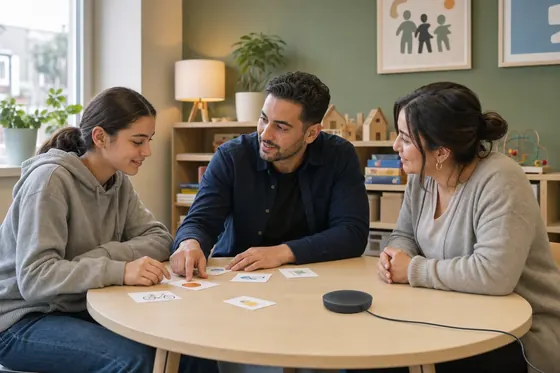
A structured report in your professional terminology
From care encounter to report
Hysio turns spoken information into a report. Choose the report format for the conversation you are documenting.
Document
Record the conversation and clearly state your own findings and agreed actions.
AI assistants
You stay in control of what gets saved.
In your workday
More attention for the conversation, less typing afterwards.
State relevant information, your own findings and agreed actions aloud so you can find them in your report.
The information appears under the headings of your chosen report format, so you can review each section.
Check names, facts and agreed actions. Edit the text where needed before using the report in your records.
Try it yourself
Try Hysio free for 14 days or schedule a personal demo.
For your team
Quick answer
In a family, requests for help run together: from the child, from the parents and from school or network. For each contact, Hysio records who said what and what you saw yourself.
In a youth care report, the child's voice sits next to what parents tell you, with the rules from the Youth Act and SKJ and the choices that stay with you.
Hysio Youth & Family Intake is for the referral. For the referral, let the young person's voice, the parent's perspective and the professional analysis each appear separately. Separate purpose, people involved and follow-up in the youth care report. The origin of the referral also stays recorded in the youth care report, with the source cited. [1] [2] [3] [9] [10]
Hysio Youth & Family Home Visit helps organise the family context recognisably for the youth and family record. Link the family context to family roles, network and the agreed goal. Organise words, context, observations and agreements in the youth care report. For the youth and family professional, interpretation and follow-up action on the family context stay traceable in the youth care report within youth and family work. [1] [2] [4] [10] [11]
Hysio Youth & Family Safety & Evaluation Meeting follows the source structure for the child's voice. Around the child's voice, note who was present and from which role information was given. In the youth care report, compare roles and choices with the source. [1] [2] [5] [11] [12]
As soon as the information from the home visit is handed over in a meeting with other people involved, Hysio Youth & Family MDT Meeting & Handover fits better than the home visit format. Describe a home visit within the specific family context and avoid a safety conclusion that is silently filled in. Keep reported information, assessment and agreement distinct in the youth care report. As soon as the source of the home visit has been checked, the text in the youth care report counts as complete. [1] [2] [6] [12] [9]
Choose between intake, evaluation and handover in the youth care report. The origin of an evaluation meeting also stays recorded in the youth care report, with the source cited. The source of an evaluation meeting stays visible alongside the follow-up. [1] [2] [3] [9] [10]
For a safety meeting, you only include the information necessary for the handover in the youth care report. Link a safety meeting to family roles, network and the agreed goal. Check recipient, consent and open actions in the youth care report. For the youth and family professional, interpretation and follow-up action on a safety meeting stay traceable in the youth care report within youth and family work. [1] [2] [6] [10] [11]
You organise a dictation about an MDT meeting in the youth care report with the source-bound structure; Hysio Youth & Family MDT Meeting & Handover is intended for this. Around an MDT meeting, note who was present and from which role information was given. In the youth care report, mark unintelligible passages for follow-up. That way, voice-driven reporting helps you have an orderly report after an MDT meeting, without the roles of parents, child and network partners running together. [1] [2] [6] [11] [12]
In the youth care report, keep different perspectives visible side by side. The youth and family worker only approves the text about the network partner after the source has been checked. [1] [2] [3] [12] [9]
In the youth and family record, the youth and family professional links the set-up for a handover within youth and family work to the correct source. For a handover, let the young person's voice, the parent's perspective and the professional analysis each appear separately. State in the youth care report whose conclusion it is. The origin of a handover also stays recorded in the youth care report, with the source cited. [1] [2] [6] [9] [10]
Within youth and family work, the final check of a family goal remains human work. Link a family goal to family roles, network and the agreed goal. Read the note alongside the contact in the youth care report. For the youth and family professional, interpretation and follow-up action on a family goal stay traceable in the youth care report within youth and family work. [1] [2] [5] [10] [11]
The youth and family professional explicitly records the origin of the young person's words. Let the young person's words stand recognisably alongside the parent's perspective and the professional analysis. Link role and moment of contact in the youth care report. For the youth and family professional, interpretation and follow-up action on the young person's words stay traceable in the youth care report within youth and family work. [1] [2] [3] [9] [10]
In the youth care report, give people close to the family and healthcare professionals separate source roles. With a parent's perspective, the youth and family worker decides after the source check what is saved in the youth care report. [1] [2] [4] [10] [11]
The family roles gain meaning through the context of the contact. For the family roles, note who was present and in which role information was given. State those present, moment and type of information in the youth care report. For the family roles, the youth and family professional first reviews the source before the text counts as finished. [1] [2] [5] [11] [12]
Missing information about the network stays open. Describe the network within the specific family context and avoid a safety conclusion that is silently filled in. Create a targeted follow-up question in the youth care report. The origin of the network also stays recorded in the youth care report, with the source cited. [1] [2] [6] [12] [9]
Perspectives on daily functioning can diverge. For daily functioning, let the young person's voice, the parent's perspective and the professional analysis each appear separately. In the youth care report, keep every statement with its source. For the youth and family professional, interpretation and follow-up action on daily functioning stay traceable in the youth care report within youth and family work. [1] [2] [3] [4] [9] [10]
For the youth and family worker, an agreement about a goal with a deadline needs a verifiable status. Connect a goal with a deadline to family roles, network and the agreed goal. In the youth care report, note the content, owner, deadline and progress. [1] [2] [5] [10] [11]
Handing over the accounts of different people calls for purposeful selection. For the accounts of different people, note who was present and in which role information was given. Review necessity, consent and receipt in the youth care report. Without a check of the accounts of different people, the text stays unfinished for the youth and family professional. [1] [2] [6] [11] [12]
The youth and family professional states source and uncertainty in the youth care report. Describe a correction within the specific family context and avoid a safety conclusion that is silently filled in. Choose words such as "reported" or "assessed" in the youth care report. The origin of a correction also stays recorded in the youth care report, with the source cited. [1] [2] [5] [12] [9]
If an open request for help later turns out differently, you note the new status with the date, next to the earlier note. With an open request for help, let the young person's voice, the parents' perspective and the professional analysis each appear separately. Keep the date, reason and adjusted passage in the youth care report. Within youth and family work, the interpretation and follow-up action for an open request for help stay traceable in the youth care report for the youth and family worker. [1] [2] [4] [9] [10]
A referral, a family conversation and an evaluation in youth care each call for their own structure. Connect the choice of report to family roles, network and the agreed goal. In the youth care report, compare the headings with the chosen type of contact. With voice-driven reporting, you make that choice before you start dictating. [1] [2] [6] [3] [10] [11]
The Youth Act, article 7.3.8, describes the record needed for good care. SKJ registration and the standard for responsible allocation of work also provide professional context; a safety decision stays with the qualified healthcare professional. With the record-keeping duty, let the young person's voice, the parents' perspective and the professional analysis each appear separately. In the youth care report, use the framework for your own assessment. [1] [2] [3] [7] [8]
In the youth care report, check role, currency and scope. With SKJ registration, the text only counts as complete after the source has been checked. The source of SKJ registration stays visible next to the follow-up. [1] [2] [4] [8] [9]
When it comes to work allocation, Hysio may not add a safety decision, youth care decision, diagnosis or conclusion on parental authority. For work allocation, note who was present and in which role information was given. In the youth care report, leave authority with the correct healthcare professional. The origin of work allocation also stays recorded in the youth care report, with the source cited. [1] [2] [5] [9] [10]
Describe a complaint or incident with the person reporting it, the specific event and the follow-up that was actually mentioned. Do not turn it into a safety conclusion or youth care decision; that stays with the healthcare professional who holds that authority. Describe a complaint or incident within the specific family context and avoid a safety conclusion that is silently filled in. Separate process note, record fact and safety assessment in the youth care report. For the youth and family professional, interpretation and follow-up action on a complaint or incident stay traceable in the youth care report within youth and family work. [1] [2] [6] [10] [7]
For youth care records, the Dutch government states a minimum of twenty years after the last change. Check who the record holder is and which exceptions or rights to have the record destroyed apply before you record a local period. With record retention, let the young person's voice, the parents' perspective and the professional analysis each appear separately. In the youth care report, do not confuse the date of an event with the destruction date. Voice-driven admin does not change that period. [1] [2] [3] [7] [8]
SKJ registration and the Norm van verantwoorde werktoedeling (standard for responsible work allocation) say something about professional deployment. They do not make Hysio responsible for the analysis, safety or decision of the youth and family professional. Link the Jeugdwet to family roles, network and the agreed goal. Only include a confirmed registration status in the youth care report. The youth and family professional only finalises the text about the Jeugdwet after their own source check. [1] [2] [4] [8] [9]
Record whether the parents, the young person or both gave consent, and for what. Around consent, note who was present and from which role information was given. In the youth care report, note the person, purpose, moment and limits. The origin of the consent is recorded in the youth care report with its source. [1] [2] [5] [9] [10]
If you share something with school, the GP or a youth care provider, it is settled who receives it and why. Describe data sharing within the concrete family context and avoid a silently filled-in safety conclusion. In the youth care report, check necessity, legal basis, destination and status. Within youth and family work, the interpretation and follow-up action for data sharing stay traceable in the youth care report for the youth and family worker. [1] [2] [6] [10] [7]
Within youth and family work, the interpretation of a professional analysis stays with the qualified discipline. With a professional analysis, let the young person's voice, the parents' perspective and the professional analysis each appear separately. In the youth care report, write the source and the professional meaning separately. [1] [2] [5] [7] [8]
For sources on current guidelines, the youth and family professional checks owner, version and date. Link current guidelines to family roles, network and the agreed goal. Verify owner, date and local validity in the youth care report. For current guidelines, the text only counts as finished after the youth and family professional has checked the source. [1] [2] [6] [8] [9]
The child's voice calls for verifiable professional data. For the child's voice, let the young person's voice, the parent's perspective and the professional analysis each appear separately. Do not include a missing classification in the youth care report. For the child's voice, the youth and family professional first checks the source before the text in the youth care report counts as complete. [1] [2] [3] [9] [10]
Professional language around family dynamics needs source context. Link family dynamics to family roles, network and the agreed goal. Check term, unit and meaning in the youth care report. The origin of family dynamics also stays recorded in the youth care report, with the source cited. [1] [2] [4] [10] [11]
In the youth and family record, missing data on network support stay blank. For network support, note who was present and in which role information was given. Flag the gap in the youth care report for follow-up questions. For the youth and family professional, interpretation and follow-up action on network support stay traceable in the youth care report within youth and family work. [1] [2] [5] [11] [12]
In the youth and family record, conflicting sources about a safety signal stay visible. Describe a safety signal within the concrete family context and avoid a silently filled-in safety conclusion. In the youth care report, name the different people who reported and observed it. [1] [2] [6] [12] [9]
Do not add a neutral-sounding professional decision to the youth care report. With a reported concern, the record text only counts as complete after the source has been checked thoroughly. [1] [2] [3] [4] [9] [10]
Within youth and family work, the youth and family professional links every safety signal to the source and to a home visit. Link a home visit to family roles, network and the agreed goal. Note words, observation and stated interpretation in the youth care report. The origin of a home visit also stays recorded in the youth care report, with the source cited. [1] [2] [5] [8] [9]
Describe separately what the child, the parents and other people involved say. Note your own observations and professional assessment separately, with the information on which you base that assessment. Add the agreed follow-up action. That way the reader sees which interpretation comes from you and which information was given by a family member. [1] [2] [6] [9] [10]
A missing youth care decision stays missing. Describe a youth care decision within the concrete family context and avoid a silently filled-in safety conclusion. In the youth care report, leave the owner and status open. [1] [2] [5] [10] [7]
The youth and family professional only links effect or cause in a description of effect to demonstrable evidence. For a description of effect, let the young person's voice, the parent's perspective and the professional analysis each appear separately. Separate expectation, observation and assessment in the youth care report. The youth and family professional only judges the text about the description of effect as complete after rechecking the source. [1] [2] [4] [7] [8]
The final check of the evaluation of a family goal follows the source. Connect the evaluation of a family goal to family roles, network and the agreed goal. In the youth care report, go through timing, uncertainty and follow-up. The origin of the evaluation of a family goal is recorded in the youth care report with its source. You read an evaluation you made with voice-driven reporting through together with the family plan. [1] [2] [6] [3] [8] [9]
Hysio Starter costs €20 per month, excl. VAT. The youth and family worker weighs the price against the type of contact, a family intake, home visit or evaluation, and against the record agreements that apply within the team. In the youth care report, compare price, correction time and record needs. The origin of the price is recorded in the youth care report with its source. [1] [2] [3] [13]
Agree with your team which data about the family belong in the record and how long they stay there. The youth and family worker always assesses privacy in light of the concrete contact, whether a family intake, home visit or evaluation, and of the local record agreements. Agree reading and approval roles locally for the youth care report. Within youth and family work, the interpretation and follow-up action on privacy stay traceable in the youth care report for the youth and family worker. [1] [2] [4] [14]
Writing yourself takes the most time, and you still organise a dictation yourself afterwards. Hysio puts your dictated text straight into the fixed sections of the youth care report, with the child's voice kept apart from what parents tell you. Choose per contact, a family intake, home visit or evaluation, what fits your team's agreements. AI reporting is another name for that last way of working. [1] [2] [5] [13] [14]
The first 14 days are free. The youth and family worker also assesses the trial period per type of contact, a family intake, home visit or evaluation, together with the applicable record agreements. In the youth care report, safely test time, faithfulness to the source and readability. During the trial period, too, the text is only ready once the source has been gone through. [1] [2] [6] [13]
Hysio is not automatically linked to your youth care organisation's record system. The youth and family worker tests the record transfer against the type of contact, a family intake, home visit or evaluation, and against the local record agreements. In the youth care report, check the handover, recipient and technical method. The origin of the record transfer is recorded in the youth care report with its source. [1] [2] [3] [14]
Within youth and family work, the youth and family record is only usable after the youth and family professional has checked the source and the text. The youth and family professional organises the human check based on the contact type, a family intake, home visit or evaluation, and the team's record agreements. Review professional language, gaps and follow-up in the youth care report. For the youth and family professional, interpretation and follow-up action on the human check stay traceable in the youth care report within youth and family work. [1] [2] [4] [15]
If you adjust a report, start with the sentence from the conversation that supports the change. The youth and family worker assesses a correction in light of the original contact, a family intake, home visit or evaluation, and the record agreements that go with it. In the youth care report, change only what is demonstrably substantiated. [1] [2] [5] [14]
The youth and family professional leaves missing or unclear words open within youth and family work. The youth and family professional assesses an incomplete dictation according to the kind of contact it comes from, a family intake, home visit or evaluation, and the team's record agreements. Mark the gap in the youth care report for targeted follow-up questions. For an incomplete dictation, the text only counts as complete after the source has been checked. [1] [2] [6] [14]
Time saved in youth care is only real if reading through and completing also take less time. The youth and family worker weighs time saved against the type of contact, a family intake, home visit or evaluation, and against the record agreements that apply. In the youth care report, compare similar contacts and the quality of the record. The origin of the time saved is recorded in the youth care report with its source. [1] [2] [5] [13]
The youth and family professional tailors a step-by-step introduction to the contact type, a family intake, home visit or evaluation, and the team's record agreements. Choose one contact purpose with a fixed final check in the youth care report. For the youth and family professional, interpretation and follow-up action on a step-by-step introduction stay traceable in the youth care report within youth and family work. [1] [2] [6] [13] [15]
Hysio creates the report. You remain responsible for what you save in the record.