Document
Keep your attention on the care encounter.
Record the conversation and clearly state your own findings and agreed actions.
Hysio Occupational Health Nursing
Set out observations, nursing analysis and follow-up agreements clearly while Hysio keeps intake, follow-up contact, workplace visit and handover side by side.
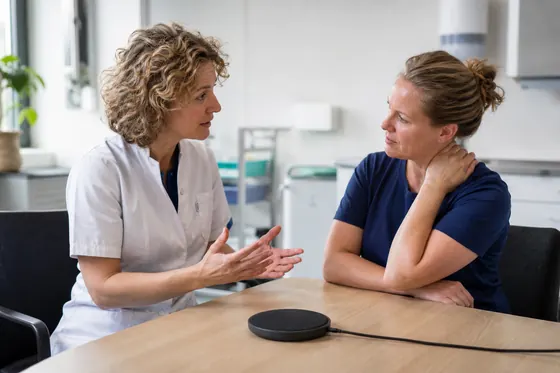
A structured report in your professional terminology
From care encounter to report
Hysio turns spoken information into a report. Choose the report format for the conversation you are documenting.
Document
Record the conversation and clearly state your own findings and agreed actions.
AI assistants
You stay in control of what gets saved.
In your workday
More attention for the conversation, less typing afterwards.
State relevant information, your own findings and agreed actions aloud so you can find them in your report.
The information appears under the headings of your chosen report format, so you can review each section.
Check names, facts and agreed actions. Edit the text where needed before using the report in your records.
Try it yourself
Try Hysio free for 14 days or schedule a personal demo.
For your team
Quick answer
Hysio organises occupational health nursing contacts into work context, observations, nursing analysis, agreements, visit findings and handover.
Intake, follow-up consultation, workplace or home visit and handover each have their own format. Hysio does not make a diagnosis, does not determine work incapacity or work capacity, and does not replace nursing assessment, medical supervision or professional escalation.
An occupational health nurse works at the intersection of health, work, prevention, safety and wellbeing. The contact can consist of history-taking, nursing observation, health education, support, a workplace visit or handover. Hysio can organise that information, but does not make a diagnosis and does not take over professional assessment. The occupational health nurse determines the content and the follow-up. After a consultation or workplace visit, you use voice-driven reporting to describe what you observed and measured; Hysio places it in the chosen format and you check the text. [1] [6] [2]
Support can be aimed at an individual employee, a team, an organisation or the work environment. The purpose and the data boundary differ per setting. Hysio can record the commissioning party, those present, the employee perspective and the organisational context separately. The occupational health nurse determines which information is needed and which feedback fits the assignment. [1] [6] [3]
Prevention has a central place within occupational health nursing: it focuses on recognising and influencing, at an early stage, the factors that can burden health and work. Work organisation, exposure, recovery, lifestyle or a safe work environment are addressed as soon as the assignment calls for it. Hysio can organise facts and agreements. The occupational health nurse makes the professional analysis and determines the preventive follow-up. [2] [6] [4]
A clinic appointment usually focuses on the conversation with the employee and their health and functioning. A workplace visit adds the actual task, environment, work organisation and risks present in that setting. In the Hysio set-up, each is given its own documentation format. What was observed and which interpretation or action is justified remains an assessment by the occupational health nurse. [1] [6] [9] [5]
Relevant information depends on the request for help and can consist of complaints as experienced, daily consequences, workload, observations, indicative measurements, interventions and the response to them. Note the source, the moment and the context. Hysio helps organise, but does not fill in missing medical information. The occupational health nurse determines what is needed for analysis, support or handover. [2] [6]
The employee describes their own experience, health and workload. The organisation can provide information about task, roster, work process or safety agreements. These perspectives are not interchangeable and are not automatically treated as medical facts. Hysio can show them side by side. The occupational health nurse weighs the sources within the professional assignment. [2] [6] [3]
No. Hysio can organise a nursing problem statement or analysis when the occupational health nurse has explicitly recorded it. The platform does not derive a diagnosis from complaints, measurements or workload. Nor does it determine incapacity for work or work capacity. The occupational health nurse checks whether the wording is professionally correct and moves on to consultation, referral or escalation as soon as that is needed. [4] [6] [5] [1]
State what was measured, with which method, by whom, when and under which circumstances. Place the outcome next to the observation and the question the measurement was taken for. Hysio does not calculate a risk or diagnosis from a value. The occupational health nurse assesses the quality, meaning and any follow-up action. [2] [6] [4]
Escalation comes into play when a signal falls outside the nursing assignment, may acutely affect safety or health, or a medical assessment is needed. Note the concrete signal, the source, the moment and the desired action. Hysio can mark this as an open item. The occupational health nurse determines the urgency and route. [4] [6] [2] [5] [1]
The occupational health nurse remains responsible for the accuracy of the observations, nursing analysis, interventions, signals and agreements in the report. Hysio organises the information provided and can set out a proposed text clearly. The platform does not take over any professional decision. The occupational health nurse checks the text, data boundary, recipient and status before it is saved. [5] [1] [6]
Hysio Occupational Health Nursing Intake suits a first or in-depth contact in which the assignment, data collection, workload, work organisation, observations and nursing problem statement are recorded. The plan and any escalation remain separately visible. Hysio does not make a diagnosis. The occupational health nurse assesses the information and determines which support or handover is appropriate. [7] [5] [2] [6]
The follow-up format shows what has changed since the previous contact, what the employee reports, which workload is involved, which interventions were carried out and what the effect was. New observations and the nursing evaluation get their own place. Hysio does not draw conclusions about employability. The occupational health nurse determines the plan and further follow-up. [8] [5] [2] [6]
This format is intended for situations where the assignment includes a workplace or home visit and the setting, those present, consent, task, environment and factual observations need to be recorded. Indicative measurements and professional interpretation remain recognisably separate. Hysio does not make a safety or health decision. The occupational health nurse determines which feedback and next step follow from the visit. [9] [5] [3] [6]
A handover describes the sender, recipient, purpose, data category, period, request for help, functioning, work context, findings, interventions, open signals and desired follow-up action. The document status makes clear whether the document is still a draft. Hysio does not send medical information on its own. The occupational health nurse checks authorisation, necessity and content before the handover. Before saving, mark which passage still needs checking by the responsible healthcare professional. [10] [5] [3] [6] [1]
Choose Intake for a first data collection, Follow-up Consultation for change and evaluation, Workplace & Home Visit for observation in the environment, and Handover for targeted information to an authorised recipient. The purpose of the contact and the consent are the deciding factors. Hysio helps choose the structure, but the occupational health nurse determines the professional and administrative context. [7] [5] [8] [9] [10]
The intake can place the reason, assignment, workload, work organisation, observations, measurements, problem statement, risks and plan side by side. This keeps visible which information was told by the employee and which was collected by the occupational health nurse. Hysio does not invent a missing value. The occupational health nurse adds the professional analysis and checks the status. [7] [5] [2] [6]
Describe which earlier agreement or situation serves as the reference, what has now been reported or observed differently and which intervention took place in between. State the date and source. Hysio can organise the comparison, but does not make a cause or effect plausible without professional interpretation. The occupational health nurse assesses the result and adjusts the plan where needed. [8] [5] [2] [6]
Note the purpose, consent, commissioning party, setting, those present, task, circumstances, observation method and any indicative measurement. Separate what was actually seen from the nursing interpretation and the advice. Hysio can keep to this order. The occupational health nurse checks whether the observations were actually made during the visit and which recipient may receive the feedback. [9] [5] [2] [6] [3]
Start with the open question and the period the handover covers. Add only relevant source information, the employee perspective, work context, observations, interventions and concrete signals. Mark what has not yet been assessed. Hysio can structure the document, but does not give a medical conclusion. The occupational health nurse determines the recipient, authorisation and desired action. [10] [5] [4] [6] [1]
Check identity, date, assignment, consent, source, observation, origin of measurements, nursing analysis, intervention, effect, escalation and recipient. Make sure a measurement is not read as a diagnosis or a work capacity decision. Hysio makes checkpoints visible. The occupational health nurse assesses the professional content and sets the correct document status. The structure supports checking, but does not shift responsibility for the content to Hysio. [5] [1] [2] [6] [4]
Include information that is necessary for the nursing assignment, support, evaluation or handover. Keep medical details, the employee's experience, work context and organisational information recognisably separate. Hysio can show source and purpose, but does not decide on its own what is necessary. The occupational health nurse checks the data category, access, retention purpose and professional relevance. [3] [6] [2]
An employer can only receive the information that is necessary and authorised for the agreed work purpose. Medical details and personal background do not automatically belong in employer-facing feedback. Hysio can structure a work-focused version, but does not filter on its own. The occupational health nurse checks the purpose, consent, recipient and wording. [3] [6] [4]
Record who gave consent, for what, on which date and which boundaries were agreed for the visit. Also name those present and the intended feedback. Hysio can place these details in the visit report, but does not replace valid consent. The occupational health nurse checks whether the observation and any handover stay within that consent. [3] [6] [5] [1]
Note who is asking for the details, for what purpose and which information is necessary. Do not share more than fits within the professional and privacy boundary. Hysio can record the request as an open item, but does not decide on disclosure. The occupational health nurse determines whether consultation with the occupational physician or another authorised healthcare professional is needed. [3] [6] [4]
An observation describes what was actually seen or measured in a particular setting. A handover selects relevant information for a recipient and names the desired action. That selection must not turn the observation into a medical conclusion. Hysio can structure both parts. The occupational health nurse authorises the handover and checks the data boundary. [2] [6] [3]
An employee, manager, prevention officer, treating professional or occupational health nurse can each make a different source contribution. Note the role, date and context for each contribution. Hysio can organise the source inventory, but does not make sources equivalent and does not assess reliability. The occupational health nurse determines which information is relevant for the nursing analysis. [2] [6]
Record the purpose, consent, those present and the boundaries of the observation in advance. Describe only what is relevant to the assignment and avoid details from the private sphere that have no professional meaning. Hysio can structure the selection, but does not guard the boundary on its own. The occupational health nurse checks the content and any feedback. [3] [6] [4]
The Professionele standaard (professional standard) calls for careful, traceable and responsible practice within the professional's own expertise and assignment. In the report, it helps to keep source, observation, nursing analysis, intervention, effect and follow-up apart. Hysio supports the structure. The occupational health nurse remains responsible for professional choices, quality and appropriate escalation. [2] [6] [5] [1]
First set out the purpose of the contact and the intended recipient. Then note only the information needed to answer the nursing question, support, evaluation or handover. Hysio can make irrelevant text visible for checking, but does not remove anything by itself. The occupational health nurse makes the final selection. Even when AI handles the admin, you decide in advance which purpose the report serves. [3] [6] [2]
No. Hysio does not send a handover on its own. It can make the purpose, data category, document status and desired action visible, but the occupational health nurse checks the content, consent and recipient before information is shared. A draft remains a draft until an authorised healthcare professional authorises it. With every handover, check again whether consent, authorisation, data selection and document status fit the recipient. [3] [6] [5] [1] [4]
The origin of a measurement makes clear who measured what, when, how and under which circumstances. Without that context, a value can be misinterpreted or used detached from the assignment. Hysio can place the details next to the outcome. The occupational health nurse assesses quality, meaning and any next step. [2] [6] [4]
An observation describes what was actually perceived during the contact or visit. The nursing analysis connects that observation to the request for help, context and professional problem statement. Hysio keeps both parts separate. The occupational health nurse determines whether the analysis is sufficiently substantiated and which intervention or escalation follows. [2] [4] [6]
Describe the concrete signal, the source, the location or situation, the moment and the possible meaning within the assignment. Do not use a heavier qualification than the observation supports. Hysio can mark the signal and the action owner. The occupational health nurse determines urgency, advice, consultation or escalation. Clear boundaries prevent a summary from carrying more meaning than the contact supports. [4] [6] [2] [5] [1]
Note relevant rosters, division of tasks, breaks, work pace, exposure, support and changes as they were discussed or observed. Keep organisational information separate from the employee's experience and medical details. Hysio can make the context clear. The occupational health nurse assesses which factor is relevant from a nursing perspective and which action fits within the assignment. [2] [6]
Record which intervention was carried out, when, for what purpose and how the employee or work environment responded to it. Make clear whether the effect was reported, observed or professionally assessed. Hysio can place those source roles side by side. The occupational health nurse determines whether continuation, adjustment, evaluation or referral is needed. [2] [6]
Note the complaint and the context without formulating a diagnosis yourself. Mark the question as a signal for the occupational physician or another authorised healthcare professional when the assignment calls for it. The occupational health nurse determines the urgency and records only their own nursing observation and interpretation. [4] [6] [5] [1]
Indicate which information was reported again by the employee, which observation is new, which measurement comes from the source and what the occupational health nurse assesses themselves. An earlier text does not automatically become a current finding. Hysio can place the date and source next to each part. The occupational health nurse checks how current it is. [2] [6]
A nursing problem statement describes the problem or risk from a nursing perspective, with the relevant context and substantiation. It is not the same as a medical diagnosis or a decision on incapacity for work. Hysio can place a stated problem statement under its own section. The occupational health nurse determines the wording, priority and plan. Check that the term does not suggest a medical or legal meaning that has not been assessed. [2] [4] [6]
Note the signal, the date, the healthcare professional consulted, the agreed action, the action owner and the moment of follow-up. Leave it open while no answer has been received. Hysio can organise these details. The occupational health nurse monitors the follow-up and decides when the signal has been dealt with. [2] [6] [5] [1]
Use concrete language for workload, observation, intervention and follow-up. Explain professional terms when another healthcare professional or recipient reads the document. Keep interpretation recognisable as professional interpretation and avoid absolute conclusions without a source. Hysio can make the structure and headings clear. The occupational health nurse checks meaning and tone. With voice-driven admin it helps to explain a professional term out loud straight away. [2] [6]
Describe the shift, the time, the task, the work organisation, the environment and what was actually observed during the visit. Add the employee perspective and any measurements separately. Hysio does not draw conclusions about health or safety. The occupational health nurse interprets the findings, notes advice and determines who picks up which action. [9] [5] [2] [6]
Record how the employee describes the fatigue, when it occurs, which tasks or shifts are related to it and which observations or agreements were mentioned. Avoid a medical explanation or judgement about employability. Hysio can organise the source and work context. The occupational health nurse assesses signals and determines any support or escalation. [2] [6] [4]
Note the working posture, task, aids, duration and circumstances as observed, without stating that they cause the complaint. Record any suggestion from the employee separately. Hysio can separate observation and nursing interpretation. The occupational health nurse determines whether health education, adjustment, further examination or consultation is needed. [2] [6] [4]
State what happened according to the source, when and where, which complaints or signals were reported, what was observed, which action has already been taken and which question remains open. Share only necessary information with the authorised recipient. Hysio organises the document. The occupational health nurse checks authorisation, urgency and follow-up. [10] [5] [3] [6] [2]
Place the dispute and the employee's perspective next to the original measurement method, circumstances and value. Do not draw conclusions about reliability without professional assessment. Hysio can mark the difference and the open question. The occupational health nurse determines whether repetition, explanation or consultation is needed. Check the origin before a reader could take the data as current or established. [2] [6] [5] [1]
Refer to the earlier agreement with its date, describe what was carried out and note the experienced or observed effect. Distinguish between an action that was not carried out and an action that was no longer needed. Hysio can structure the follow-up. The occupational health nurse determines the evaluation and any new action. [2] [6]
No. Hysio can organise signals about workload, health experience and progress when these have been recorded. The platform does not predict sickness absence, diagnosis or work capacity. The occupational health nurse assesses the nursing meaning and can, within the professional route, propose consultation or preventive action. The report structure can make a question visible, but does not fill in the missing professional assessment. [4] [6] [5] [1]
Agree which contact types you use, how observations and measurements are described, who checks handovers and which recipients may receive information. Test with an intake and a workplace visit, and check whether the employee's perspective, the organisational context and the nursing interpretation stay apart. Hysio provides the structure. The occupational health nurse decides on the local way of working and the final check. Then choose one type of contact to try AI reporting on first. [2] [6] [5] [1]
An occupational health nursing report records nursing data, observations, interventions, signals and follow-up within the nurse's own expertise. An occupational physician's report contains the medical assessment and advice of the occupational physician. Hysio can structure both professional roles separately. The platform does not draw a medical conclusion from nursing information. A recognisable role prevents confusion between support, examination, advice and decision-making. [1] [6] [4]
After a note has been recorded, responsibility does not shift to Hysio: the occupational health nurse remains responsible for the careful representation of the contact, the professional analysis, interventions and flagging. Hysio can organise the text and present a proposed text, but does not validate a diagnosis or advice. Before saving, check source, privacy, recipient and status; a handover also needs to be authorised by the competent healthcare professional. [5] [1] [3] [6] [4]
Hysio creates the report. You remain responsible for what you save in the record.