Document
Keep your attention on the care encounter.
Record the conversation and clearly state your own findings and agreed actions.
Hysio Wound and Stoma Care Nursing
Hysio organises wound and stoma consultations and intakes, covering wound assessment, stoma care and self-care.
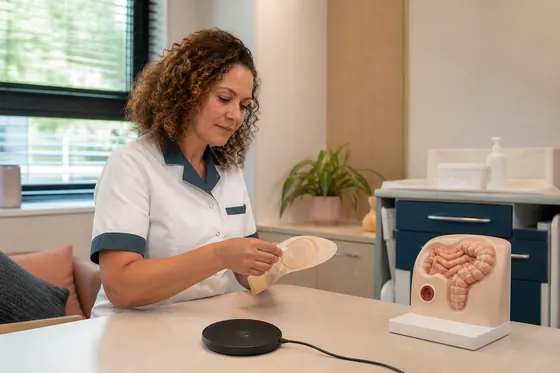
A structured report in your professional terminology
From care encounter to report
Hysio turns spoken information into a report. Choose the report format for the conversation you are documenting.
Document
Record the conversation and clearly state your own findings and agreed actions.
AI assistants
You stay in control of what gets saved.
In your workday
More attention for the conversation, less typing afterwards.
State relevant information, your own findings and agreed actions aloud so you can find them in your report.
The information appears under the headings of your chosen report format, so you can review each section.
Check names, facts and agreed actions. Edit the text where needed before using the report in your records.
Try it yourself
Try Hysio free for 14 days or schedule a personal demo.
For your team
Quick answer
Four documentation formats for the consultation, the intake, the wound status and the evaluation with handover.
Here is a brief overview of how Hysio writes up a wound or stoma consultation. You read every report back yourself, including the dimensions and materials.
The profile covers a Wound & Stoma Nursing Consultation, Wound & Stoma Intake, Wound Status & Procedure Report and Wound & Stoma Care Evaluation & Handover. They describe, respectively, a consultation, initial data collection, a current assessment with a procedure, and an evaluation with follow-up. Choose based on the purpose and the information available. A wound characteristic, a professional conclusion and a procedure carried out each stay separately recognisable. [3] [4] [5] [6]
The Consultation organises the reason for contact, observations, stated assessment, care provided and agreements from a single wound or stoma consultation. It can contain information about one or both domains when these were actually discussed. Hysio does not itself determine an infection status or a treatment choice. Check that the summary keeps a distinction between what someone reports, what you see and what was actually done. [3]
The intake brings together the referral, reason for care, history and the initial wound or stoma status with the nursing analysis and the discussed care plan. It does not constitute a later evaluation if none has taken place. Keep older information from a referral letter recognisable alongside current findings. Also check that any additional considerations are not presented as treatment that has already been discussed. [4]
This format describes a wound or stoma assessment narrated aloud and the care actually provided. It starts from the current status, without assuming a full history or a new care plan. State what you observe, measure and do, including the response you actually established. Hysio may not fill in missing wound characteristics or a procedure that was not stated. [5]
This format describes which findings were compared, how the care was professionally evaluated and which follow-up or handover was agreed. Older and current data keep their date. Hysio does not itself determine that a goal has been achieved and does not calculate a difference in measurements. Check whether a reported change rests on data actually provided and who takes on the follow-up. [6]
The consultation report fits a single discussion of the reason for contact, status, care and follow-up. The intake also gathers the initial history, reason for care and the discussed care plan in context. Not every contact with a new question is a full intake. Choose based on what actually took place and leave information that was not discussed open, even when a more extensive layout offers space for it. [3] [4]
A referral letter or earlier note keeps its source and date. The current wound or stoma status describes what was actually provided at the intake. Hysio may not automatically update old dimensions, materials or skin characteristics. Check whether a difference stays clearly visible and whether an older classification is not shown as an assessment made again today. [4]
Yes, when it concerns the current assessment and the care actually provided during that change. Record the observed status and the materials used insofar as you mention them. A proposed action is not yet a procedure. Check the description against the care moment; Hysio does not turn a brief status assessment into a full intake or treatment plan. [5]
For wound and stoma care nursing, Starter costs €20 per month, Pro €40 and Unlimited €80, excl. VAT. Pay per year and two months are free. The price does not differ per documentation format or per care moment. The wound and stoma care nurse assesses the source, observation and follow-up before reviewed text goes into the record in line with local agreements. [7]
Determine which information is needed for the wound or stoma consultation and follow your organisation's privacy agreements. Check who gets access to the reporting and which data are needed for a handover. Information that happens to be available does not automatically belong in every report. Hysio's Privacy Policy describes the processing roles and the agreements on data use. [9]
The Richtlijn Verpleegkundige en Verzorgende Verslaglegging (guideline on nursing and care documentation) is aimed at nurses, nurse specialists and carers. The framework is therefore not limited to one level of training or to wound care alone. Use it within your own expertise and your organisation's agreements. A fixed heading structure does not change the writer's authority or the required assessment of the care content. [12]
The guideline asks that the function level of the care professional deployed be matched to the complexity of the stoma care. It mentions uncomplicated stoma care from function level three IG. That is a statement about organising appropriate expertise, not a general permission for every procedure. Check authority, competence and task agreements separately and describe in the report what was actually carried out. [14]
The Richtlijn Stomazorg Nederland makes a deliberate distinction in how it refers to the person. For the clinical phase before and after surgery, the guideline uses "patient"; after discharge from hospital, it uses "stomadrager" (person with a stoma). That choice was discussed with the Nederlandse Stomavereniging. The term here is therefore linked to the phase of care and is not simply a random alternation of words. [14]
The area of expertise describes additional knowledge and skills for wound care, including observation, treatment, aftercare and collaboration with other disciplines. The patient and informal carer are important parties involved. This is a professional framework, not an automatic treatment plan for every wound. In a report, therefore, keep visible which contribution comes from you, which information was reported and which advice was given by another discipline. [20]
The Richtlijn Decubitus connects risk assessment with the professional assessment and the care that follows. Describe the relevant findings and the measures actually chosen, so that the connection in the care plan stays visible. Hysio may not fill in a risk category or intervention that was not provided. A general reference to a guideline does not replace the assessment of the individual situation. [16]
Wound care takes place in different settings, including hospital, wound expertise centre and home care. As a result, several people involved may record information about the same wound. At a transition, keep clear which status is current, who made a treatment agreement and who carries out the follow-up. An earlier note is not automatically the current instruction; check what is actually relevant and confirmed for the recipient. [20]
In wound care, different disciplines can work together, for example around a diabetic foot. The area of expertise describes that collaboration as part of the profession. State in the reporting who carried out an examination, gave an assessment or offered advice. A team meeting does not turn all contributions into your own findings. Also check whether a proposed follow-up was actually agreed with the discipline involved. [20]
The guideline consulted mentions a check-up two weeks after discharge, then every six weeks in the first three months, then every six months, and yearly from the second year onwards. That is the schedule from the source. An individual report must show which check-up was actually agreed; mentioning a guideline schedule does not mean that the appointment has already been made with the person with a stoma. [14] [15]
When you write yourself, you record the wound or stoma data directly. When you dictate, you first have the verbally provided information organised and then review the result; that is voice-driven admin in practice. Compare whether observation, measured value, professional assessment and procedure stay clearly distinct. Also include correction time; a faster first report is only useful when the content is correct. [10]
You can use Hysio free for two weeks. Take a fictional wound or stoma consultation and see whether findings, explanation and agreements stay clearly apart. Check the platform's current options and review the result yourself. In a trial account you can also use the documentation formats for wound and stoma care nursing. [8]
The profession-wide Richtlijn Verpleegkundige en Verzorgende Verslaglegging forms a basis for the record, alongside the specific wound and stoma care sources. It describes documentation as part of the nursing process. Make sure that data collection, care problem, goals, interventions and evaluation can be followed together. A single consultation note does not need to repeat that entire history, but it must connect with it carefully. [12]
Check the publication, version and any revision information with the issuing professional organisation. A planned revision date is no proof that a new version has already been published or that the old text continues to apply unchanged. Use the applicable recommendation alongside your organisation's agreements. When making a content-related reference, state which source you actually consulted. [12] [13]
The Richtlijn Stomazorg Nederland cited here is the revision from November 2018. For a current care question, also use the V&VN information on revisions and any successors. A year next to a source is no confirmation that every passage still applies unchanged. Therefore check which recommendation applies before you link a guideline reference to a specific care agreement. [14]
Describe which nursing problem or support need is central. The documentation guideline uses several related terms for this, including client problem and nursing diagnosis. Choose the term that fits your record and use it consistently. Make clear what the wording is based on and keep the problem separate from the desired outcome, the intervention and a single observation. [12]
The guideline describes a process-oriented structure and does not prescribe a generally mandatory acronym-based format for every wound or stoma report. Data collection, care problem, goals, interventions, evaluation and handover must be recognisably connected in the record. Choose the format that fits your work context. In doing so, keep a subjective report, objective observation and relevant context apart, even when they are in the same note. [12] [13]
The quality standard uses these categories to distinguish how wound care is organised. Categories I and II concern basic wound care; categories III and IV specialised wound care. It is not an automatic description of tissue or pressure ulcer category. Only adopt a professionally determined category and keep its source recognisable. Hysio does not derive that classification independently from a wound description. [17] [18]
The Richtlijn Stomazorg is structured around phases such as preparation, the period after surgery, discharge and aftercare. That structure helps link information to the right care moment. An observation during preparation, for example, is not a current finding at discharge. Use the structure to keep the report clear, with recognisable findings and agreements for each phase. [14]
The Richtlijn Decubitus consulted contains a separate appendix with indicators, from page 168. Consult the appendix for the exact description and application of an indicator. The existence of that appendix says nothing in itself about the assessment of an individual wound. Therefore keep the description of the wound and accountability through a quality indicator recognisably separate from each other. [16]
Carefully review the wound or stoma status, measurement date and procedure carried out before you use text in the record. Follow your organisation's transfer route and check which integrations are actually available. The existence of a report does not mean it is already in the right place in the record. After transfer, check whether the checked version and the right care moment are recognisable. [11] [10]
Before use, check whether the wound or stoma findings, measurement data and explanation given match the contact. Make sure that information from the client is not shown as your own examination finding. Also review the agreed follow-up and correct inaccurate passages. With voice-driven reporting, you approve the report yourself; Hysio does not determine a wound classification or treatment choice. [10]
No. For basic wound care, the quality standard describes expected, largely uncomplicated healing within three weeks, with attention to the situation and underlying condition. That is not an individual guarantee and no reason to ignore a deterioration. The report should contain the actual findings and the professionally agreed follow-up; Hysio does not set its own healing period or referral moment. [18]
State the moment of measurement, the method and unit insofar as these were provided. An earlier measurement stays with its own assessment. Hysio does not calculate an area or percentage change and does not silently treat different measurement methods as equal. Check the circumstances before you use a comparison and keep a professional conclusion about the course separate from the individual measured values. [5] [6]
The pressure ulcer guideline does not designate any single risk assessment instrument as generally superior. The choice must fit the setting and the professional assessment. With a recorded score, state which instrument and moment of measurement were used, so that the outcome can be understood. A score without that context is not readily comparable with another measurement and does not replace the assessment of the situation. [16]
The Richtlijn Stomazorg mentions SACS for describing and diagnosing a peristomal skin problem; a comparable validated scale can also be used. State in the reporting which instrument was applied and which assessment you actually made. A standalone description of redness or irritation is not automatically a SACS classification. Do not retrospectively fill in an assessment that was not carried out. [14]
No. The health and care information model (zorginformatiebouwsteen) Wond describes structured data, such as location, dimensions and wound characteristics, with accompanying definitions. Running text can mention the same topics without technically conforming to that model. Check your organisation's exchange route and agreements separately. The presence of a field name or a readable Hysio report does not prove an automatic record integration or validated data exchange. [19]
The intake describes the starting situation and the discussed care plan. The evaluation looks at what was actually compared and assessed during a later contact, with the agreed follow-up. A baseline measurement is not in itself an evaluation. The contact determines the appropriate report structure; check that an old situation and a current finding keep their own date. [4] [6]
A report of pain describes what the client indicates; a wound observation describes what you observe. Hysio may not form its own judgement on infection from colour, odour or pain. Only mention a professional assessment when it was actually stated. Also check the summary, so that the personal experience does not turn into a measured finding or a conclusion that no one has drawn. [3]
Any additional consideration is kept separate from the factual data and the discussed care plan. It calls for assessment by the wound or stoma nurse. Hysio may not present that input of its own as a treatment, classification or agreement that has already been determined. Always check which passage rests on the conversation and which point first needs further consideration or verification. [4]
Correct a discrepancy on the basis of the original wound assessment or stoma description. Check, for example, location, dimension, unit of measurement and whether a procedure was actually carried out. Then also review the summary and evaluation, because the same error can carry through there. Do not add a new classification while correcting. For a record note that has already been transferred, your organisation's agreements on amendments apply. [10]
An unclear dimension, material name or action may not be filled in based on expectation. Look up the original passage or ask the nurse who carried out the assessment for clarification. With voice-driven reporting, you keep visible what is still unknown. After adding information, check whether it belongs to this wound or stoma and to the right moment of measurement. [10]
The bottleneck analysis accompanying the documentation guideline describes that records do not always connect well with the nursing process and that poor alignment can lead to duplicate recording. That is an organisational issue alongside writing a note. Investigate where information is recorded again and why. A report written faster does not automatically solve missing exchange agreements or duplicate work. [12]
The Richtlijn Stomazorg also covers the organisation of care, including a sufficient number of trained nurses. That calls for agreements at organisational level. The individual stoma report describes the care given to a patient and does not prove that staffing or training across the whole organisation is in order. Therefore keep organisational accountability separate from the findings and agreements from an individual consultation. [14]
Only include a characteristic as a current finding when it was actually provided for this moment. Hysio may not automatically repeat an old wound edge, odour or dimension because a change seems unlikely. An earlier note can be recognisable background. Check that the status describes what has now been observed and that data not reassessed do not appear to be current. [5]
Describe which explanation was given, what the patient told or showed you themselves and how you assessed it. Giving an explanation does not prove that someone carries out the care independently. Hysio does not determine a goal status on the basis of a plausible development. Check which skill was actually evaluated and which follow-up still needs to be discussed or practised. [6]
Yes, when both domains were actually discussed in the consultation. The wound observations and stoma observations then stay separately recognisable. A consultation about a wound alone does not need to include a stoma status. Hysio does not fill a missing domain with normal findings. Check that the layout matches the content provided and does not suggest more care or examination than took place. [3]
A diagnosis, earlier advice on materials or an old wound measurement from the referral keeps a source label and date. Your own data collection sits recognisably alongside it. Hysio may not present an older instruction as a new agreement or fill in a missing history. When doing the analysis and care plan, check which information is current and what still needs to be clarified with the right person involved. [4]
No. Discussing, advising, planning and actually carrying out are different statuses. The procedure report only states what was actually provided about the performance and the response to it. Hysio does not assume an action because it could suit the wound. Check that the materials used, the procedure and the follow-up match what was really done and agreed during this care moment. [5]
No. The documentation format keeps the stated previous and current status and the professional evaluation. Hysio does not calculate a difference, does not establish healing and does not decide independently that a goal has been achieved. Any additional suggestion remains limited to evaluation measures, measurement conditions or repeat measurements. Check the source of every conclusion and keep a planned follow-up measurement separate from an existing result. [6]
Choose comparable wound or stoma consultations and measure the time for recording, checking, editing and use in the record. Also look at whether measurement data and procedures are shown correctly and how much correction that required. Different types of consultations are not comparable without qualification. Assess your own results over several moments and do not translate a general figure on administrative burden into a guaranteed personal time saving. [10]
Start with fictional examples of a wound status and a stoma consultation, with explicit dimensions, care actions and agreements. Check together that Hysio does not add a classification or a performed action of its own. Agree the privacy and record-keeping approach in advance and see which options are available. Wider use follows your organisation's agreements, including who assesses the final text. [10] [9]
Hysio creates the report. You remain responsible for what you save in the record.