Document
Keep your attention on the care encounter.
Record the conversation and clearly state your own findings and agreed actions.
Hysio Sports Medicine
After a sports medicine consultation or exercise test, you say how the injury happened and what you measured. Hysio keeps sports history, test and return plan separate.
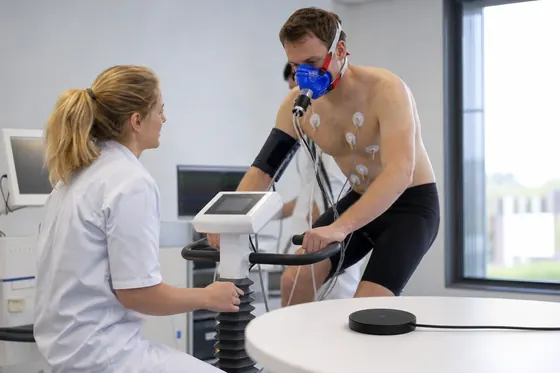
A structured report in your professional terminology
From care encounter to report
Hysio turns spoken information into a report. Choose the report format for the conversation you are documenting.
Document
Record the conversation and clearly state your own findings and agreed actions.
AI assistants
You stay in control of what gets saved.
In your workday
More attention for the conversation, less typing afterwards.
State relevant information, your own findings and agreed actions aloud so you can find them in your report.
The information appears under the headings of your chosen report format, so you can review each section.
Check names, facts and agreed actions. Edit the text where needed before using the report in your records.
Try it yourself
Try Hysio free for 14 days or schedule a personal demo.
For your team
Quick answer
For sports injuries and exercise, with a dedicated place for sports history, training load, test result and return to sport.
A sports medicine consultation, an exercise test or an evaluation after an injury: read how Hysio organises the report. The answers follow the six documentation formats of sports medicine.
The Sports Medicine Intake and Exercise Capacity Assessment fits a first conversation, the Sports Medicine Consultation a follow-up encounter and Sports Medicine Exercise Testing the completed test. For the presenting question, the type of encounter and the injury mechanism determine the appropriate report structure. A first consultation calls for different emphases than an exercise test or evaluation. Record the sports history and training load in the words of the source and state where the exercise test comes from. This keeps it clear which information is relevant to the intended return to sport. [2] [3] [4] [5] [6] [7] [1] [13]
Put training load and the injury mechanism under fixed headings, so you can quickly find the sports history within the return to sport. Place the injury mechanism next to the exercise test and keep sports load together with its origin. Also record how and when the training load was discussed, so the source stays recognisable for each part of the record. [2] [1] [12]
Let the exercise test follow the route your medical record system already uses, instead of inventing a new format. Record training load and the injury mechanism with the available origin, and check the sports history and the source before you save the return to sport for good. You only assess sports load after that check. [12] [1] [2]
Limit the note on training load to what this specific encounter needs, and record the basis for sharing information about the injury mechanism separately. Link the exercise test to the sports history and the encounter, while sports load remains your own assessment. Beyond that, write down only what the source states about the return to sport, and share nothing without that explicit consent. [10] [15] [1]
The price of Hysio for a sports physician is on the central pricing page and does not change by topic, not even for sports history or return to sport. You pay for the same plan, whether you mainly document consultations, exercise tests or injury examinations. A free trial first shows whether the layout fits the way you keep records, before you choose a plan. [8] [9]
Sometimes your own template for the injury mechanism fits better than Hysio's standard format; in that case, compare both side by side and keep the exercise test traceable to the source. Record the sports history next to training load and only assess sports load if this encounter actually supports it. Describe the injury mechanism first and then connect it to the rest of the record. [1] [12] [13]
Read back the report on the sports history alongside the dictation and check whether the training load described appears in it. Compare the injury mechanism and the exercise test with their original notes. A fixed documentation format does not automatically make the return to sport correct. If something differs, correct the text or record the uncertainty, so a colleague can trace the sports load back to the right encounter. [1] [13] [11]
When documenting an exercise test, focus on the client first and only then on the system. Check the sports history before you finalise the note on the return to sport, and record training load and the injury mechanism with their available origin. You only assess sports load after that check, so the encounter takes precedence over the format. [1] [2] [12]
The difference lies in the division of roles: Hysio organises the training load and links it to the source, while you assess the injury mechanism and decide what is useful for the return to sport. Link the exercise test to the sports history and the encounter, and let sports load remain your own assessment. In doing so, write only what the source states. [1] [2] [12]
Start the sports history with one recognisable encounter and only expand after that. Agree in advance who checks the training load, before you use the approach more widely for return to sport. Record the injury mechanism and the exercise test with their origin and assess sports load separately within that first encounter, before you scale up further. [9] [10] [1]
Yes. In a follow-up encounter, the Sports Medicine Consultation brings training load, injury mechanism and next steps together. Saving the return to sport does wait for your check. Also record the exercise test and sports history with the available origin and check the text about sports load before saving. [2] [1] [13]
Yes, the Sports Medicine Intake and Load Capacity Analysis organises the sports history, training load and initial load capacity, and so fits a sports medicine consultation or a first exercise test. With voice-driven reporting you link the injury mechanism to the exercise test; how much load the athlete can take, you assess yourself. Record the sports history next to training load and write only what the source states. [3] [1] [13]
Yes, Sports Medicine Exercise Testing organises the exercise test itself with findings and next steps, which makes it suitable for a sports medicine evaluation. Record the injury mechanism and sports history with their origin and only assess load capacity within sports load and recovery. You describe training load in the athlete's words, next to the outcome of the test. [4] [1] [13]
Yes. After an injury, the Injury Examination organises the reason, findings and next steps around the injury mechanism. The format also brings the sports history, training load and the encounter follow-up together; saving the return to sport waits for your check. Record the exercise test next to sports load. [5] [1] [13]
Yes, the Sports Medicine Return-to-Sport Evaluation fits the moment when return to sport becomes concrete: it links the exercise test and sports history to the training level reached. Within sports load and recovery, you record training load next to the injury mechanism; in doing so, write only what the source states. Saving waits for your check, as does the final clearance for training. [6] [1] [13]
Yes, the Sports Medicine SOAP Note organises Subjective, Objective, Evaluation and Plan, and so fits a short follow-up encounter within an ongoing sports medicine episode. For the mixed source, the format brings training load, the injury mechanism and the encounter follow-up together. Record the sports history and exercise test with their origin and assess sports load separately. [7] [1] [13]
The appropriate report structure follows the injury mechanism of this specific encounter: a consultation for a follow-up encounter, exercise testing for the test itself, and the return-to-sport evaluation for the final stage. Record the sports history next to training load and only assess sports load if this encounter supports it. Work from the injury mechanism. [1] [2] [13]
Choose an intake when the sports history describes the starting point of the encounter; use a follow-up report as soon as training load shows what has changed within the return to sport. Record the injury mechanism and the exercise test with the available origin and check the text about sports load before saving. This keeps each follow-up encounter linked to the right starting point. [1] [2] [13]
In the note, describe the reason, the procedure and the findings, and do not add unnecessary technical test details that the source does not state. Link training load to the injury mechanism and the encounter, while sports load remains your own assessment. Record the sports history next to the exercise test and write only what the source states. [1] [2] [13]
A handover about training load names the source, the recipient and the concrete agreement for the next steps. Check consent before you share data about the return to sport. Put the exercise test and sports history in the report with their origin and only describe the injury mechanism as far as the next steps require. The recipient must be able to see what is source data and what is still being assessed by the sports physician. [1] [2] [13]
Describe the presenting question and the course based on what was said during the encounter. Only add training load when it was actually discussed in the sports history, the exercise test or the evaluation. Record the injury mechanism and the sports load with their own origin. The sports physician can then assess what this means for the return to sport, without the report adding facts that the source does not support. [1] [13]
Record who provided the sports history and keep that separate from your own observation, so the training load stays traceable within the return to sport. For the source role, record the injury mechanism and the exercise test with the available origin; check the text about sports load before saving. Then connect the sports history to the rest of the record, so the origin is never lost. [1] [15] [13]
For a measurement during injury assessment, record which instrument you used, in which unit and at what moment you measured. Put the measured value next to the source and describe no more than what was established during the encounter. The exercise test and training load get their own origin. You decide how the outcome is used within the sports medicine assessment, while the sports history and return to sport stay clearly separate. [1] [13]
Link the result of an exercise test to the time of measurement, the method used and the source that provided the value. Also describe which sports load was discussed in the encounter. The sports physician assesses the meaning of the result and decides the next steps; Hysio does not prescribe any training advice or medical conclusion. [1] [13] [15]
No, Hysio does incorporate a report provided on the exercise test, but does not itself assess images for the injury mechanism; the source always takes precedence. Record training load next to the injury mechanism and assess the sports history separately. Write only what the source states about the return to sport, without adding any interpretation of its own. [12] [11] [13]
Use the professional terms that are common within your own team and record abbreviations explicitly, so colleagues can read the training load unambiguously within the return to sport. Record the exercise test and sports history with their origin and assess the injury mechanism separately. Describe training load in the words of the source, even when they sound informal. [1] [13]
For information about return to sport, record who the source is: the client, a relative or a referrer. Keep that statement separate from your own observation and record consent for sharing training load separately. Only link the sports history and the injury mechanism when the source supports it. The exercise test and sports load stay traceable to whoever provided them. [1] [15] [13]
Make visible which discipline provided the injury mechanism and who takes up the next steps, and keep the exercise test understandable for the whole team within the return to sport. Put the sports history next to training load and keep sports load together with its origin. Also record how the injury mechanism was discussed, so every discipline reads the same state of affairs. [1] [2] [15]
A good example shows the real encounter, the sports history and the next steps, without inventing a diagnosis around the return to sport. Record the injury mechanism and the exercise test with their origin and check the text about sports load before saving. Describe the sports history in the words of the source, next to the training load. [1] [13] [2]
Limit a handover about the exercise test to the source, the purpose and the information the recipient needs. Record which sports history and training load it is based on and keep the injury mechanism separate when the next steps do not need it. The recipient must be able to reconstruct the return to sport without your own assessment being presented as source data. [12] [10] [15] [13]
No, Hysio organises the exercise test, but does not itself make a diagnosis or set an indication. You determine that meaning as a sports physician, as your own professional responsibility and not as a suggestion from Hysio. Put training load next to the injury mechanism and keep the sports history together with its origin. Also record how the sports load was discussed during the encounter. [11] [1] [13]
You check the training load before saving: you choose the record content yourself and assess what is correct, and Hysio does not take over that professional decision around return to sport. Record the exercise test and sports history with the available origin and check the text about the injury mechanism before saving. Describe the training load in the words of the source. [1] [11] [15]
Mark explicitly that the return to sport is still missing or has not been discussed, and do not add any date, value or conclusion yourself that the source does not provide. For the missing item, record the injury mechanism next to the exercise test within sports load and recovery; only assess sports load if this encounter supports it. Record training load next to the sports history, so a later reader can follow the gap for themselves. [1] [11] [13]
No, do not use Hysio to triage an acute injury mechanism. Do the acute assessment first, and only then document the exercise test, tied to the source. Record the sports history and training load with their origin and assess sports load separately. Describe the injury mechanism in the words of the source, next to the exercise test. [11] [10] [13]
First check the purpose, the consent and the recipient before you share information about the sports history, and then record only what was actually agreed within the return to sport. For the consent, record the injury mechanism and the exercise test with the available origin; check the text about sports load before saving. Work from the sports history and only expand later. [10] [15] [1]
No, Hysio puts the exercise test clearly under a heading, but does not itself choose a treatment or operation based on the sports history. That decision and the monitoring of the return to sport stay with you as a sports physician. Put training load next to the injury mechanism and keep the sports history together with its origin, as a fixed part of your own record. [11] [12] [13]
Keep doubt about the training load visible and do not make the injury mechanism more definite than the source allows; simply record the open question as such within the return to sport. Always state the origin with the exercise test and sports history. With voice-driven admin too, that uncertainty stays, so a colleague can see where the source gave no certainty. [1] [13] [11]
Keep both readings side by side when sources differ about the sports history, and record their origin first before you make your own assessment of the return to sport. For the different sources, record the injury mechanism next to the exercise test within sports load and recovery; only assess sports load if this encounter supports it. Record the sports history next to training load, so a later reader can follow the difference for themselves. [1] [15] [13]
Separate medication data from your own assessment and record the source, date and context for each item. An exercise test only gets a place when the source states the examination and the result. The sports physician determines the professional meaning and the next steps, while Hysio keeps the recorded information clearly apart. [1] [13] [11]
Put the sports history next to the source and the date once more. If the training load is not right, correct it before you save. For the final check, record the injury mechanism and exercise test with the available origin; check the text about sports load before saving. That last look is always the sports physician's. [1] [10] [11] [15]
Before a handover, agree who reads the text on the sports history and decide which information about the training load is needed. Put the next steps separately, so the recipient recognises them straight away within the return to sport. For the team handover, record the injury mechanism next to the exercise test within sports load and recovery; only assess sports load if this encounter supports it. [12] [10] [15] [2]
As a team, agree on fixed headings for the exercise test and shared terms for the sports history, and record who ultimately approves the return to sport. Record training load and the injury mechanism with their origin and assess sports load separately. Describe the exercise test in the words of the source, next to the sports history. [1] [2] [12]
First test working with training load in one clearly defined encounter and collect the corrections to the injury mechanism that turn out to be needed; only expand once the representation of return to sport is correct. Put the exercise test next to the sports history and only then scale voice-driven reporting up to the whole team. [9] [10] [1]
Check the sports history against the local headings your team uses and the training load against the authorisations that apply, and have a designated colleague check the return to sport before you save. Put the injury mechanism next to the exercise test and keep sports load together with its origin, so the local agreement takes precedence over a generic template. [12] [1] [13]
Say how the injury happened: the movement, the sport and the load at that moment. Hysio puts that with the sports history, separate from your examination and the training load. Anything the athlete no longer remembers stays open. You check the text before you save. [1] [13] [2]
With the sports history, also count the time for reviewing and correcting. A safe return to sport comes before any promised time percentage. For the time measurement, put the injury mechanism next to the exercise test within sports load and recovery; only assess sports load if this contact supports it. Speed is not a goal here. [1] [12] [9]
Before a trial, first read Hysio's central conditions and agree who checks the sports history. Use the trial to assess whether training load and the exercise test are retrieved carefully, not to have a sports medicine conclusion filled in. Discuss corrections with the team and only then record which way of working for return to sport will be continued. [9] [8] [10]
The central pricing page contains the Hysio plans and the conditions of the free trial. The legal pages explain how data is used. Neither training load nor return to sport has a separate plan price. When assessing Hysio, distinguish between those platform agreements and your sports medicine work: you check the report content and determine the meaning of measurements, observations and agreed follow-up arrangements. [8] [10] [11]
Agree with your team how you name the sports history, sports load and injury mechanism. Choose fixed spellings for abbreviations and write a term out in full when another discipline is reading along. Use the same agreement for the exercise test and the training load. This keeps the report understandable during a handover and lets everyone link the decision on return to sport to the right source. [1] [12] [13]
First divide a complex case into the presenting question, sports history, examination and next steps. Record the exercise test and the injury mechanism with the encounter they relate to and do not add any conclusion of your own to data from the source. Also record which training load was discussed. The sports physician assesses the meaning for the return to sport; the documentation format mainly helps the team find the origin again. [1] [13] [2] [11]
Hysio creates the report. You remain responsible for what you save in the record.