Document
Keep your attention on the care encounter.
Record the conversation and clearly state your own findings and agreed actions.
Hysio Orthopaedics
Hysio organises the orthopaedic consultation, the imaging review and the postoperative follow-up around fractures, joint function, weight-bearing and the agreed next steps.
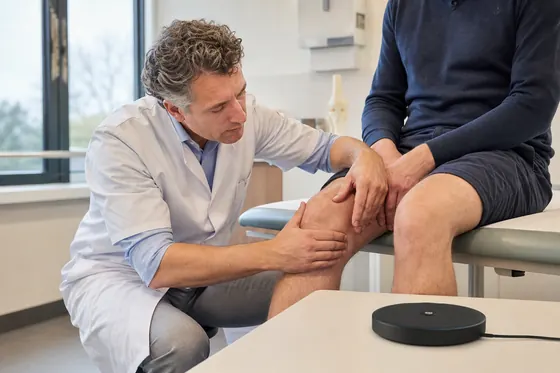
A structured report in your professional terminology
From care encounter to report
Hysio turns spoken information into a report. Choose the report format for the conversation you are documenting.
Document
Record the conversation and clearly state your own findings and agreed actions.
AI assistants
You stay in control of what gets saved.
In your workday
More attention for the conversation, less typing afterwards.
State relevant information, your own findings and agreed actions aloud so you can find them in your report.
The information appears under the headings of your chosen report format, so you can review each section.
Check names, facts and agreed actions. Edit the text where needed before using the report in your records.
Try it yourself
Try Hysio free for 14 days or schedule a personal demo.
For your team
Quick answer
A profession-specific structure for conditions and injuries of the musculoskeletal system, with a separate place for the history, physical examination, imaging provided, weight-bearing and the agreed next steps.
In an orthopaedic consultation, a preoperative assessment, an imaging review or a check-up after surgery: here you can read how Hysio supports you. The answers follow the documentation formats and sources of orthopaedics.
The moment of contact determines the appropriate report structure, not the topic. If the fracture comes up for the first time, the Orthopaedic Intake carries the presenting question, the mechanism of injury and the medical history. If it concerns an ongoing course of care, the Orthopaedic Consultation fits. If surgery has already taken place, the course belongs in the Orthopaedic Postoperative Follow-up. The format carries over the fracture details themselves, including the side and the classification mentioned, exactly as the source gives them. [2] [3] [4] [5] [6] [1] [12]
Keep two layers apart. Under physical examination are the measurable findings: range of motion per joint, stability and provocation tests, swelling and tenderness, left next to right. Under plan is the weight-bearing you agreed: weight-bearing or not, partial weight-bearing with the stated weight, the walking aid and the time frame. Hysio puts these two under fixed headings, so a colleague at the next follow-up can see what was measured and what was agreed. [2] [1] [11]
An operative report follows a fixed order: identification, date, surgeon and others present, indication, then the report itself with positioning, side of surgery, incision, intraoperative findings, procedure, materials used, blood loss, complications and closure, and finally the postoperative conclusion and aftercare. Hysio organises your dictation in that order. The size, brand, type and batch code of an implant and the side of surgery are carried over verbatim, without additions and without corrections. [11] [1] [2]
In the joint examination, note what this encounter needs: the joints tested, the finding and the date. Work or personal circumstances only go into the record if the patient mentions them and they affect the plan. You record consent to share examination data with a referrer, an occupational physician or family separately. Hysio never infers that consent from the conversation, and what is not in the source does not go into the report. [9] [12] [1]
Hysio charges a subscription per healthcare professional. There is no separate rate per documentation format and no surcharge for documenting an X-ray, CT or MRI result that you discuss during the encounter. The current prices, the number of sessions per plan, the team discount and the yearly arrangement are on the pricing page; that page takes precedence. The subscription does not change the boundaries: assessing the image remains the work of the orthopaedic surgeon. [7] [8]
A custom template is justifiable when your department organises fracture details differently from the standard format, for example with a fixed heading for classification and side or with a local order for reduction, cast and follow-up appointment. First check which fields you actually miss in the Hysio format. If nothing is missing, a custom route mainly adds maintenance. If the local agreement does differ, record who manages the template and who reviews it. [1] [11] [12]
Check the weight-bearing instructions against your dictation and the documents provided. Pay attention to the figures: the permitted weight, the duration, the side and the date on which the agreement takes effect. If one of those four does not match, the rest of the paragraph is also suspect. A fixed structure makes a report readable, not automatically correct. That check remains a task for the orthopaedic surgeon, before the text goes into the record. [1] [12] [10]
The operative report is written in the third person and is not a conversation report; it is not the text you go through with the patient. What the patient does need to hear is the plan: the permitted weight-bearing, wound care, the follow-up appointment and the warning signs for which they should get in touch sooner. Record that separately, in plain language. Because you do not have to type during the encounter, you keep eye contact and your words are organised afterwards. [1] [2] [11]
Hysio writes the joint examination in the order of the specialty: per joint, left next to right, with range of motion, stability and provocation tests under their own headings, and the imaging discussed separately under additional investigations. What Hysio deliberately does not do is weigh the finding: which test is decisive and what that means for the indication is decided by the orthopaedic surgeon. [1] [2] [11]
Start small: one type of encounter, for example the results consultation after a knee or hip X-ray. Agree in advance how you name a result that was provided, whether you copy the radiologist's report text verbatim and who reviews the report before it goes into the record. Only expand once those three agreements are in place. That way it stays visible which part comes from the result provided and which part is your own assessment. [8] [9] [1]
The Orthopaedic Consultation is the format for an outpatient follow-up encounter. The report runs from the reason for the visit and the referral, via medical history, active diagnoses and the history of the presenting complaint, to physical examination, additional investigations, conclusion, considerations and plan. Everything under those headings comes from the source: Hysio adds no clinical synthesis of its own and puts no advice section under the report. With voice-driven reporting, the conclusion contains only what you stated. [2] [1] [12]
The Orthopaedic Intake fits a first encounter or a new referral. Besides the usual headings, this format makes room for the social history and for the patient's expectations, because around joint surgery these affect the plan. As its only own contribution, the intake has an optional closing section in which a question that was not asked or a conflict between sources may appear as a suggestion. Medication, an interpretation or a plan of its own never goes in there. [3] [1] [12]
This format belongs to the encounter in which you examine the patient yourself and then discuss existing imaging information. The report separates the examination performed from the orthopaedic findings and places the imaging discussed under additional investigations, with the date and the person who discussed it. Hysio does not assess images and draws no radiological conclusion: you state the finding, the conclusion and the plan, and the format records them. [4] [1] [12]
The Orthopaedic Postoperative Follow-up tracks the course after the procedure: wound healing, pain, function and the range of motion you measure, alongside the weight-bearing permitted at that time. The procedure itself is not described again; the operative report remains the source for that. An optional closing section with a verifiable question may appear under the report. You note complications as they occurred, without weighing or classifying them. [5] [1] [12]
The Orthopaedic SOAP Note organises a short encounter in four parts: subjective, what the patient tells you; objective, what you measure; assessment, how you weigh that; and plan, what you agree. That fits a telephone consultation, a short follow-up or a question in between. The assessment line carries your judgement; Hysio does not fill it in itself and adds no synthesis of its own. The subjective layer stays in the patient's own words. [6] [1] [12]
That depends on the encounter, not on the result. If you discuss the X-ray in a planned results consultation, Orthopaedic Examination and Imaging Review fits. If the result comes up in a regular follow-up encounter, the Orthopaedic Consultation remains the format and the result goes under additional investigations. If it is a follow-up after a procedure, it belongs in the Postoperative Follow-up. The result text itself does not change. [1] [2] [12]
You choose an intake for a first encounter or for a new injury to another joint, even if the patient is already known to you. The mechanism of injury, the time, the initial care elsewhere and the medical history then belong in the report. If it concerns the same fracture you saw before, a follow-up encounter is the right format: it shows the difference from last time instead of the starting point. [1] [2] [12]
After a results consultation, four things belong with the weight-bearing: how much weight is permitted on the leg or arm, how long that restriction applies, which aid you advised and what the patient said about it. Do not add surgical details that were not discussed in this encounter. You note the rationale, for example the union on the follow-up X-ray, as a result provided and not as your own finding. [1] [2] [12]
A message to the GP or a colleague needs a compact summary: the indication, the procedure performed with the side, the materials used as they appear in the operative report, the course, any complications and the aftercare with the follow-up appointment. You do not send the full report as standard. Make it visible who wrote the message, who it is intended for and what was agreed with the patient. [1] [2] [12]
Keep four layers apart: what the patient tells you, what you examined yourself, what someone else provided and what you make of it. For the joint examination, that concretely means your own measurement under physical examination, and the physiotherapy report or the report text for the X-ray under additional investigations, with source and date. Hysio records that origin, so nobody later confuses your measurement with someone else's. [1] [2] [12]
Strictly speaking, the joint examination does not belong in the history; the history holds what the patient tells you. The history of the presenting complaint does record what they say about joint function: when the locking or giving-way sensation occurs, what distance they can still manage and what happens at night. You note those statements in their own words. Your own measurement, with range of motion and test position, goes under physical examination. Hysio keeps those two headings separate. [1] [12]
Note the origin with the result itself: is it the radiologist's report text, your own assessment of the image, a letter from another hospital or what the patient remembers of an earlier X-ray? Those four do not carry equal weight. Hysio adds the role as it appears from the source and does not invent one. If the origin is not clear from the conversation, that field stays empty until you fill it in. [1] [12]
For each value, state the instrument, the unit and the moment. For a fracture, that means the measured angle or displacement with the image used, the date, and whether it concerns the situation before or after reduction. A score such as the Oxford Knee Score or the KOOS is copied as the patient completed it, with the date it was taken. Hysio does not calculate a score and does not attach a meaning to it; that judgement remains yours. [1] [12]
Make the link explicit: which result, from which date, led to which weight-bearing agreement. Without that link, a colleague at the next follow-up reads advice without a basis. Write the result as it was provided and put your conclusion below it as a separate line. If the load capacity changes later, a new result or a new finding belongs with it. Voice-driven admin does not make that link itself; Hysio follows what you stated during the encounter. [1] [12]
No. Hysio does not look at images and does not derive a finding from an X-ray, CT or MRI. What the format does do is copy a report text as it was provided, with date and source, and place your stated assessment separately below it. An operative report comes from what you saw and did in the operating theatre, not from imaging. The radiological conclusion stays with the radiologist, the orthopaedic one with you. [11] [10] [12]
Use the term your department also uses in the record, and use it consistently: range of motion or ROM, but not both interchangeably. Write test names in full the first time and abbreviate them after that. Hysio copies abbreviations from your dictation verbatim and does not expand them itself, precisely because the same letters can mean something different for each joint. Agree on one way of writing left and right within the specialty group. [1] [12]
Note who said it and in what capacity: an accompanying partner, a parent with a child, or the referrer in a letter. A remembered result is not a result; note it as a statement with its source and request the report before you base a plan on it. You record consent to discuss or share something with a relative separately. Hysio never assumes that consent from the fact that someone came along. [1] [12]
A multidisciplinary meeting needs four things: the question on the table, the fracture with the side and the imaging provided, the weight-bearing and comorbidity that are relevant, and who takes on which next step. The date and the disciplines present belong with it. Hysio organises the report in that order and keeps visible which discipline contributed which item. The conclusion of the meeting is written by the chair or the treating clinician, not by the documentation format. [1] [2] [12]
Take a case in which the weight-bearing changes, for example a patient with an ankle fracture who moves from non-weight-bearing to partial weight-bearing after six weeks. The report then shows what the follow-up X-ray reported, what you found on examination, which weight you permitted and which aid goes with it. A useful example shows the real encounter and the agreement, not an invented conclusion. In such a case, Hysio writes down nothing that was not said in the conversation. [1] [12] [2]
Limit the handover to source and purpose: who receives it, for what, and which details does that recipient need? Refer to the operative report as the source instead of copying entire passages, so the recipient can trace where a sentence comes from. You do copy implant details and the side of surgery verbatim. What you add yourself, for example an estimate of recovery, you mark as your assessment and not as a finding from the report. [11] [9] [12]
No. Hysio organises what you dictated and did; you write the diagnosis, the indication for surgery and the classification of the fracture. The format also does not choose a thesaurus term or a care product code: that choice belongs in the record system and with the orthopaedic surgeon. What the format does do is keep finding and conclusion clearly apart, so it is clear later what was measured and what you made of it. [10] [1] [12]
You, always. The report is a proposal and not yet record text: only when you review and save it does it become part of the record. In the joint examination, look especially at side, measured value and date, because that is where a slip causes the most harm. Agree within the specialty group who reviews during locum cover or holidays, so no text is ever left without an owner. [1] [10] [12]
Leave the gap and name it. Write that the result had not yet come in or was not discussed in this encounter, and state what you could not yet assess as a result. Fill in no date, no value and no conclusion that is not in the source. Agree in the same encounter who requests the result and when you will come back to it. Hysio does not write an assumption in the place of a missing item. [1] [10] [12]
In an acute situation you act first and document afterwards. Hysio does not triage, does not determine urgency and does not advise on what needs to happen now; that judgement is yours and the team's at that moment. After the initial care, the format organises what was found, done and agreed, with the times as they were stated. So do not use the report as an aid during the assessment itself. [10] [9] [12]
Only those whom the patient has designated for this, or those who need the data within the treatment relationship. For an employer, an insurer or a sports club, that almost never applies without explicit consent, not even if the request seems harmless. Record the purpose, the recipient and the consent given before you share anything. Hysio does not infer consent from the conversation and sends nothing itself; sharing remains an action you take. [9] [12] [1]
No. Hysio puts the plan under a heading, but does not choose a treatment, an indication for surgery or an implant. What is in the plan is what you stated during the encounter and agreed with the patient. If a step is missing, it stays missing until you add it; the format does not fill anything in out of habit or from an earlier patient. The choice between conservative and surgical treatment remains with the orthopaedic surgeon. [10] [11] [12]
Write the doubt down as doubt. If a test could not be performed reliably because of pain or swelling, note that fact and not a result you do not have. Use the wording you used yourself, without making it more definite. Put the open question and the moment you will come back to it in the same report. Hysio does not make hesitant wording more fluent than the source: what is uncertain stays uncertain in the text. [1] [12] [10]
Keep both readings if they differ. If the report text for the X-ray says something different from what you see yourself or from what an earlier letter states, put both in the report, each with source and date, and write your assessment separately below them. Do not silently choose the most recent one. A difference between sources is itself a clinical fact and disappears as soon as someone smooths it over. Hysio does not harmonise sources and leaves the difference in place. [1] [12]
Copy medication verbatim with name, strength, dosage and route of administration as they were stated, including anticoagulation and the agreement about it around a procedure. Measurements keep their unit and their moment. Do not convert anything, do not fill in a missing dosage and do not correct a name that seems odd to you; mark it as unclear instead. Medication review and prescribing remain actions for you and the pharmacist, not for the documentation format. [1] [12] [10]
Review the weight-bearing agreement on four points: side, amount, duration and start date. Compare it with the finding and the result you based it on. If something does not match, correct it in the report and not later in an addendum. Then save. That last step deliberately lies with you: the record only gets a line once the orthopaedic surgeon has seen and accepted that line. [1] [9] [10] [12]
First decide who takes over the shift and what that colleague needs to be able to do tomorrow. For weight-bearing, that means the current regime, the reason for it, the date on which it changes and the question that is still open. Keep that open point separate from the course, so it does not get lost in the running text. Agree who reviews the report before it is shared, and keep the handover shorter than the record itself. [11] [9] [12] [2]
Agree on three things within the specialty group: which headings you use, how you record implant details and the side of surgery, and who authorises the report when the surgeon does not dictate it personally. Also agree how soon after the procedure the report must be ready. Without those agreements, each surgeon develops their own variants, and with implants in particular, a different way of writing is hard to trace later. [1] [2] [11]
Choose one clinic and one type of encounter, for example a week of knee follow-up appointments. Decide in advance what you will look for: is the side correct, are the measured values right, is the range of motion recorded recognisably? Collect the corrections you make and discuss them with a colleague before you expand. A week of voice-driven reporting in one clinic tells you more than individual reports scattered across the department. [8] [9] [1]
Put the format next to the headings your department uses and see where they differ. Usually it concerns the place of a result that was provided: under additional investigations, or under the plan it influences. Choose one place and stick to it. Also agree who may authorise and how a later change stays visible. The local agreement takes precedence, as long as the origin of every item stays visible. [11] [1] [12]
Yes. You name the fracture, the chosen fixation, the position on the check X-ray and the agreements on weight-bearing. Hysio puts that into the structure of the operative or follow-up report. Load capacity and management plan remain your choice, and you review the report. [1] [12] [2]
Measure three things separately: the time spent dictating, the time spent reviewing and the number of corrections you make. Count them over a fixed week, before and after, at the same type of clinic; otherwise you are comparing two different days. Also look at quality: is the weight-bearing agreement complete in the report more often? A percentage from a brochure says nothing about your specialty group; your own measurement does. [1] [11] [8]
The free trial lasts fourteen days, with a limited number of sessions and without a credit card. What exactly is included and how it continues afterwards is on the trial and pricing page; that text takes precedence, even if someone tells you otherwise. Use the period with a clear aim: test whether the organisation of an operative report matches the headings of your specialty group, and whether the side and the implant details come back correctly. [8] [7] [9]
For the cost of Hysio, use the central pricing page. A joint examination or a postoperative follow-up does not get its own rate within the subscription. The privacy policy and other legal information describe how Hysio handles data and which responsibilities have been set out. Use that information to assess its use in your practice; it does not replace an orthopaedic guideline or a local agreement on record keeping. [7] [9] [10]
Make one list for the specialty group and keep it up to date: which abbreviation you use for an image, how you write the side and which term you use for an assessment that was provided. Put the full form next to each abbreviation, so a locum or a registrar can look it up. Agree who manages the list and when you update it. Hysio follows your way of writing and does not introduce a new abbreviation itself. [1] [11] [12]
Split the case into layers before you write it down: the current encounter, the medical history, the documents provided from elsewhere and the open questions. For multiple injuries, write per joint, with the side, so the reader does not have to guess which leg is meant. Set out the next steps separately for each part. What has not yet been decided stays as an open point; the documentation format does not close the case for you. [1] [12] [2] [10]
Hysio creates the report. You remain responsible for what you save in the record.