Document
Keep your attention on the care encounter.
Record the conversation and clearly state your own findings and agreed actions.
Hysio Rheumatology
After a rheumatology consultation, you mention swollen joints, morning stiffness and blood results. Hysio keeps them separate from your assessment of disease activity.
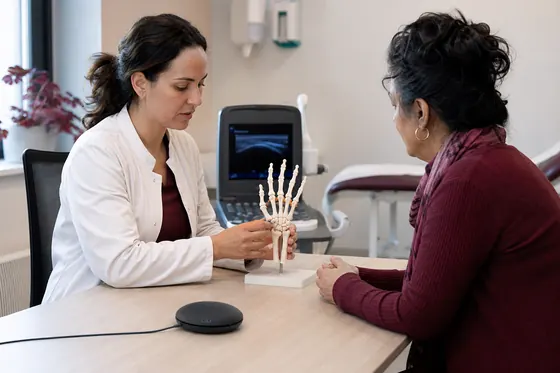
A structured report in your professional terminology
From care encounter to report
Hysio turns spoken information into a report. Choose the report format for the conversation you are documenting.
Document
Record the conversation and clearly state your own findings and agreed actions.
AI assistants
You stay in control of what gets saved.
In your workday
More attention for the conversation, less typing afterwards.
State relevant information, your own findings and agreed actions aloud so you can find them in your report.
The information appears under the headings of your chosen report format, so you can review each section.
Check names, facts and agreed actions. Edit the text where needed before using the report in your records.
Try it yourself
Try Hysio free for 14 days or schedule a personal demo.
For your team
Quick answer
For inflammatory rheumatic disease and other joint complaints, with a dedicated place for joint status, lab results, medication and course.
Here you can see how Hysio supports a rheumatology consultation, an intake or an evaluation of medication and disease activity. The answers follow the four documentation formats of the specialty.
For a first joint history, the Rheumatology Intake fits, because that format brings together the reason for seeking care, medical history and expectations. If the joint history comes up again at a follow-up appointment, the Rheumatology Consultation fits better. Record the complaints in the words of the client and the source, and place morning stiffness and swelling in the section where they were discussed. You keep blood results with their original result report. [2] [3] [4] [5] [1] [11]
Give blood results and disease activity each a recognisable heading, and put joint history, morning stiffness and swelling where they were discussed in the encounter. Note the origin for each item. This way a colleague can follow the inflammatory joint complaints without combining loose notes. The layout helps you find things again, but does not change the content of the source. [2] [1] [10]
You record morning stiffness where you expect it in your own record route: in the history of the presenting complaint, with duration and course as the client describes them. Add the origin, so that a colleague can see whether it is a statement by the client or your own finding. Before saving, check that swelling and blood results sit with their own source and that disease activity is not described more firmly than the encounter allows. [10] [1] [2]
Limit information about disease activity to what the agreed purpose of this encounter needs. Record the basis for sharing the joint history separately and note the recipient. Morning stiffness, swelling and blood results stay linked to their source; do not share them automatically just because they are in the same report. The rheumatologist decides which information is relevant for the handover. [8] [16] [1]
Hysio costs €20 for Starter, €40 for Pro and €80 for Unlimited, per person per month and excl. VAT; with yearly billing you get two months free. The plan determines how many sessions you can document per month, not what may be included in a rheumatology report. Disease activity and joint history belong to the ongoing encounter, and the choice of plan is completely separate from that. See the pricing page for the current rates. [6] [7]
A template of your own can be appropriate when your practice uses fixed headings for joint history. Compare the structure with the information Hysio organises and decide for yourself which format you use. Keep morning stiffness, swelling and blood results traceable to their source. The choice of route is a working agreement within your team, not an automatic recommendation from Hysio. [1] [10] [11]
Read the text about blood results back alongside the original result report and the date. Check that disease activity is not described as a fact when the source only states a value. Keep joint history and morning stiffness recognisable as separate data and place swelling with the right source. A tidy structure is not proof of accuracy; that check stays with you. [1] [11] [9]
During the encounter, you focus first on the client themselves, with morning stiffness as one of the points of attention in the conversation. Because you have the encounter organised afterwards, you do not need to type along during the conversation. You check swelling only afterwards, before you finalise the note, and you place blood results next to disease activity with their origin. Describe the joint history in the words the client used. [1] [2] [10]
Hysio organises disease activity and refers to the source, but does not draw any rheumatological conclusion itself. You assess joint history, morning stiffness and swelling and decide what is usable for the record. Blood results stay linked to the original result report. This way the structure supports your work without the layout taking over the professional assessment of inflammatory joint complaints. [1] [2] [10]
Start with one recognisable encounter in which swelling plays a role, and agree who will then check the blood results before you work more broadly. You link disease activity to joint history and to that one encounter; the interpretation of morning stiffness always stays with you as the rheumatologist. Beyond that, you only write what the source provides. [7] [8] [1]
The Rheumatology Consultation fits a regular follow-up encounter. The structure runs from summary and reason for visit, through medical history and history of the presenting complaint, to physical examination, additional investigations, conclusion and management plan. You link disease activity to swelling, and within the inflammatory joint complaints you keep joint history separated by source. Admin with AI does not save anything itself: the report waits for your check. [2] [1] [11]
The Rheumatology Intake fits the very first encounter and therefore has the broadest set-up: alongside history and examination, there is room for active diagnoses, social context and the client's expectations. Record swelling and blood results with the origin you have, and check the text about disease activity before saving. As with the other formats, saving the intake waits for your final review. [3] [1] [11]
The Rheumatology Medication and Disease Activity Consultation fits the appointment in which you weigh medication and disease activity together. The structure follows the same eight sections as the regular consultation, but the emphasis is on what has been discussed since the previous encounter about effect, side effects and follow-up. You link joint history to blood results, while the final interpretation of morning stiffness stays with you as the rheumatologist. [4] [1] [11]
The Rheumatology SOAP Note fits an ongoing encounter in which observations, assessment and follow-up come together. Place Subjective, Objective, Assessment and Plan with the source and keep swelling, blood results and morning stiffness recognisable. Joint history stays separate from the professional assessment of disease activity. With voice-driven reporting, Hysio organises the text, but you check the content before it goes into the record. [5] [1] [11]
The encounter and the question at hand determine the appropriate report structure. The Rheumatology Intake describes the starting point, the Rheumatology Consultation organises a follow-up conversation, the Medication and Disease Activity Consultation focuses on the appointment in which medication and disease activity are weighed, and the SOAP Note divides an ongoing encounter into four fixed parts. Record joint history, morning stiffness and swelling as the source provides them. [1] [2] [11]
Choose an intake when swelling is the starting point of the encounter and you want to describe the complaint from the beginning. Use a follow-up report when new blood results or changes in disease activity are discussed. Record morning stiffness and joint history with their origin and do not add any finding that was not mentioned. The chosen format therefore follows the encounter, not an automatic rule. [1] [2] [11]
After a follow-up conversation, describe the reason, the new findings and the agreed follow-up around joint history. Do not add any change in medication or laboratory result that was not mentioned in this encounter. Record swelling and blood results with their origin and document morning stiffness when it was discussed. This way it stays clear what is new compared with the earlier report. [1] [2] [11]
A handover about blood results states the source, the recipient, the purpose and the agreement made. Check consent before you share the result. Only record joint history and morning stiffness when they are needed for the follow-up, and keep swelling with the right source. The rheumatologist assesses disease activity, while the recipient must be able to distinguish what is a factual result and what is professional interpretation. [1] [2] [11]
For morning stiffness, separate the client's account, your own observation and the professional assessment. Note for each item who the source is and do not add a conclusion to a stand-alone description. Blood results and swelling stay linked to their own origin. Joint history and disease activity can be in the same report, but the role of each item must remain visible to the next reader. [1] [2] [11]
Compare disease activity between encounters using the same agreed characteristics. Only describe changes that the source supports and add the date of each encounter. Keep morning stiffness, swelling and blood results separately recognisable, even when they are discussed together. This way a colleague can see what changed in the joint history and which conclusion the rheumatologist drew themselves. [1] [2] [11]
In the history, you record the reason for seeking care and the course in the words of the source, and you only add disease activity when it was actually discussed during the encounter. Describe morning stiffness and swelling as the client reports them, including duration and course; weighing them remains your own assessment. Blood results belong with the additional investigations, not in the history. For the reason for visit, you otherwise write only what the source provides, so that joint history stays tied to the source. [1] [11]
For swelling, note who provided the information and keep that source role separate from your own observation. Describe whether it came from the client, a relative or a referrer. Only link blood results and disease activity when the source supports that relationship. You keep joint history and morning stiffness separately traceable, so that it stays clear later who contributed which information. [1] [16] [11]
For a measurement moment, record what you measured, with which instrument, in which unit and on which date. A score that you stated goes into the report word for word; Hysio does not calculate any score itself and does not convert a value to another scale. You describe the meaning of the outcome for the joint history separately, as your assessment. Swelling and blood results stay linked to their own source. [1] [11]
Connect blood results to the investigation, the date and the source of the result. Copy value and unit exactly as they were stated, without converting them. A requested investigation without a result belongs in the management plan and not in the findings. You put your assessment of disease activity in a separate passage, apart from the literal laboratory text. You only link swelling to this result when the source makes that connection. [1] [11] [16]
No, Hysio can organise a supplied imaging report, but does not assess images and does not determine meaning. Record what the source says about morning stiffness or swelling without your own interpretation. Keep blood results and joint history separate when they come from a different encounter. The rheumatologist decides whether the information says anything about disease activity or inflammatory joint complaints. [10] [9] [11]
Use technical terms that have the same meaning within your rheumatology team. Record abbreviations and write a term out in full when a GP or another discipline reads the report. Apply that language agreement consistently to disease activity, morning stiffness, swelling and blood results. This way the joint history stays understandable and no different clinical meaning arises from inconsistent notation. [1] [11]
When a relative talks about swelling, you write that down as a statement by that relative and not as the client's own observation. State who was present and whether the client confirmed the statement. For sharing that information with a referrer, you record consent separately. Only link disease activity and joint history to this statement when the source supports that. [1] [16] [11]
Make it visible which discipline supplied the information about joint history and who picks up the follow-up after that, so the team does not have to guess. Add which agreement was made with the GP and when that feedback will follow. Record swelling and blood results with their own origin, so that another clinician involved in the care can see where a number comes from. Keep morning stiffness worded in a way that colleagues outside your own field can understand. [1] [2] [16]
A good example shows the real encounter, the blood results as they were supplied and the follow-up that came after, without inventing a diagnosis that the source does not mention. You keep joint history and morning stiffness with their origin within the inflammatory joint complaints, and you link swelling directly to that example case itself. [1] [11] [2]
Limit the handover of morning stiffness to the purpose of the encounter and the source that provides the information. Note which joint history the recipient needs and keep blood results and swelling separate when they are not relevant. The rheumatologist determines the meaning for disease activity; the recipient must be able to find the original information again. [10] [8] [16] [11]
No, Hysio organises morning stiffness clearly but does not make a diagnosis and does not establish an indication: the rheumatologist determines that meaning themselves in the context of inflammatory disease activity. Even a neatly structured report remains a representation of what you heard, saw and decided. Record blood results with their own result report and keep the joint history separate from your conclusion. [9] [1] [11]
You check disease activity before the report is saved. Compare the passage with the source and decide for yourself whether the description of morning stiffness and swelling is correct. Also check blood results and joint history when they are in the same passage. Hysio can organise the data, but does not take over the professional assessment or responsibility of the rheumatologist. [1] [9] [16]
Mark explicitly that swelling is missing or was not discussed, and do not add any date, value or conclusion that the source does not mention for inflammatory disease activity. You record disease activity and joint history with the available origin, and check the text about morning stiffness before saving. This way it always stays visible what has and has not been documented in the record. [1] [9] [11]
Do not use Hysio to triage in an acute situation or to make a rheumatological decision. Let the immediate assessment take priority. After the encounter, you can record joint history, swelling and morning stiffness tied to the source and link blood results to the right result report. The rheumatologist determines the meaning of disease activity; Hysio only organises the information you have supplied. [9] [8] [11]
Check purpose, consent and recipient before you share information about blood results. The client decides on disclosure to third parties; within the treatment relationship you share what is needed for that care. Record who received the result, when and on what basis. Only include in the disclosure the result that belongs to the question asked, with the date and the source. [8] [16] [1]
No, Hysio does not make a treatment plan based on morning stiffness. It can place the supplied information clearly, but the rheumatologist decides on disease activity, follow-up and any treatment. Record blood results and swelling with their source and keep joint history with the right encounter. The report structure makes clear what has been recorded, not which clinical choice you should make. [9] [10] [11]
Write down uncertainty about disease activity explicitly and do not make the joint history more definite than the source allows. Note which information about morning stiffness, swelling and blood results is still missing or contradictory. Leave an open question in place until an additional source provides clarity. This way the team can see what has been established and what the rheumatologist still needs to assess. [1] [11] [9]
When sources give different information about swelling, you keep both accounts and note who gave which information. Only add your own assessment of disease activity after checking. Keep joint history, morning stiffness and blood results recognisable as separate source data. This way it stays clear why the rheumatologist confirms, qualifies or still leaves open an earlier description. [1] [16] [11]
For each medicine, record the name, the dose and the date on which it was started, changed or stopped, exactly as the source states. You copy measurements word for word, with unit and date. Keep the joint history separate from that: what the client tells you is not the outcome of a measurement. You, as the rheumatologist, determine what medication, morning stiffness and swelling together mean for disease activity. [1] [11] [9]
Read the text about blood results back alongside source and date, and correct discrepancies before the inflammatory disease activity is finally saved. Pay attention to numbers, units and whether a value is attached to the right investigation. If there is a conclusion that the source does not support, remove it or phrase it more cautiously. Only then do you transfer the text to the record. [1] [8] [9] [16]
Prepare a handover about blood results by naming source, recipient and purpose in advance. Agree who reads the text through and which information about disease activity is needed. Set the follow-up apart and state the origin of joint history and morning stiffness. Do not share details that fall outside the agreement; the recipient must be able to place the result without reading your clinical assessment as fact. [10] [8] [16] [2]
Agree how you describe morning stiffness: in minutes, by part of the day or in the client's own words. Also record who writes the report, who reads it through and who approves it before it goes into the record. In a shared clinic it helps to name those roles for each encounter, so that no report is left without a final review. What goes into the team report stays limited to what the source has provided. [1] [2] [10]
First test disease activity in one clearly defined encounter and collect the corrections for joint history that come out of it, before you work more broadly with Hysio. Only when that description is correct do you expand voice-driven reporting to more encounters. Keep track of which correction you keep making; that says more about usability than one successful report. In that trial, you record morning stiffness, swelling and blood results with their origin. [7] [8] [1]
Test a report on swelling against the fixed headings and authorisations of your practice. Have a colleague check whether blood results and joint history are in the right place and whether disease activity is not described more firmly than the source allows. Record morning stiffness with the right encounter. The local agreement determines the form, but not the clinical assessment. [10] [1] [11]
State which joints are tender or swollen and how long the morning stiffness lasts, in minutes. Hysio puts that with the joint history, separate from your own examination. You mention blood results and a DAS28 with their date. You assess the disease activity. [1] [11] [2]
First take a baseline measurement: over a series of comparable encounters, keep track of how many minutes the report on blood results and the rest of the consultation takes. Then measure the same kind of encounters again and count the corrections you still need to make. Give the quality of the report priority over a gain that you have not measured yourself. Hysio does not state a percentage that applies to your practice. [1] [10] [7]
The free trial lasts fourteen days, you do not need a credit card for it and the subscription can then be cancelled monthly. Use those weeks to test whether morning stiffness, swelling and blood results end up where you expect them. Record for each encounter which corrections you make, so that at the end you know whether the structure fits your way of working. The current terms are on the pricing page. [7] [6] [8]
The rates are on the pricing page. What Hysio does with data is set out in the privacy policy; the terms are in the legal information and the boundaries of the platform in the disclaimer. Those pages apply to all professions and say nothing about the rheumatology content of your report. What you record about disease activity and joint history remains your own professional responsibility. [6] [8] [9]
Make a short list of the terms and abbreviations your team uses for swelling, tenderness and disease activity, and give each term one meaning. Use that notation in every report, even when you dictate quickly. If a term does not match the fixed structure, note where you place it. This way a colleague later reads the same as what you meant. [1] [10] [11]
Split a complex case into separate encounters and separate sources, and for each encounter organise the reason, the findings and the agreed follow-up. Set out side by side what the client said, what you saw yourself and what came from additional investigations. Do not add an overarching conclusion that none of those sources supports. What the joint history says about the whole, you write down separately as your assessment. [1] [11] [2] [9]
Hysio creates the report. You remain responsible for what you save in the record.