Document
Keep your attention on the care encounter.
Record the conversation and clearly state your own findings and agreed actions.
Hysio Chiropractic
Hysio organises chiropractic contacts around the care request, case history, examination, professional interpretation and follow-up appointments.
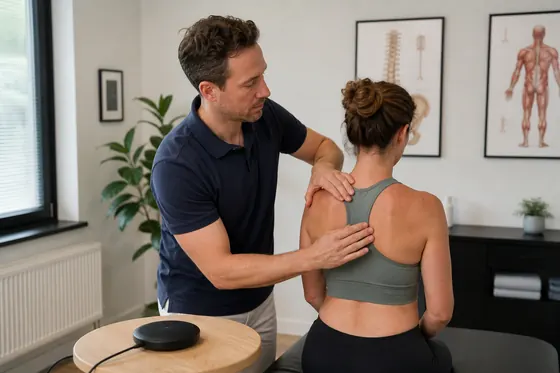
A structured report in your professional terminology
From care encounter to report
Hysio turns spoken information into a report. Choose the report format for the conversation you are documenting.
Document
Record the conversation and clearly state your own findings and agreed actions.
AI assistants
You stay in control of what gets saved.
In your workday
More attention for the conversation, less typing afterwards.
State relevant information, your own findings and agreed actions aloud so you can find them in your report.
The information appears under the headings of your chosen report format, so you can review each section.
Check names, facts and agreed actions. Edit the text where needed before using the report in your records.
Try it yourself
Try Hysio free for 14 days or schedule a personal demo.
For your team
Quick answer
Hysio fits in with chiropractic documentation moments without promising any outcome or effect. Complaint history, neuromusculoskeletal findings, care arrangements discussed and the client's response each stay separately traceable. The chiropractor remains responsible for the professional meaning, decision-making and the final assessment of the report.
Here you can see, for each contact, what Hysio records about the complaint narrative, safety questions and functional tests, and what you assess as a chiropractor.
For the musculoskeletal care record, Hysio Chiropractic Follow-up Consultation remains a format built around a chiropractic follow-up consultation with complaint progression, functional tests, intervention and agreements. This applies to a consultation involving a neuromusculoskeletal examination. In this follow-up consultation, complaint progression, functional test and professional interpretation stay readable as separate information sources in the musculoskeletal care record. In the follow-up consultation, check the complaint progression, the functional test and the professional assessment as three separate record sources. [1] [3]
For the chiropractic intake with care request, case history, safety information and examination plan, Hysio Chiropractic Intake is intended for the musculoskeletal care record. This format fits a consultation involving a neuromusculoskeletal examination. In the musculoskeletal care record, the chiropractor links "Summary" to the first information source. "Registration, reason for contact and care request" stays separately readable for a consultation involving a neuromusculoskeletal examination. A test that was not carried out or an unknown body side does not get a filled-in result if information about the case history is missing. For the case history, check the complaint, functional test and professional assessment as three separate record sources. [1] [4]
Hysio Chiropractic Examination and Treatment Report is for neuromusculoskeletal examination and treatment with findings tied to the source and professional interpretation in the musculoskeletal care record. In a consultation involving a neuromusculoskeletal examination, the chiropractor keeps complaint history, case history, functional test and professional finding separately recognisable. Examined region, test name, side, finding and consultation date belong together when recording the neuromusculoskeletal observation. For the interpretation of the neuromusculoskeletal observation, the practitioner determines the clinical connections, safety considerations and the chosen follow-up of the consultation. [1] [5]
For a chiropractic evaluation with progress towards goals, response, findings and discharge, Hysio Chiropractic Evaluation is intended for the musculoskeletal care record. The set-up keeps "Summary" separate from "Evaluation moment and episode source" and leaves an outcome that has not been established open. A neuromusculoskeletal possibility is not described more firmly than the healthcare professional recorded it when formulating the physical examination. For the physical examination, check the complaint, functional test and professional assessment as three separate record sources. [1] [6]
Hysio Chiropractic Examination and Treatment Report organises the information from the described contact within the musculoskeletal care record. In a consultation involving a neuromusculoskeletal examination, the chiropractor can organise complaint history, case history, functional test, professional finding, care agreement and response to the contact. Their origin stays visible with the professional findings in the musculoskeletal care record. In the musculoskeletal care record, the chiropractor does not fill in a missing detail about the professional findings. For the professional findings, check the complaint, functional test and professional assessment as three separate record sources. This way, voice-driven reporting keeps chiropractic findings traceable per source. [1] [2] [5]
The neuromusculoskeletal documentation format does not formulate a medical diagnosis, efficacy claim or treatment choice. A missing test, body side or safety finding stays visible as not examined or unknown. Complaint wording is not turned into clinical connections, and an open care plan is not completed as a matter of routine. The chiropractor personally assesses the functional tests, weighs the safety information and approves the follow-up before saving to the musculoskeletal care record. [1] [2] [3]
In the musculoskeletal care record, the chiropractor separates complaint history, case history, functional test, professional finding, care agreement and response to the contact based on their actual origin. For a follow-up consultation involving a neuromusculoskeletal examination, what the client said stays visible. In the musculoskeletal care record, the chiropractor places the observation about a follow-up consultation alongside the examined region, test name, finding, side and contact moment. Professional interpretation is given its own origin and assessment by the chiropractor. [1] [2] [3]
Before saving to the musculoskeletal care record, the chiropractor compares the examined region, test name, finding, side and contact moment with the original note. For the response to the contact, check the complaint, functional test and professional assessment as three separate record sources. The chiropractor later keeps only a version of the musculoskeletal care record in which origin and professional terminology are correct. [1] [2] [3]
In documentation for musculoskeletal care, you should not assume an automatic connection with every record system. When handing over the musculoskeletal care record, the chiropractor specifically assesses region, side, functional test, safety finding, contact date and the correct report version. The practice's working method for the musculoskeletal care record determines the format within a musculoskeletal care practice. Access and version control stay linked to the musculoskeletal care record. The report set-up for neuromusculoskeletal care does not prove any technical integration for the musculoskeletal care record; the handover remains human work. [1] [2] [6]
For the musculoskeletal care record, the chiropractor chooses between follow-up consultation, intake, examination with treatment and evaluation based on the actual purpose of contact. The intake contains the care request and safety information. The examination and treatment report describes functional tests and how they were carried out, the follow-up consultation the ongoing care and the evaluation the progress and the agreements. In this way each documentation format fits the contact and the handover or discharge stays traceable. [1] [2] [6]
The chiropractor records the care request and the complaint history in the musculoskeletal care record with origin and contact moment. In a consultation involving a neuromusculoskeletal examination, the chiropractor links the contact moment and care goal to the care request and the complaint history. Hysio Chiropractic Intake is intended to keep the physical examination separate. If information about the care request and the complaint history is missing, that passage stays open. For the care request and the complaint history, check the complaint, functional test and professional assessment as three separate record sources. [2] [4]
The complaint and safety history are recorded in the musculoskeletal care record as the client reports them. A neuromusculoskeletal functional test gets its own examination source with region, side, method and result. The chiropractor only describes the clinical meaning after assessment. The intake format does not combine complaint wording, test results and professional interpretation into an independent diagnosis. [2] [4]
Place a neuromusculoskeletal observation in the musculoskeletal care record with the functional test that was carried out, not with the complaint history. Describe region, side, test and finding before the chiropractor records professional connections. Do not infer a cause yourself. The chiropractor approves the clinical interpretation and the follow-up. In this way the neuromusculoskeletal observation in Hysio Chiropractic Examination and Treatment Report stays traceable to the original functional test. [2] [5]
A physical examination result belongs in the musculoskeletal care record with the recorded region, side, functional test and contact date. A safety finding also stays linked to its own source. Where information conflicts, the chiropractor checks the examination notes and corrects only the verified passage. The report set-up does not choose a test result, diagnosis or urgency. [2] [5]
In the musculoskeletal care record, the chiropractor gives the professional findings the same certainty as the original source. A neuromusculoskeletal possibility is not described more firmly than you recorded it. Put the professional term next to the goal of the consultation. With voice-driven reporting too, you decide what a finding means. [2] [5]
In a chiropractic care plan, only include context that clarifies the care request, the functional test carried out or the agreed follow-up action. Sensitive medical history with no relation to the purpose of the examination stays out of the musculoskeletal care record. The documentation format does not select any information independently. Before saving, the chiropractor assesses both the necessity and the readability of every passage. [2] [3]
Record a follow-up consultation with the functional test actually carried out, the examined region, the side and the described finding. In the musculoskeletal care record, keep the client's response separate from a change in function and from the clinical assessment by the chiropractor. This documentation format does not calculate a score. Only the practitioner gives the finding meaning and chooses the follow-up. [2] [3]
Only link a response to the contact to the treatment goal discussed beforehand when the source supports that connection. In the musculoskeletal care record, note separately what the client experiences, what was examined again and which follow-up appointment the practitioner makes. This documentation format does not combine those parts into an effect claim. The chiropractor assesses how they relate. [2] [3]
When evaluating progress, the chiropractor chooses Hysio Chiropractic Evaluation, not automatically an intake or follow-up structure. The musculoskeletal care record shows complaint progression, repeated functional test, professional assessment and discharge decision separately. This evaluation format does not select anything independently. The practitioner determines whether the contact concerns an interim measurement, a follow-up consultation or completion. [2] [6]
At handover and discharge, the musculoskeletal care record describes the latest chiropractic finding, the follow-up discussed and any open safety question. The chiropractor states which information may be provided to a verified recipient and which source applies to it. This documentation format does not make a discharge decision. Only the approved version is kept in line with the local record policy. [2] [6]
The SCN professional profile and the regulations describe a private professional framework; "chiropractor" is not an article 3 or article 34 title. The musculoskeletal care record names the SCN professional profile and the associated private regulations with publisher, date and type of source. In a consultation involving a neuromusculoskeletal examination, the musculoskeletal care record shows the legal status. A musculoskeletal care practice separates professional standards from government rules. [7] [8] [10]
The chiropractic record follows the care request, case history, neuromusculoskeletal examination, care agreements, response and evaluation as recorded professionally. For the case history, the chiropractor only uses the applicable part of the SCN professional profile and the associated private regulations. The musculoskeletal care record keeps the document version and scope. In a consultation involving a neuromusculoskeletal examination, a local arrangement stays recognisably local. [7] [8]
The professional name chiropractor is not protected and, without a separate regulated qualification, does not lead to BIG registration. In the musculoskeletal care record, the legal position of chiropractor is kept separate from any second care role. The chiropractor only states a demonstrable status for a consultation involving a neuromusculoskeletal examination. Another capacity is checked separately for the musculoskeletal care record. [10]
For a chiropractic practice, Wkkgz obligations, the SCN regulations and any other complaints procedure are described side by side. After a consultation involving a neuromusculoskeletal examination, a notification in the musculoskeletal care record includes facts, date and follow-up. A musculoskeletal care practice chooses the applicable complaints procedure. The musculoskeletal care record contains facts and no independent legal judgement. [13]
Set the retention period based on the treatment relationship and applicable law; a private register does not determine that period independently. The musculoskeletal care record states the treatment relationship and the rule on which the chosen retention period in the chiropractic practice is based. SCN registration does not determine that choice independently. When circumstances change, the policy is reassessed and dated. [7] [8] [12]
A chiropractic quality register confirms private criteria and must not sound like a statutory granting of a title or authority. For an SCN registration, the chiropractor notes the register consulted, the date of the check and the specific scope. The musculoskeletal care record does not present this as statutory title protection or a national government register. Another regulated professional role is stated separately and demonstrably. [9] [10]
In a chiropractic consultation, make visible which question was asked, which answer followed and whether a recording or disclosure that was discussed was later restricted. In a chiropractic consultation, the question asked stays traceable, together with the answer and the moment, to the contact note. A recording or disclosure that was discussed gets its own purpose, restriction and recipient. The chiropractor checks the record and does not fill in an answer that the source does not contain. [4] [7] [8]
A chiropractic handover is limited to purpose-bound complaint, examination and follow-up data for the right recipient. For a handover from the musculoskeletal care record, the chiropractor checks the care goal, recipient and scope of the data. In a consultation involving a neuromusculoskeletal examination, the musculoskeletal care record keeps the client's own words separate from the complaint history, case history, functional test, professional finding, care agreement and response to the contact. A musculoskeletal care practice uses the verified destination and the local sending method. [6] [7] [8] [12]
Clinical interpretation, safety considerations and the choice of follow-up stay with the chiropractor and require human review before saving. In the musculoskeletal care record, the layout can separate complaint narrative, case history, functional test, professional finding, care agreement and response to the contact. You interpret the examination yourself. With AI reporting too, the follow-up and the saved version remain your work. [2] [3]
Check the SCN profile, regulations and register information each for date and scope before an existing claim is repeated. The chiropractor assesses the SCN profile, the regulations and the register each for publication date and their own scope. The musculoskeletal care record only uses a changed claim after the type of source and validity have been established. [7] [8] [9]
Only transfer the outcome of a chiropractic functional test when region, side, test name and contact moment belong to the same examination note. Only note a scale or other outcome measure if it was actually administered, including method and known unit. The documentation format does not calculate a value. The chiropractor compares the representation with the movement examination and only then gives it clinical meaning. [2] [5] [7]
In a consultation involving a neuromusculoskeletal examination, the chiropractor only uses professionally recorded terminology for the case history. In the musculoskeletal care record, the term stays linked to the examined region, test name, finding, side and contact moment and the correct source. A neuromusculoskeletal possibility is not described more firmly than the healthcare professional recorded it when formulating the case history. Before saving, the chiropractor assesses the necessity, precision and readability. [2] [3] [7] [8]
The chiropractor leaves the relevant part of the musculoskeletal care record empty if, after a consultation involving a neuromusculoskeletal examination, the source contains no information about the neuromusculoskeletal observation. A detail that was not mentioned about the examined region, test name, finding, side and contact moment stays unknown. The chiropractor asks targeted questions or states in the musculoskeletal care record that information about the neuromusculoskeletal observation is missing. [2] [3]
Where information about the physical examination conflicts, the chiropractor keeps source, moment and wording separately in the musculoskeletal care record. During a consultation involving a neuromusculoskeletal examination, the chiropractor compares the relevant parts of the complaint history, case history, functional test, professional finding, care agreement and response to the contact. When the physical examination is corrected, a functional test is restored only from the original examination note. [2] [5]
The boundary around professional findings is that the report set-up for neuromusculoskeletal care does not produce a medical diagnosis, efficacy claim or treatment outcome. Complaint progression, functional test and professional interpretation stay readable as separate information sources in the musculoskeletal care record. The practitioner determines the clinical connections, safety considerations and follow-up. [2] [5]
With a red flag or other safety question, the musculoskeletal care record keeps what was reported in the case history separate from the functional test carried out. Region, side, test result and agreed follow-up stay traceable. The report set-up does not choose a medical diagnosis, urgency or referral. The chiropractor weighs the safety information personally and assesses the final text. [2] [3]
In the musculoskeletal care record, a response from the client is not confused with a repeated neuromusculoskeletal functional test. The chiropractor links the test to region, side, method and care encounter and describes the clinical meaning separately. A safety finding and the agreed follow-up also stay recognisable. Voice-driven admin does not turn these parts into a diagnosis or effect claim either. [5]
A functional test stays linked to the region, side, method and date of the examination and is not silently translated into a diagnosis code. The report set-up does not calculate a score and does not infer a medical cause from the complaint or test result. The chiropractor checks the original note, describes the clinical meaning personally and only includes an outcome measure that was actually used. [2] [3] [7]
Experienced response, change in function and professional assessment remain three different outcomes. For the evaluation of progress, the chiropractor follows, in the musculoskeletal care record, the certainty of the complaint history, case history, functional test, professional finding, care agreement and response to the contact. During a consultation involving a neuromusculoskeletal examination, a reported change stays separate from the examined region, test name, finding, side and contact moment and the assessment by the chiropractor. For a musculoskeletal care practice, the report set-up for neuromusculoskeletal care does not provide proof of efficacy or a causal relationship. [2] [6] [11]
Before saving to the musculoskeletal care record, compare the examined region, test name, finding, side and contact moment with the complaint history, case history, functional test, professional finding, care agreement and response to the contact. If information about the handover and discharge is missing, that part stays open. From the report text for the musculoskeletal care record, the chiropractor removes any autonomous medical diagnosis, efficacy claim or treatment outcome. For the handover and discharge, check the complaint, functional test and professional assessment as three separate record sources. [2] [6]
The general Hysio price for every practice starts at Starter, from €20 per month excl. VAT; Pro costs €40 and Unlimited €80. If you pay yearly, you pay for ten months. The current plans and terms are on the pricing page. There is no separate rate for voice-driven reporting in chiropractic. [14]
Data from the safety history and the neuromusculoskeletal examination require a clear care goal and restricted access. Under the GDPR, the chiropractic practice records who reviews the musculoskeletal care record and verifies the recipient of any feedback. The chiropractor selects the necessary information. The professional formats do not give any independent right to process or share data. [15] [16]
For the musculoskeletal care record, the chiropractor compares writing by hand with dictation. In a consultation involving a neuromusculoskeletal examination, the Hysio format for the musculoskeletal care record is intended as a third option. Within a musculoskeletal care practice, every working method requires review of the complaint history, case history, functional test, professional finding, care agreement and response to the contact. A general chatbot does not automatically know the examined region, test name, finding, side and contact moment. For a musculoskeletal care practice, the Hysio format is therefore the format that brings these parts together in a structured way. [2]
For Hysio, including the chiropractic documentation formats, a 14-day trial applies in a musculoskeletal care practice. A first chiropractic check can use one follow-up contact with a repeated functional test. Region, side, safety information, the client's response, clinical interpretation, source comparison and time for corrections are criteria to be set in advance. [14]
A chiropractic follow-up report is not sent automatically to every record system; no connection whatsoever is assumed for this. The chiropractor first assesses region, side, functional test and contact moment against the original note of the follow-up consultation. Only after that check does the practice place the text manually in its own record system, in line with the local working method for storage and access. The report set-up itself does not arrange any technical sending or connection. [2]
The chiropractor checks the complaint, safety history, functional test and the client's response each against the correct source. The safety considerations, clinical interpretation and choice of follow-up remain professional work. Within the practice, only a designated person may save the reviewed version. The report set-up organises the parts, but does not determine a diagnosis, urgency or treatment result. [2] [3]
When a follow-up consultation is changed, the original functional test, the client's response and the safety note stay available for comparison. The chiropractor corrects only the verified part and reassesses whether the clinical interpretation or follow-up appointment is affected. The musculoskeletal care record registers the change and keeps only the professionally reviewed version as the final text. [2] [3]
If the response to a follow-up contact is missing, the chiropractor checks the original client note alongside the repeated functional test. A change in a test is not automatically the same as an experienced change. Without a recorded client source, that passage stays open and a targeted question can follow. The report set-up does not infer a treatment result. [2] [3]
For chiropractic, a repeated follow-up consultation is the most useful basis for a time comparison. Measure dictation, the checking of region, side, functional test and safety information, corrections and transfer into the record separately. The professional formats do not show any time savings at present. Do not publish a savings percentage without your own baseline measurement. Repeat the measurement over several follow-up consultations, and you will see what admin with AI brings your practice. [2]
Start the introduction with one type of follow-up consultation and let the same chiropractor review the first reports. The practice records checkpoints for region, side, functional test, safety information, clinical interpretation and saving to the record. Only expand once source comparison and human review go consistently well in these contacts. [2]
Hysio creates the report. You remain responsible for what you save in the record.