Document
Keep your attention on the care encounter.
Record the conversation and clearly state your own findings and agreed actions.
Hysio Pharmaceutical Care
Hysio organises client questions, medication sources, professional assessments and follow-up as recognisable parts of the pharmaceutical report.
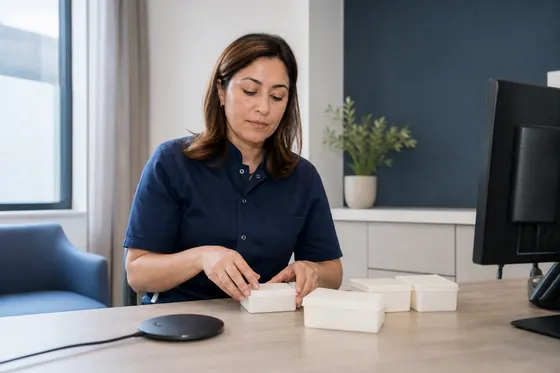
A structured report in your professional terminology
From care encounter to report
Hysio turns spoken information into a report. Choose the report format for the conversation you are documenting.
Document
Record the conversation and clearly state your own findings and agreed actions.
AI assistants
You stay in control of what gets saved.
In your workday
More attention for the conversation, less typing afterwards.
State relevant information, your own findings and agreed actions aloud so you can find them in your report.
The information appears under the headings of your chosen report format, so you can review each section.
Check names, facts and agreed actions. Edit the text where needed before using the report in your records.
Try it yourself
Try Hysio free for 14 days or schedule a personal demo.
For your team
Quick answer
The four formats match consultation, medication review, discharge medication and handover.
For each care moment, you can see what the documentation format organises and what stays with you. Client factors, medication sources, professional assessment and follow-up stay recognisably separate.
This report format is intended for a client conversation, covering a care question, medication sources, client factors, assessment and agreements. Write up the pharmaceutical source by describing how you organise the client question, medication source and stated assessment separately. In the pharmaceutical consultation, note the medicine, use, origin and status only insofar as those data have been confirmed. With voice-driven reporting, you dictate the client's question and the medicines discussed after the conversation; Hysio organises them and you check the medication source. [2] [7] [3]
This report format is intended for a medication review with history, sources, analysis, plan and follow-up. In a medication review, make it traceable how you record the steps from history to stated plan without presenting them as automatic advice. In a medication review, the pharmacist checks the client context, medication source, pharmaceutical assessment and the agreed follow-up separately. [2] [8] [4]
This report format is intended for a conversation at discharge or another care transition, with changes, understanding and status. For medication safety, you record medication entries, discussed changes and understanding separately. In the discharge medication consultation, leave uncertainty in place until the medicine, dosage, use or decision is evident from a reliable source. [2] [10] [5]
This report format is intended for a pharmaceutical handover with a question, medication data, discrepancies, assessment and follow-up. Organise the information so that it is clear how you separate the concrete question, source status and desired follow-up. The final assessment of the handover to the prescriber remains with the pharmacist and is not derived from isolated data. [2] [10] [6]
A conversation about several medicines first calls for a complete and current picture of the client and the medicines used. Hysio Medication Review is the format that fits, with the medication list and the client question visible before the professional assessment. With several medicines, the medicine, use, origin and status only appear in the text insofar as those data have actually been confirmed. [2] [7] [4]
A client question can be about use, effect, a side effect, practical intake or an experienced problem. For a client question about medication, make it traceable how you note the question in the client's own words and the response given separately. For a client question about medication, the pharmacist checks the client context, medication source, pharmaceutical assessment and the agreed follow-up separately. [2] [13]
A prescription, medication overview, packaging, client statement and pharmacist's dictation do not have the same source status. For medication safety, you record how you keep the origin and date of each medication data item visible. For a medication source, leave uncertainty in place until the medicine, dosage, use or decision is evident from a reliable source. Compare the note about a medication source with the original source and note which part is still missing. [2] [7]
A reported change is not automatically a confirmed prescription or current medication entry. Organise the information so that it is clear how you keep report, verification and final status apart. The final assessment of a change that has not been confirmed remains with the pharmacist and is not derived from isolated data. [2] [10]
Medication advice belongs to the authorised professional assessment and not to an automatically organised text. Hysio therefore does not formulate new medication advice itself and does not turn a source data item into advice without further ado. What does go into the text remains limited to the medicine, use, origin and status insofar as those data have actually been confirmed. [2] [11]
Understanding is only a fact for the record when it has been discussed in the conversation or checked in an appropriate way. For understanding after a medication explanation, make it traceable how you name stated understanding, question and open point separately. [2] [7]
A medication review connects client information, current medication, relevant sources, analysis, plan and follow-up. For medication safety, you record how you make the source of each part and the status of the plan recognisable. For data for a medication review, leave uncertainty in place until the medicine, dosage, use or decision is evident from a reliable source. [2] [8]
Medication surveillance focuses on alerts and their handling, while a medication review covers a broader systematic assessment. Organise the information so that it is clear how you do not automatically describe an alert as a complete pharmacotherapeutic plan. The final assessment of medication surveillance and review remains with the pharmacist and is not derived from isolated data. [2] [9]
A surveillance alert is a source or system notification that may still need assessment and handling. Write up the pharmaceutical source by describing how you place the alert, professional response and open status side by side. For a medication surveillance alert, note the medicine, use, origin and status only insofar as those data have been confirmed. [2] [9]
A medication overview is only current insofar as the source, verification and date support that. For a current medication overview, make it traceable how you do not mix up known, reported and verified. For a current medication overview, the pharmacist checks the client context, medication source, pharmaceutical assessment and the agreed follow-up separately. [2] [10]
Experience of use, practical abilities, preferences, concerns and earlier problems can clarify the client context. For medication safety, you record how you link only relevant factors that were actually discussed to the medication source. [2] [7]
A client may use a medicine differently from what was agreed, without a judgement about the person replacing the source. Organise the information so that it is clear how you render the reported use and the discussed cause in neutral language. The final assessment of adherence remains with the pharmacist and is not derived from isolated data. [2] [7]
A plan is only a plan once the authorised healthcare professional has explicitly determined its content and next step. Write up the pharmaceutical source by describing how you label a proposal, discussed option and established plan as different statuses. For a pharmaceutical plan, note the medicine, use, origin and status only insofar as those data have been confirmed. [2] [8]
A missing dosage is an open medication data item that does not safely follow from the product name or context. For a missing dosage, make it traceable how you leave the gap visible and do not reconstruct a dose. For a missing dosage, the pharmacist checks the client context, medication source, pharmaceutical assessment and the agreed follow-up separately. [2] [11]
A warm handover contains the purpose, relevant source information, a concrete question and the status of receipt or follow-up. For medication safety, you record how you name the healthcare professional involved and the action that is still open. For a warm handover, leave uncertainty in place until the medicine, dosage, use or decision is evident from a reliable source. [2] [10] [6]
A difference between lists calls for both sources, the difference itself and the verification that is still missing. Organise the information so that it is clear how you do not make a silent correction in the source-bound text. The final assessment of a medication discrepancy remains with the pharmacist and is not derived from isolated data. [2] [10]
The pharmaceutical record can contain medication data, care encounters, alerts, information, agreements and contact with other healthcare professionals. Write up the pharmaceutical source by describing how you include only necessary parts with an appropriate source and status. In the pharmaceutical client record, note the medicine, use, origin and status only insofar as those data have been confirmed. [2] [7]
The WGBO context (the Dutch Medical Treatment Contracts Act) states a minimum of twenty years from the last change for a medical record. Note the retention period as source information and do not present it as proof that a local Hysio setup complies with the law. The pharmacist checks the client context, medication source, professional assessment and agreed follow-up separately. [2] [12]
Sharing medical data requires attention to identity, authorisation, consent and the applicable legal basis. For medication safety, you record how you keep purpose, recipient and sharing status apart. [2] [13]
A reliable handover states the source, currency, verification, relevant change and follow-up status. Organise the information so that it is clear how you preserve the origin of the medication entry. Compare the note about a reliable medication handover with the original source and note which part is still missing. [2] [10]
The prescriber can answer the concrete question about treatment or prescription within their own professional responsibility. Write up the pharmaceutical source by describing how you do not fill in the question to the prescriber as an answer yourself. [2] [10]
A consultation between colleagues is a separate care moment with participants, topic, stated decision and any follow-up. In a consultation with the pharmacist, it stays recognisable who said what and what status that was given, separate from the rest of the conversation. That way the pharmacist checks the client context, medication source, pharmaceutical assessment and agreed follow-up each separately. With voice-driven admin, you first name who took part in the consultation. [2] [7]
Dispensing, explanation and pharmaceutical advice are different parts of a client contact. For medication safety, you record how you do not extend the actual action with advice that was not stated. For dispensing and advice, leave uncertainty in place until the medicine, dosage, use or decision is evident from a reliable source. [2] [11]
A prescription is a medication source, while a client report provides information about use or experience. Organise the information so that it is clear how you let both source roles stand side by side. The final assessment of a prescription and client report remains with the pharmacist and is not derived from isolated data. [2] [7]
A source conflict between client, prescriber, pharmacy and list is relevant information until verification takes place. Write up the pharmaceutical source by describing how you visibly note the difference and the follow-up required. For a source conflict in the medication record, note the medicine, use, origin and status only insofar as those data have been confirmed. [2] [10]
A handover can be discussed, sent, received or followed up; those statuses mean different things. Do not derive the handover status from the content. The pharmacist checks the client context, medication source, pharmaceutical assessment, status and agreed follow-up separately before the text is used. The pharmacist then determines which status and next step are recorded in the record. [2] [10]
The G-Standaard (the Dutch drug database) supports the identification and composition of medicinal products, not automatically a client-specific prescription. For medication safety, you record how you do not confuse product identification with a personal dose or choice. [2] [7]
An ATC code classifies a medicine for purposes including drug utilisation research and is not an individual prescription. Organise the information so that it is clear how you keep classification and client-specific instruction apart. [2] [8]
SNOMED CT is a terminology standard, and a concrete implementation requires an appropriate release and context. Write up the pharmaceutical source by describing how you do not fill in a code as a meaningful client term without a source. [2] [12]
A measurement needs at least a value, unit, moment, measurement method and client context. For a measurement in medication care, make it traceable how you copy only the measurement actually mentioned, without inventing a norm. For a measurement in medication care, the pharmacist checks the client context, medication source, pharmaceutical assessment and the agreed follow-up separately. [2] [7]
A symptom experienced after medication is initially a client report until a healthcare professional assesses it further. For medication safety, you record how you note the experience, time course and professional assessment separately. For a reported side effect, leave uncertainty in place until the medicine, dosage, use or decision is evident from a reliable source. [2] [9]
An interaction alert calls for professional analysis and is not something that can be concluded from an isolated medication name. Organise the information so that it is clear how you do not present an alert as an established interaction. The final assessment of an interaction alert remains with the pharmacist and is not derived from isolated data. [2] [9]
Medication verification compares relevant sources to obtain a medication picture that is as current as possible. Write up the pharmaceutical source by describing how you state the source consulted and the remaining uncertainty. For medication verification, note the medicine, use, origin and status only insofar as those data have been confirmed. Compare the note about medication verification with the original source and note which part is still missing. [2] [10]
A client-oriented note can organise and clarify professional terms without changing their professional meaning. For understandable pharmaceutical terminology, make it traceable how you make the term and the stated explanation visible side by side. [2] [7]
Hysio organises source information but does not take over the choice, change, substitution or dosage of a medicine. For medication safety, you record how you leave the authorised healthcare professional as the deciding source. For medication choice, leave uncertainty in place until the medicine, dosage, use or decision is evident from a reliable source. [2] [11]
An uncertain source, missing verification or a plan that has not been confirmed should remain recognisable in the text. Organise the information so that it is clear how you name the open point, source and next check separately. [2] [10]
For pharmaceutical care, Hysio Starter costs €20 per month excl. VAT. The rate belongs to the plan and not to one profession or AI assistant for pharmaceutical care. With an annual plan you pay for ten months and get two months free. The pharmaceutical care professional remains responsible for checking the content and for the final place in the record. [14]
For this profession, Hysio describes four formats for pharmaceutical care: consultation, medication review, discharge medication consultation and handover to the prescriber. For every report format within Hysio, the pharmaceutical care professional checks the source information, professional content, missing data and the final record text themselves. [17]
For fourteen days you can try Hysio free with medication conversations. During that period you get to know Hysio and the source-bound way of record keeping. Before use, always check the origin of the source, the professional content and the right destination in the record. The pharmaceutical care professional then chooses what is useful and checks the text against source, context, record purpose and professional agreements. [15]
In pharmaceutical care, human review remains necessary for source origin, professional content, missing information and the final record choice. Organise the information so that it is clear how you check the text against the original contact and the current sources. The final assessment remains with the pharmacist and is not derived from isolated data. [17]
For pharmaceutical care, Hysio does not write directly to an electronic record; the pharmaceutical care professional assesses the text and transfers it themselves. Write up the pharmaceutical source by describing how you assess the text yourself and transfer it manually to the right place. [18]
In pharmaceutical care, time can be saved by organising a conversation or dictation, but review and safe transfer remain part of the work. Also factor in the time for source checking and safe transfer. [2] [7]
Start with one clearly defined pharmaceutical contact and choose the AI assistant that fits the purpose. Compare the text with the client conversation and the reliable medication sources. Leave unknown medicines, dosages, decisions and follow-up actions open. The authorised pharmaceutical care professional checks and transfers the final text themselves. [17]
In pharmaceutical care, Hysio does not fill in a missing measurement, consent, assessment, action or agreement. Organise the information so that it is clear how you do not fill empty parts with plausible pharmaceutical text. [2] [11]
For each medicine, note what you saw, what you proposed and what the prescriber decided. Add the reason if it was discussed. That way it stays visible which advice came from you and which decision lay with the doctor; Hysio does not propose anything itself. [17]
In pharmaceutical care, the pharmaceutical care professional remains responsible for source choice, professional assessment, correction and final storage. You do not hand over the final check to the text. [17]
Hysio creates the report. You remain responsible for what you save in the record.