Document
Keep your attention on the care encounter.
Record the conversation and clearly state your own findings and agreed actions.
Hysio Veterinary Medicine
Hysio organises information about the animal, the human client, the veterinary examination, the professional assessment and the follow-up into a traceable report.
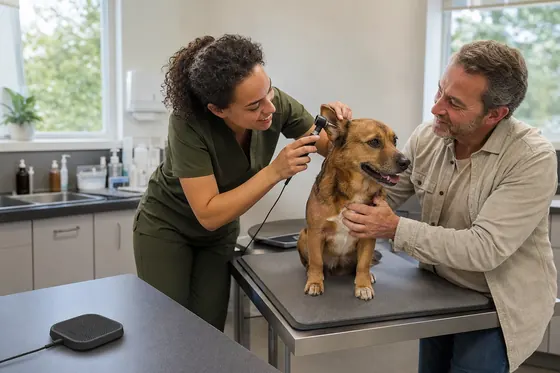
A structured report in your professional terminology
From care encounter to report
Hysio turns spoken information into a report. Choose the report format for the conversation you are documenting.
Document
Record the conversation and clearly state your own findings and agreed actions.
AI assistants
You stay in control of what gets saved.
In your workday
More attention for the conversation, less typing afterwards.
State relevant information, your own findings and agreed actions aloud so you can find them in your report.
The information appears under the headings of your chosen report format, so you can review each section.
Check names, facts and agreed actions. Edit the text where needed before using the report in your records.
Try it yourself
Try Hysio free for 14 days or schedule a personal demo.
For your team
Quick answer
The four report formats match consultation, intake, examination and discharge, with the animal, the client's account, findings, assessment and follow-up each in their own place.
Every care encounter, from consultation to discharge, has a documentation format of its own. Animal and client stay separate, while the veterinarian safeguards the professional content and the final record.
This report format is for an ongoing veterinary consultation, covering the animal, the client's account, examination, assessment, care and follow-up. The format keeps the account of the human client, the veterinarian's own examination and the stated assessment in separate sections, with the species, name and characteristics of the animal alongside the findings. Treatment carried out, medication, consent discussed, costs and aftercare each get their own place. The veterinarian reads the note through and decides what goes into the veterinary record. With voice-driven reporting, you dictate after the consultation what the owner reported and what you found, and Hysio puts it into this format. [2] [7] [3]
This report format is for a first veterinary contact with animal and client context, history, examination, analysis and the care plan discussed. The intake places the reason for the visit, the medical history and the living or farm context before the veterinarian's own findings, so it stays visible what the human client reported and what the veterinarian established. The veterinary working hypothesis, the reasoning and the next steps are recorded as statements of the veterinarian. [2] [8] [4]
This report format is intended for a veterinary examination described out loud, sampling or another procedure. Choose it when the contact revolves around the procedure itself: the clinical question, examination set-up, method, material and sample, measurements, anaesthesia used, complications and the limitations of the examination. A result that has not been stated stays open, and the conclusion remains a statement of the veterinarian. For a broad first contact, the intake format is a better fit. [2] [9] [5]
This report format is intended for a discharge conversation covering care, the medication details provided, points of attention and a safety net. The text is addressed to the human client and describes what was done, how the animal is doing, what to watch for and when contact is needed. Only explanations the veterinarian actually gave are included; new care, extra advice or a dosage are not made up. [2] [10] [6]
For a first veterinary contact, the intake format is the right choice, not a separate examination or discharge report. A first contact calls for the reason for the visit, medical history, living or farm context and history-taking alongside the first findings. An examination report only starts at the procedure itself and a discharge instruction only at the follow-up. If a contact runs through both, the veterinarian decides which format best carries this contact. [2] [7] [4]
A veterinary record contains information about an animal and information from the human client who presents the animal. The animal is the patient: species, name, characteristics, examination and findings belong there. The client provides the account, the context, the consent and the agreements. Both sit in their own sections of the report, so it stays visible later who said what and what a decision was based on. [2] [8]
A veterinary medicine that is mentioned is only usable as source data, with the details that were actually stated. Name, strength, dosage, route, frequency, duration and withdrawal period are taken over as mentioned and are not supplemented or converted. The status counts too: prescribed, administered, changed or only discussed are different facts. If a detail is missing, it stays open in the report and the veterinarian fills it in. [2] [10]
Owner and keeper are not automatic labels for every person who comes in with an animal. Rights and obligations are attached to that capacity, so it only goes into the report when the source names it explicitly. If the role stays unclear, a neutral description such as human client or companion is more accurate. The veterinarian corrects the role label before the text goes into the record. [2] [7]
A difference between the client's account, an earlier note and the veterinarian's own examination is a source conflict that is not silently resolved. Both readings remain, each with the source that carries it and the moment at which it was mentioned. The report does not itself choose which reading is correct. The veterinarian weighs the contradiction, notes what still needs to be verified and decides what goes into the record. [2] [8]
No. A diagnosis or working diagnosis only belongs in the report when the veterinarian has stated it. A complaint from the human client or an observation during the examination therefore remains a complaint or an observation, even when the direction seems clear. Hysio does not choose a differential diagnosis, does not set an urgency level and does not choose a treatment. The assessment appears in the report with the veterinarian named as the speaker. [2] [9]
Veterinary medicine works with companion animals, horses, farm animals and other specific animal groups. Each context brings its own setting: a consulting room, a stable, a farm or a site, and sometimes a keeper who speaks on behalf of an organisation. Species, setting and the human client involved together determine how a finding should be read, so those three are stated explicitly in the report rather than having to be inferred from the rest of the text. [2] [7]
Examination, care, medication and signs take on meaning within the animal species and the specific context. A heart rate, a posture or a dosage means something different in a horse than in a cat or in a herd on a farm. That is why species, age, weight and husbandry stay with the finding, and veterinary terms are not replaced by human-medicine concepts or a generic standard sentence. [2] [8]
The human client reports behaviour, course or concerns; the veterinarian records their own observation, measurement and procedure. That difference determines how much weight a detail carries in the record. An account therefore sits in the history section with the client as the source, and a finding sits in the examination section with the veterinarian as the source. If they do not match, both remain visible side by side. [2] [9]
A traceable consultation report connects reason, history, examination, stated judgement, care provided and follow-up in one timeline. A colleague who opens the record later must be able to see in which order something happened, who said something and what a decision was based on. That is why each part carries its own source and moment, and a section about which nothing was said stays empty instead of being filled in plausibly. That way, your admin with AI stays traceable for every colleague in the practice. [2] [9]
In sampling or a procedure, the execution, material, measuring method and any result are separate pieces of data. The report records which sample was taken, from which animal, where and when, with which method and by whom. A result that has not yet been stated does not belong there and stays open until the veterinarian mentions it. Anaesthesia, complications and the limitations of the procedure also get their own place. [2] [10]
Medication information calls for the product provided, the strength, dosage, route, frequency, duration and withdrawal period, and the animal or animal group it applies to. For food-producing animals, a stated withdrawal period before delivery counts as a separate detail. If any of those fields is missing in the contact, it stays open in the note. The veterinarian fills it in and checks whether the whole matches what was actually prescribed or administered. [2] [10]
Aftercare consists of the instructions, observation points and contact arrangements the veterinarian actually discussed. The report records who carries out which task at home, what to watch for and which sign means contact is needed again. That safety net comes literally from the conversation and is not supplemented with general advice. The explanation is attributed to the veterinarian; carrying it out lies with the human client. [2] [7]
The veterinarian combines client information with their own examination into a professional assessment, and that is the part that carries the record. That assessment is therefore recorded recognisably as a statement of the veterinarian, separate from what the human client reported. Hysio organises the contact but does not take over the assessment and does not phrase it more firmly than it was stated. [2] [8]
With a herd or group-housed animal, group size, selection and individual deviations from the source must stay recognisable. A finding in five examined animals is not a finding about the whole stable, and an individually sick animal does not disappear into a group picture. The report therefore notes how many animals were examined, how they were selected and which observations were individual. Farm, location or herd identification only go in when the source names them. [2] [7]
Veterinary terms describe the animal, examination and treatment within a different framework from human healthcare. Human classifications and legal concepts do not fit there and quietly shift the meaning of a finding. The report therefore uses the words that apply in the source and in veterinary practice, including species names, anatomical terms, side and units as the veterinarian stated them. [2] [9]
Registration in the public Diergeneeskunderegister (the Dutch register for veterinary professions) is the condition for practising the protected veterinary professions. That register is not the BIG register for human healthcare and is separate from your Hysio account. In a report, registration is at most a detail that someone mentions themselves. Hysio does not verify authority, does not consult a register and infers nothing about competence from a title or a transcript. [2] [7]
Veterinary powers and procedures fall under the Wet dieren (the Dutch Animals Act) and the regulations based on it, with their own provisions on veterinary medicines. That is a different framework from human healthcare legislation, so concepts from it do not belong in a veterinary report. A legal basis or obligation only appears in the text when the veterinarian mentions it. Hysio assesses no lawfulness, no authority and no supervision. [2] [8]
The KNMvD guideline Richtlijn Verslaglegging (on record keeping) from 2014 has been under revision since 1 March 2026 and no longer applies. You can still use its structure as a working model, but not present it as a current standard, and there is not yet a general successor to take its place. If you mention such a structure in a report or in a discussion, state that it is a historical model. The order of information remains useful; its status does not. [2] [9]
Information about an identifiable human client calls for careful handling, while data that concern only the animal are a different layer. Therefore include only what this contact needs, in the right source role, and keep names of staff, addresses and traceable business details out of the note. The animal keeps its name, because that carries the identification in the record. The practice itself remains responsible for purpose, access and retention. [2] [7]
A client's account, a veterinarian's statement, a measurement result and an external source such as a laboratory or a referring veterinarian each have their own origin. That origin stays attached to the statement, even when two sources say the same thing. Merging them quietly turns an account into a finding and a suspicion into a conclusion. Who said something and when is therefore noted with the sentence itself and not only at the top of the report. [2] [9]
Consent, refusal and costs that were discussed only belong in the report when they were mentioned in the contact. The note records what was put forward, how the human client responded and for what, if anything, no consent was given. Discussed is not the same as consented to, and an estimate that was mentioned is not an invoice. Hysio does not infer agreement from the course of the conversation or from the fact that the treatment went ahead. [2] [9]
An incomplete dictation only carries the parts that were actually spoken. The other headings stay empty instead of being filled with a plausible sentence, even when the rest of the contact suggests that direction. That way you see straight away where the contact produced nothing and where additions are needed. An empty section is useful information for the record; a filled-in section without a source is not. [2] [7]
The public register shows which veterinary professions are legally protected and who is registered in it. For this profession page, it is a public source for defining the scope of the profession: it determines which profession these report formats are about. It goes no further than that. A reference to registration in a report remains a statement by the person who made it, and not a check by Hysio. [2] [7]
Data that relate exclusively to an animal are by nature something different from data that identify a person. In a veterinary record, those two layers almost always sit side by side, because an animal can usually be traced back to a client or a farm. Therefore treat the human data as personal data and limit them to what the contact needs. Hysio does not make a legal assessment of that boundary; the practice determines its own processing. [2] [8]
The veterinarian remains responsible for professional interpretation, accuracy and the final choice of what goes into the record. Hysio organises text and bears no substantive responsibility for the contact, the animal or the decision. In practice this means: every organised note is checked by the veterinarian before anything is saved, and corrections are made in the record itself. Access, retention and disciplinary accountability also remain with the practice. [2] [9]
An examination report can only show measurements that were provided with instrument, unit, moment and source. A temperature without a measuring method, a weight without a unit or a value without a time stays incomplete in the text. Side, anatomical location, animal species, number of animals and sample identity remain exactly as stated. Hysio does not convert anything, does not round anything and does not add a missing unit. [2] [9]
You note a test without a result as carried out, with the result as an open point. The report notes that the procedure was done and leaves the result explicitly open, so that nobody later assumes an outcome that was never stated. Filling in a plausible value would make the record incorrect and could steer a follow-up decision. The veterinarian adds the result as soon as it is known and only then determines what it means. [2] [8]
A diagnosis only gets a place when the veterinarian has stated it in the contact, and then with speaker and moment alongside it. The wording stays as firm as it sounded: a suspicion stays a suspicion, a working diagnosis stays a working diagnosis. The reasoning the veterinarian gave also belongs with it, so that it can later be traced what the conclusion was based on and which findings were used for it. [2] [9]
Species, breed or type, sex, age, weight and identification such as a microchip number or ear tag belong in it when they were mentioned in the contact. They determine how a finding should be read and which dosage or withdrawal period fits. If a characteristic is missing, it is not inferred from appearance, breed or context. The animal's name stays in, because it carries the identification in the veterinary record. [2] [7]
A number does not automatically acquire a normative meaning by being put in a report. Reference values differ by animal species, breed, age, measuring method and laboratory, so normal or elevated is a judgement and not a measurement. The report states the value literally, with unit and moment alongside it. Whether it deviates is assessed by the veterinarian, and that interpretation is attributed to the veterinarian in the record. [2] [8]
The source determines whether a product was prescribed, administered, discussed or only mentioned as a possibility. Those four statuses stay separate, because each has different consequences for the animal, the record and accountability afterwards. Hysio does not itself propose a product, dosage, substitution or change and does not calculate a withdrawal period. What was not said does not go in; the veterinarian fills it in and remains responsible for the prescription. [2] [10]
Owner instructions can organise explanations and follow-up clearly when the veterinarian has stated that content. The text addresses the human client directly, keeps the animal's name in and puts technical language into everyday words without shifting the meaning. Care, medication, points of attention and when to get in touch are listed separately. No new advice is added, because it would land directly with the owner. [2] [7] [6]
The consultation report has separate sections for summary, animal and client, reason for contact and source of information, history according to the client, general impression, examination and measurements, the veterinary assessment by the veterinarian, treatment and medication carried out, information discussed including consent and costs, and aftercare and follow-up. The order is fixed, and a heading about which nothing was said in the contact stays empty. [2] [7] [3]
In veterinary medicine, the animal is the patient and the person or organisation that receives the care is the client. The two do not coincide: the examination concerns the animal, while the account, consent, agreements and invoice go through the client. Using one term for both makes it impossible to trace later who said what and who signed for what. That is why every statement in the report carries the role it belongs to. [2] [7]
The format organises information provided but does not take over any veterinary assessment, treatment or medication decision. Hysio does not make a diagnosis, does not determine urgency, does not choose a therapy and does not write directly to the veterinary record. The fact that a procedure is recorded does not give Hysio the authority to carry out or assess that procedure either. The veterinarian reads the text back, corrects it where needed and decides what is saved. [2] [8]
Hysio Starter costs €20 per month excl. VAT, Pro €40 and Unlimited €80. With yearly billing, you pay for ten months and use twelve. The price applies to the subscription, not to one veterinary practice, profession or report format. Whichever plan you choose, the veterinarian remains responsible for checking the source and decides what goes into the final record. [11]
You can use Hysio free for fourteen days in your veterinary practice. During that period you work with the platform and see how a spoken care contact leads to an organised report. What is in that text remains an organisation of your own source and not an independent assessment. So check the animal, the human client, medication, veterinary judgement and missing data before you transfer anything to the veterinary record. [12]
Include only necessary data about the human client and keep them separate from data that concern only the animal. Names of staff, addresses and traceable business details do not belong in the note. Hysio processes what you provide and does not change the veterinary practice's own privacy responsibility: the practice determines purpose, access and retention and remains responsible for the record. [13]
No. Hysio organises the information provided into text, but does not write directly to the veterinary record and has no integration with your practice software. You read the note back, correct what is not right and place the final text in the right place in your own system yourself. That intermediate step is deliberate: it means the veterinarian is always the last reader before anything is recorded. [15]
Hysio can save time by immediately organising a consultation, intake, examination or discharge conversation into a recognisable structure, so you are not typing from memory afterwards. How much that yields depends on the type of contact, the quality of the source and how much you need to correct, so Hysio does not attach a fixed percentage to it. Reading back and transferring remain the veterinarian's work. [2] [7]
Start with one clearly defined contact and choose the AI assistant that fits that purpose of contact, for example only consultations instead of your whole day. Compare the first notes line by line with the source, look at where the format organises things differently from what you are used to, and agree within the practice who reviews. Only expand once that comparison consistently holds up. [14]
Compare the organised text with the original contact and correct what differs. Then put each section where it belongs in your record: history with history, findings with examination, medication with medication. Leave open what the contact did not produce, instead of filling it in anyway during the transfer. The veterinarian places the text themselves and remains the author of the record note. [14]
First check whether the human client's accounts, your own observations and the veterinary assessment are attributed to the right source, because that is where organising the text most easily goes wrong. Then go through the timeline, the units and the medication details, and check whether points left open are really still open. If the meaning is right but not the wording, you rewrite it. If the source is not right, you remove the sentence. [14]
Hysio does not fill in a diagnosis, urgency, dosage, treatment, consent, measurement, owner role or follow-up appointment when it is not clear from the source. An account from the human client does not silently become a veterinary finding either, and an option that was discussed does not become a decision. What is missing stays visibly missing. The veterinarian decides which information the source really carries before it goes into the note. [2] [8]
One fixed profile route keeps the profession name, AI assistants, questions, sources and background information together at one address. That prevents several versions of the same explanation from arising side by side and contradicting each other. The profile code is only a label for this page and says nothing about the registration or authority of an individual veterinarian. The substantive assessment remains with the veterinarian. [14]
Hysio creates the report. You remain responsible for what you save in the record.