Document
Keep your attention on the care encounter.
Record the conversation and clearly state your own findings and agreed actions.
Hysio Forensic Medicine
Hysio organises statements, examination methods, factual findings and professional interpretation, and keeps track of the source and of what information may be shared.
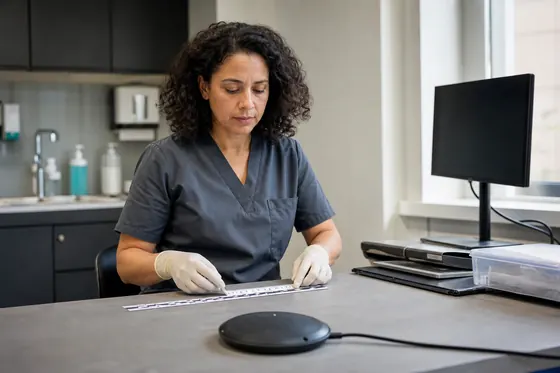
A structured report in your professional terminology
From care encounter to report
Hysio turns spoken information into a report. Choose the report format for the conversation you are documenting.
Document
Record the conversation and clearly state your own findings and agreed actions.
AI assistants
You stay in control of what gets saved.
In your workday
More attention for the conversation, less typing afterwards.
State relevant information, your own findings and agreed actions aloud so you can find them in your report.
The information appears under the headings of your chosen report format, so you can review each section.
Check names, facts and agreed actions. Edit the text where needed before using the report in your records.
Try it yourself
Try Hysio free for 14 days or schedule a personal demo.
For your team
Quick answer
The four formats fit examination, injury consultation, post-mortem examination and reporting.
Every assignment, from detainee consultation to external post-mortem examination, gets a format of its own. Statement, examination, factual finding, the physician's interpretation and information limits stay separately visible.
This documentation format is for a forensic examination, covering purpose, statement, method, findings, the physician's interpretation and limitations. For the forensic record, set out how you organise statement, examination method and factual findings separately. For the forensic medical examination, keep the assignment, medical source, time of examination and report status strictly separate. With voice-driven reporting, you dictate your findings after the examination; Hysio organises them neutrally and you decide what goes into the report. [2] [8] [3]
This documentation format is for a detainee or injury consultation with notification, examination, findings, the physician's assessment and information boundary. Make the origin verifiable by describing how you keep the purpose of contact, statement, examination and the physician's assessment separate. For the detainee and injury consultation, the forensic physician determines which medical interpretation and information boundary are justified. [2] [7] [4]
This documentation format is for a post-mortem examination with identification source, circumstances, method, findings, conclusion and status. Write up the source material without increasing its evidential value: note how you make sure identification, circumstances and post-mortem findings are not written as one conclusion. For the post-mortem examination report, name every limitation or uncertainty that emerges from the source. [2] [11] [5]
This documentation format is for reporting with underlying report, origin, the physician's interpretation, attachments, review and status. For the assignment concerned, describe how you visibly separate source document, interpretation, attachment and handover status. For the forensic handover and reporting, always check identity, timeline, method, recipient and status before final reporting. [2] [9] [6]
A description of injuries calls for examination, method and factual observation and not automatically for a statement about cause or perpetrator. For the forensic record, set out how you name the purpose of the examination before the findings. For a neutral description of injuries, keep the assignment, medical source, time of examination and report status strictly separate. [2] [9] [3]
Forensic examination answers a designated medical question within the available sources and professional assignment. Make the origin verifiable by describing how you keep the question and the boundaries of the examination visible. For the purpose of forensic examination, the forensic physician determines which medical interpretation and information boundary are justified. [2] [7]
A statement comes from a person involved, whereas a finding results from your own examination or a designated source. Write up the source material without increasing its evidential value: note how you record both origins with their own wording and time. For statement and finding, name every limitation or uncertainty that emerges from the source. [2] [8]
Neutral reporting describes source, method, observation and limitation without a conclusion that is not substantiated. For the assignment concerned, describe how you use factual language and attribute interpretation to the physician. [2] [9]
A legal conclusion about guilt, perpetrator or classification falls outside an organised report text. For the forensic record, set out how you do not merge the medical finding and the legal question. [2] [10]
The information boundary describes which question, sources and consent the reporting does and does not cover. Make the origin verifiable by describing how you place missing information as a limitation next to the text. For the information boundary, the forensic physician determines which medical interpretation is justified. [2] [10]
A detainee consultation can contain purpose of contact, statement, physical examination, findings, the physician's interpretation and follow-up. Write up the source material without increasing its evidential value: note how you record the medical question and any information limitation separately. For a detainee consultation, name every limitation or uncertainty that emerges from the source. [2] [7]
A description of injuries can contain location, size, colour, shape, wound care and measurement method without proving causality. For the assignment concerned, describe how you do not merge observation and statement into a cause. [2] [9]
The person examined can provide complaints, history and a statement, whereas the examination forms its own source layer. For the forensic record, set out how you label the personal statement and your own finding separately. For the person examined as a source, keep the assignment, medical source, time of examination and report status strictly separate. [2] [8]
A physical examination calls for the parts examined, method, time and factual findings. Make the origin verifiable by describing how you include only findings that were examined and stated. For a physical examination, the forensic physician determines which medical interpretation and information boundary are justified. [2] [8]
An examination that was not carried out or was limited is a relevant limitation of the reporting. Write up the source material without increasing its evidential value: note how you make the reason for and consequence of the limitation visible. For a limited examination, name every limitation or uncertainty that emerges from the source. [2] [9]
A post-mortem examination calls for identification source, circumstances, examination method, post-mortem findings and the physician's conclusion. For the assignment concerned, describe how you do not supplement the examination data with a circumstance that was not mentioned. For a post-mortem examination, check identity, timeline, method, recipient and status before final reporting. [2] [11] [5]
Circumstances surrounding a death are source data that stand apart from the post-mortem findings. For the forensic record, set out how you clearly distinguish who reported what and when. For circumstances surrounding a death, keep the assignment, medical source, time of examination and report status strictly separate. [2] [11]
A cause-of-death certificate is a separate source for the medical registration of a death and is not the same as a freely formulated forensic conclusion. Make the origin verifiable by describing how you name the document as a source without filling in a cause yourself. For a cause-of-death certificate, the forensic physician determines which medical interpretation and information boundary are justified. [2] [12]
Contact with the police or the judicial authorities requires a concrete question, participant, basis for information and status. Write up the source material without increasing its evidential value: note how you record question, answer and disclosure of information separately. For contact with the police or the judicial authorities, name every limitation or uncertainty that emerges from the source. [2] [10]
A third-hand account remains an indirect source with its own reliability and limited traceability. For the assignment concerned, describe how you do not make the distance from the source invisible. For a third-hand account, check identity, timeline, method, recipient and status before final reporting. [2] [8]
Forensic medicine links medical expertise with assignments concerning injury, medical care for detainees, death and reporting. For the forensic record, set out how you name the medical and forensic assignment side by side. [2] [7]
The NRGD assessment framework is a source for assessing forensic medical examination and not an automatic substantive conclusion. Make the origin verifiable by describing how you use the framework as a reference and not as an outcome. [2] [9]
Professional confidentiality remains relevant for requests from the police or the judicial authorities and calls for a concrete assessment of the information boundary. Write up the source material without increasing its evidential value: note how you keep request, legal basis, consent and disclosure apart. [2] [10]
The medical record and forensic reporting can have different purposes, sources and access boundaries. For the assignment concerned, describe how you do not mix up the purpose of the document and the place where it is stored. For the medical record and forensic report, check identity, timeline, method, recipient and status before final reporting. [2] [10]
Consent can be relevant for examination or disclosure of information, depending on the assignment and legal context. For the forensic record, set out how you do not fill in the status if the source does not mention it. [2] [10]
A request from the judicial authorities needs a sender, question, date and appropriate basis for information. Make the origin verifiable by describing how you do not confuse the request with consent or a physician's decision. For a request from the judicial authorities, the forensic physician determines which medical interpretation and information boundary are justified. [2] [10]
A medical purpose focuses on care or examination, whereas a legal purpose can have a different question and information boundary. Write up the source material without increasing its evidential value: note how you state the purpose explicitly with the sources. [2] [8]
A source that is not traceable limits the evidential value and calls for a visible source limitation. For the assignment concerned, describe how you do not merge the source with another statement. For a source that is not traceable, check identity, timeline, method, recipient and status before final reporting. [2] [9]
The report status makes clear whether a report is still a working version, has been checked internally, has been signed or has been sent. State only the status that demonstrably applies and keep it separate from the examination date and the medical findings. That way a working version is not read as a completed and sent report. With voice-driven admin, you only set the status to final after your check. [2] [9]
An attachment belongs to a specific document, has an origin and must be recognisable as received or missing. Make the origin verifiable by describing how you do not summarise attachment and content without checking. [2] [8] [6]
An observation describes what was seen during the examination, whereas interpretation can be a professional judgement. Write up the source material without increasing its evidential value: note how you record both layers and their source role separately. For observation and interpretation, name every limitation or uncertainty that emerges from the source. [2] [8]
Measurement data need value, unit, method, location and time to be traceable. For the assignment concerned, describe how you only adopt values that were actually mentioned without inventing a norm. For measurement data from an injury examination, check identity, timeline, method, recipient and status before final reporting. [2] [9]
Photo documentation is a source with time, context and origin that does not automatically replace the complete finding. For the forensic record, set out how you name the photo as a source and do not interpret it yourself. For photo documentation, keep the assignment, medical source, time of examination and report status strictly separate. [2] [9]
A chain of custody makes visible who collected, handed over and received material or information. Make the origin verifiable by describing how you record every status only as a source fact. [2] [9]
A material source calls for identification, type, time of collection or receipt and status when those data are known. Write up the source material without increasing its evidential value: note how you do not fill in the material status without a source. For a material source, name every limitation or uncertainty that emerges from the source. [2] [8]
An association between finding and statement does not automatically prove a medical or legal cause. For the assignment concerned, describe how you state the interpretation given and the remaining uncertainty separately. [2] [10]
Uncertainty can result from limited sources, examination method, the passage of time or contradictory statements. For the forensic record, set out how you do not phrase the limitation away. [2] [9]
A conclusion is attributed to the physician when the source makes clear that the forensic physician stated it. Make the origin verifiable by describing how you do not write your own organisation of the material as the physician's conclusion. For a conclusion attributed to the physician, the forensic physician determines which medical interpretation and information boundary are justified. [2] [8]
A correction calls for a visible change, reason and status without hiding the original source fact. Write up the source material without increasing its evidential value: note how you do not mix old and new wording without this being noticed. For a report correction, name every limitation or uncertainty that emerges from the source. [2] [10]
Hysio organises source material but does not determine cause, guilt, perpetrator, legal classification or cause of death. For the assignment concerned, describe how you leave the physician's interpretation standing as the decisive source. [2] [11]
For forensic work, Hysio Starter costs €20 per month excl. VAT. The rate belongs to the plan and not to one profession or documentation format for forensic medicine. The forensic physician remains responsible for checking and final saving. For more sessions per month, Pro and Unlimited are also available, each for a fixed monthly amount excl. VAT. [13]
Forensic medicine is a fixed profession in the Hysio catalogue, with its own route and four named documentation formats for examination, detainee and injury consultation, post-mortem examination and handover. The forensic physician assesses source, professional content and record text personally. Note only which passages are suitable for the record and leave missing information visibly open. [16]
You can try Hysio free for fourteen days for forensic work. During that period you get to know Hysio, the four forensic documentation formats and the source-bound way of record keeping. Use the trial period to look at Hysio, but assess every result against the source. The forensic physician then chooses what is useful and checks the text against source, context, record purpose and professional agreements. [14]
In forensic medicine, human review remains necessary for source origin, professional content, missing information and the final choice for the record. For the assignment concerned, describe how you compare the text against dictation, source documents and status. In doing so, check identity, timeline, method, recipient and status before final reporting. [16]
Hysio does not write directly to an electronic record for forensic medicine; the forensic physician assesses the text and transfers it personally. For the forensic record, set out how you assess the text yourself and transfer it manually to the right place. [17]
In forensic medicine, time can be saved by organising a conversation or dictation, but checking and safe transfer remain part of the work. Make the origin verifiable by describing how you include time for checking and safe transfer. [2] [7]
Assessment of the report structure centres on one clearly defined forensic medical assignment and alignment with the report's purpose. Compare the text with the dictation and source documents, keep statement, observation and the physician's interpretation apart and leave uncertainty visible. For every format, the forensic physician personally determines the information boundary, the wording and the final report status. [16]
In forensic medicine, Hysio does not fill in any missing measurement, consent, assessment, action or agreement. For the assignment concerned, describe how you do not fill empty sections with forensic assumptions. [2] [8]
Note who was present at the examination: the person examined, a police officer, an interpreter or a confidential adviser. Add who gave which information and at what moment. That way it can later be traced where each piece of data came from; you approve the report. [16]
In forensic medicine, the forensic physician remains responsible for the choice of sources, professional assessment, correction and final storage. Make the origin verifiable by describing how you do not hand over the final assessment to the text. [16]
Hysio creates the report. You remain responsible for what you save in the record.