Document
Keep your attention on the care encounter.
Record the conversation and clearly state your own findings and agreed actions.
Hysio Obstetric Nursing
Source-bound documentation for obstetric nurses, from admission and mother-baby reporting to birth and discharge handovers.
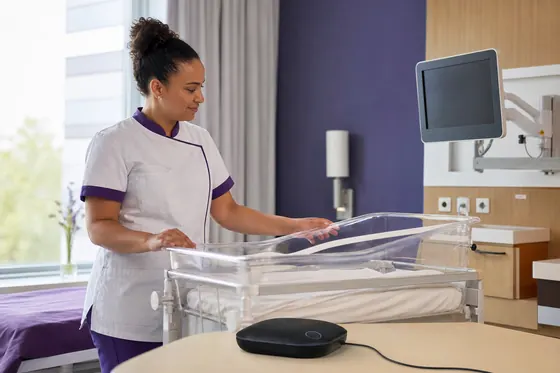
A structured report in your professional terminology
From care encounter to report
Hysio turns spoken information into a report. Choose the report format for the conversation you are documenting.
Document
Record the conversation and clearly state your own findings and agreed actions.
AI assistants
You stay in control of what gets saved.
In your workday
More attention for the conversation, less typing afterwards.
State relevant information, your own findings and agreed actions aloud so you can find them in your report.
The information appears under the headings of your chosen report format, so you can review each section.
Check names, facts and agreed actions. Edit the text where needed before using the report in your records.
Try it yourself
Try Hysio free for 14 days or schedule a personal demo.
For your team
Quick answer
The Hysio set-up distinguishes admission, mother-baby report, birth handover and discharge handover as separate documentation formats.
Accounts, nursing observations, care provided, responses, source results and action owners stay recognisable per person and point in time.
For obstetric nursing, Hysio fits four care purposes: admission, mother-baby report, birth handover and discharge handover. Observations, nursing care provided, responses, source results, parents' accounts and open actions stay recognisable per person, episode and point in time. When preparing the text, the obstetric nurse checks the source, the moment and the professional meaning before this information is included in the obstetric nursing record. [3] [4] [5] [6] [10] [11] [13] [15]
The admission format organises reason and stage, sources, reports, history, medication details, care request, maternal and fetal information, nursing actions carried out, the assessment as stated and follow-up. The obstetric nurse keeps source facts and the existing care plan apart. For an admission with ruptured membranes, for example, you note the time, the colour of the amniotic fluid and what the midwife or doctor agreed. [3] [8] [10] [11]
The mother-baby report keeps the reporting period, care context, the mother's reports and observations, care given and response, observations and measurements of the baby, baby care and response, parent reports and open actions separate. That keeps it clear which nursing action belongs to which person. Think of a feed that was difficult, the baby's temperature or the mother's pain score after a caesarean section. [4] [10] [11] [12]
The birth handover organises the recipient and context, the course of labour up to handover, the current status of mother and baby, nursing care given, preferences, source conflicts and open actions. Hysio does not create a new handover instruction and makes no decision on whether escalation is needed. After a vaginal birth, for example, the recipient sees the time of birth, the blood loss and how the baby adapted after birth. [5] [11] [13] [15]
The discharge handover brings together the discharge context, episode and birth, the current status of mother and newborn, care given, parents' wishes, open results, follow-up appointments, the recipient and the handover status. Hysio organises a recorded decision, but does not take over the discharge decision. The agreements with maternity care and the community midwife at home go in too, including who arranges the heel prick if it has not been done yet. [6] [11] [13] [15]
Choose admission when a nursing episode is opened and the reason, history and starting situation are gathered. Choose mother-baby report for a specific moment of care or a reporting period with observations, actions and responses. The source and the purpose of the encounter decide the choice. A mother who stays for observation after an outpatient birth usually starts with an admission. [3] [4] [10] [11]
The birth handover fits when information about the course of labour, the current status of mother and baby and the nursing care is handed over to another healthcare professional or setting. A regular report stays a separate moment of care. Hysio does not choose the moment of handover itself. This happens, for example, when the woman goes from the labour ward to the maternity ward or to theatre. [5] [11] [13] [15]
Use the discharge format when the clinical episode is closed or current information is shared for follow-up care. Check the recipient, open results, the current status of mother and baby and the action owner. Hysio does not write discharge as a done deal when the decision is not in the source. Think of a discharge after a caesarean, with agreements on wound checks, pain relief and the first days at home. [6] [11] [13]
Keep reports, observations, measurements, actions carried out, responses, professional assessments and instructions recognisable as separate kinds of information. Hysio can organise these parts, but the source decides what is actually there. A convincing sentence gains no extra authority or certainty. If the mother says the baby is feeding poorly, that stands as her report; what you saw while latching the baby on stands as your observation. [3] [4] [10] [11] [12]
No. Hysio can organise a recorded observation, care given, response or instruction, but does not set urgency, triage, nursing priority, medication actions, CTG interpretation, birth management or escalation. The obstetric nurse and qualified healthcare professionals remain responsible for assessment and action. If you are unsure about blood loss or the baby's condition, you consult the doctor or midwife straight away, and record it afterwards. [3] [4] [5] [6] [7] [10] [11] [15]
At admission, Hysio places reason, phase, source, account, history, care need, mother, baby and actions carried out in a fixed reading order. The obstetric nurse checks whether medication data and instructions really come from the source and keeps their own observation separate from professional interpretation. During observation and nursing reporting, the obstetric nurse checks the source, the moment and the professional meaning before this information is included in the obstetric nursing record. [3] [8] [10] [11]
Use the mother-baby report for a defined period and note for each person what was reported, observed, carried out and described as a response. Parent reports get their own place. The format supports continuity, but does not create a trend or nursing conclusion beyond the source. With rooming-in you note per moment what you did with mother and baby, even if the baby was with the mother for the whole shift. [4] [10] [11] [12]
First describe the nursing action carried out as a fact, and put the response of mother or baby separately. State the moment and source when they are available. Hysio does not turn a response into a claim of effectiveness and does not decide whether the action should be repeated. For example: you helped with latching on, and the baby then fed at the breast for ten minutes. [4] [5] [10] [11]
Link every observation, measurement, action and response to the mother or to a specific baby. Use the shared context only for parent reports or family information that was actually recorded that way. Hysio does not build a joint clinical picture from two source roles. With twins, each baby gets their own part, even if the observations look alike. [4] [6] [10] [11] [15]
Start with the recipient, the episode and the course of labour up to handover. Then add the current status of mother and baby, care given, preferences, source conflicts and open actions. Leave details that were not discussed empty. The obstetric nurse checks that the handover contains only relevant facts. For a handover to neonatology you put the baby's details first, and the mother's status after that. [5] [11] [13] [15]
Include an instruction only when it was clearly named as a source detail. Note who gave it, who it applies to, its status and the follow-up when that information is present. Hysio does not turn a recommendation into an instruction and does not decide on carrying it out. Think of an instruction to have the blood pressure checked at home over the coming days. [6] [7] [11] [13]
Include an external result with its source, date, person and status. Keep the nursing observation and professional explanation separate. Hysio does not validate the result, does not complete it and does not set an intervention based on the text alone. You include a bilirubin value or a culture result with the date and the person it relates to. [3] [4] [11] [12] [13]
Note the open action, action owner, recipient and deadline when these were agreed. Keep open, planned, carried out and checked apart. Hysio does not fill in an action owner and does not present a handover that has not yet been sent as a completed message. Think of a hearing screening that still has to happen, or a paediatrician who wants to see the baby before discharge. [5] [6] [11] [13]
Keep the previous report recognisable as an earlier source with its period and context. In the current moment, describe only what was newly observed, reported or carried out. Hysio does not make a current status out of old text and draws no trend conclusion of its own. That way you can see, for example, which pain relief was given in the night and what is new in your shift. [4] [10] [11]
No. Monitoring, acute assessment, consultation and action stay with the qualified healthcare professionals. Hysio can organise a safely recorded encounter afterwards or alongside the work, but does not replace direct communication, triage, clinical observation or nursing decision-making. [3] [4] [10] [11] [15]
Distinguish between mother, baby, parents' account, obstetric nurse, doctor or midwife, instruction, external result and handover recipient. Note who reported, observed, acted or assessed. This keeps responsibility readable per source and per person. At handover within the obstetric team, the obstetric nurse checks the source, the moment and the professional meaning before this information is included in the obstetric nursing record. [3] [6] [7] [10] [11] [13]
Describe parents' wishes as a report or discussed preference, and keep them apart from care given and professional policy. Include only the words and agreements that are in the source. The obstetric nurse decides how the preference is taken into the actual care plan. [5] [6] [10] [11] [15]
Name the purpose, recipient and sharing status when consent or data sharing was explicitly discussed. Keep mother and baby details apart and share only what the care purpose needs. Hysio does not assume consent from a standard handover. [5] [6] [11] [13]
The eOverdracht information standard offers a framework for standardised nursing handover. Use the source as language and structure, not as proof that every organisation is technically connected. Hysio can organise the text, but does not send or validate any data exchange by itself. Voice-driven admin delivers the text; you approve it for the record. [5] [6] [13] [14]
Put the report and your own observation side by side, with their source and moment. Do not turn them into a compromise sentence and do not add an explanation. The obstetric nurse discusses the difference and decides which professional follow-up or verification is needed. [4] [5] [10] [11]
Go back to the note, observation or instruction the sentence came from. Correct it based on the source and keep any unresolved difference visible. The obstetric nurse checks the change and decides whether a recipient needs to be informed again. [4] [6] [11] [12] [13]
Include only information relevant to the recipient and the agreed care purpose. Keep details about mother, baby and parents separate and leave out background that was not discussed. The responsible healthcare professional checks necessity, consent and sharing status. [5] [6] [11] [13] [15]
The obstetric nurse and the responsible healthcare professionals remain responsible for correct observation, care, handover, professional interpretation and approval within their role. Hysio organises source information and does not set nursing priority, medication actions or clinical follow-up. [3] [4] [5] [6] [7] [10] [11]
The colleague must be able to recognise the episode, period, mother, baby, reports, observations, care given, response, open actions, action owner and follow-up. The source status stays visible. Hysio makes the route readable, but the obstetric nurse checks the content. [5] [6] [11] [13] [15]
A nursing observation, a medical assessment, a parent report and an instruction have different source roles. Name them separately and do not assign authority to the wrong healthcare professional. Hysio places the roles side by side, but does not decide who sets the policy. [3] [5] [7] [10] [11]
No. Hysio can organise a CTG assessment recorded by an authorised healthcare professional as source data, but does not interpret a trace, does not give a score and does not determine urgency or action. The professional assessment and the nursing action stay with the authorised healthcare professional. For vital and obstetric observations, the obstetric nurse checks the source, the moment and the professional meaning before this information is included in the obstetric nursing record. [3] [4] [10] [11] [15]
Link the value to mother or baby, the subject, the unit, the method, the date or time and the source when these are known. Hysio does not round off and does not compare against a norm. The obstetric nurse judges the meaning within their own professional role. [4] [6] [10] [11] [12]
Keep the instruction and the unclear status visible, and do not add that it was carried out. Name who recorded it if that is known. Hysio does not turn an intention into a completed action; the obstetric nurse checks and records the follow-up. Even when admin is handled with AI, an instruction without a status stays open until you close it. [3] [6] [7] [11] [13]
Include medication only if the drug, moment, source and status are explicitly recorded. Hysio prescribes nothing, changes no dosage and does not assess an indication. The qualified healthcare professional checks the current overview before it is used in a handover. [3] [6] [7] [11]
No. A score, trend or classification may only be included when it is explicitly in the source. Hysio does not calculate a score from separate observations and makes no prediction. The obstetric nurse decides which measurement or assessment information belongs in the record. [4] [5] [10] [11] [12]
Include the response as a report or observation with person and moment, without automatically turning it into an effect or cause. Hysio links action and response only when the source does. The obstetric nurse judges the follow-up. [4] [5] [10] [11]
A missing result stays open, or is marked as not documented when the source supports that. Hysio does not add a laboratory value, CTG interpretation or observation. The qualified healthcare professional decides whether verification or another action is needed. [3] [6] [11] [13]
Describe the observation, context, source and the consultation or follow-up that was actually recorded. Do not add urgency, diagnosis or referral. Hysio makes the information readable; the obstetric nurse and other qualified healthcare professionals decide on meaning and action. [4] [5] [10] [11] [15]
Link the event, time, observation and measurement to the mother or to the specific baby the source is about. Hysio does not create a joint birth profile. The obstetric nurse checks the link to the person before a handover is approved. [5] [6] [11] [15]
An observation describes what was seen or measured; a professional assessment describes the meaning the qualified healthcare professional recorded. Hysio keeps the two apart. The platform does not assess the observation and does not add a nursing conclusion. [3] [4] [10] [11]
First decide whether the encounter is an admission, mother-baby report, birth handover or discharge handover. Then check source, observation, action, response and action owner for each person. That way the format supports nursing work without taking over professional priority. [3] [4] [5] [6] [10] [11] [13]
The profession-specific content describes report structures, not a general technical link with every hospital information system. You remain responsible for source checks, consent, the recipient and the place where the text is stored. [5] [6] [13] [14]
Check the period, mother, baby, reports, observations, actions, responses, source results and open actions. Make sure an instruction is not written as carried out and that a baby's detail has not been placed with the mother. Only approve after a professional check. [4] [10] [11] [12]
No. An instruction, priority or action owner is included only when the source explicitly carries it. Hysio does not fill in a missing instruction and does not set an intervention. The obstetric nurse checks which instruction was actually given and what its status is. [3] [6] [7] [11] [13]
Choose the handover format when that is the real purpose of the encounter. Check mother, baby, current status, open results, recipient, action owner and sharing status. Hysio organises the text, but you decide whether sharing is appropriate and whether the handover is professionally complete. [5] [6] [11] [13] [15]
No. Escalation, consultation, referral, transfer and acute action are professional decisions. Hysio can organise a report or decision that was already recorded, with source, time and recipient, but does not set necessity, urgency or destination. [4] [5] [6] [10] [11] [15]
Describe what the obstetric nurse observed, carried out, reported or handed over, and keep the medical assessment with the qualified source. Hysio adds no authority and makes no diagnosis. [3] [4] [5] [7] [10] [11]
You check source, person, episode, time, action, response, instruction, professional interpretation and open action. Hysio organises the information, but does not take over clinical or nursing responsibility. [3] [4] [5] [6] [10] [11] [13]
Use a compact distinction between report, observation, measurement, care given, response, professional assessment, action owner and follow-up. Include only information relevant to the recipient. Hysio supports that structure, while the obstetric nurse checks the content. [5] [6] [11] [13] [15]
Hysio organises admission, mother-baby report, birth handover and discharge handover. The platform does not interpret a CTG, does not set urgency or priority, does not change medication, creates no instruction and makes no transfer or discharge decision. You check what goes into the record. Voice-driven reporting helps you organise a busy shift, while the nursing assessment stays with you. [3] [4] [5] [6] [10] [11] [13] [15]
Hysio creates the report. You remain responsible for what you save in the record.